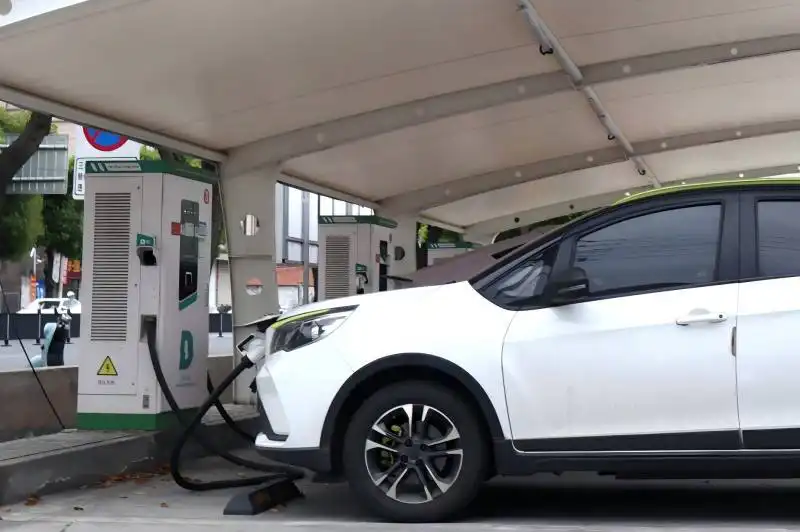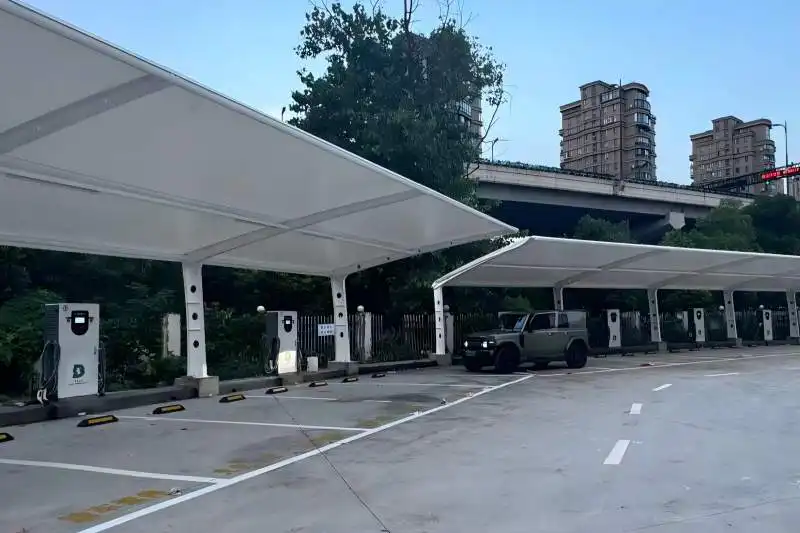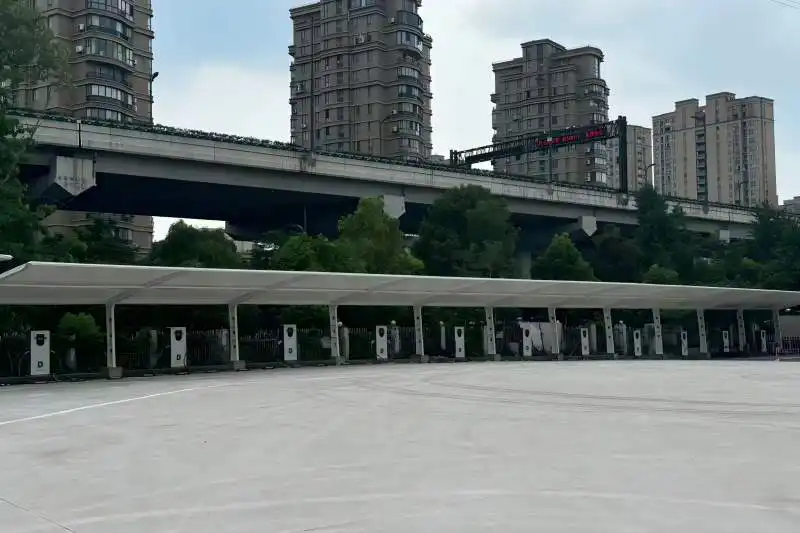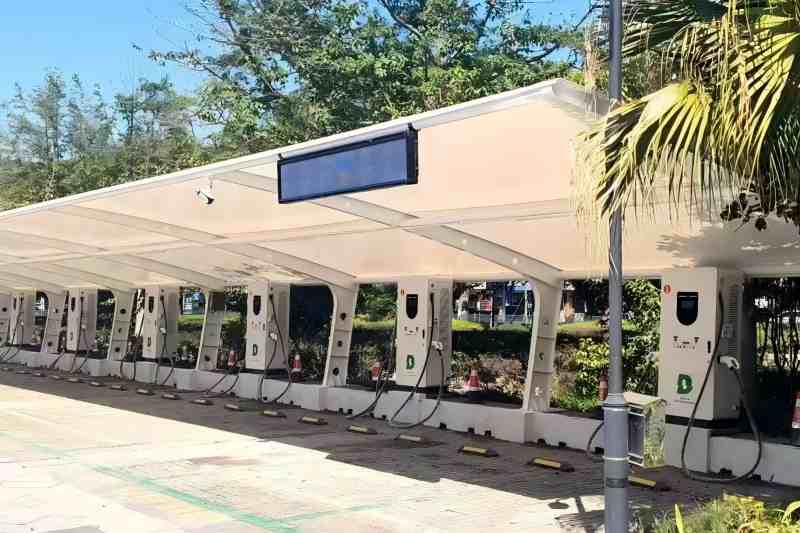
DongYu is a type 2 EV charger manufacturer supplying 3.5 kW to 22 kW AC charging hardware for homes, workplaces, fleets and public networks. Every product is built around the IEC 62196-2 Type 2 connector, supports single-phase and three-phase supply, and ships with CE documentation, OCPP-ready firmware and OEM options.
Type 2 AC EV charging requirements can vary significantly by vehicle, charging speed, electrical capacity, and installation environment.
DongYu offers Type 2 AC EV charger solutions across different charging levels and power options, helping customers select the configuration best suited to their needs.
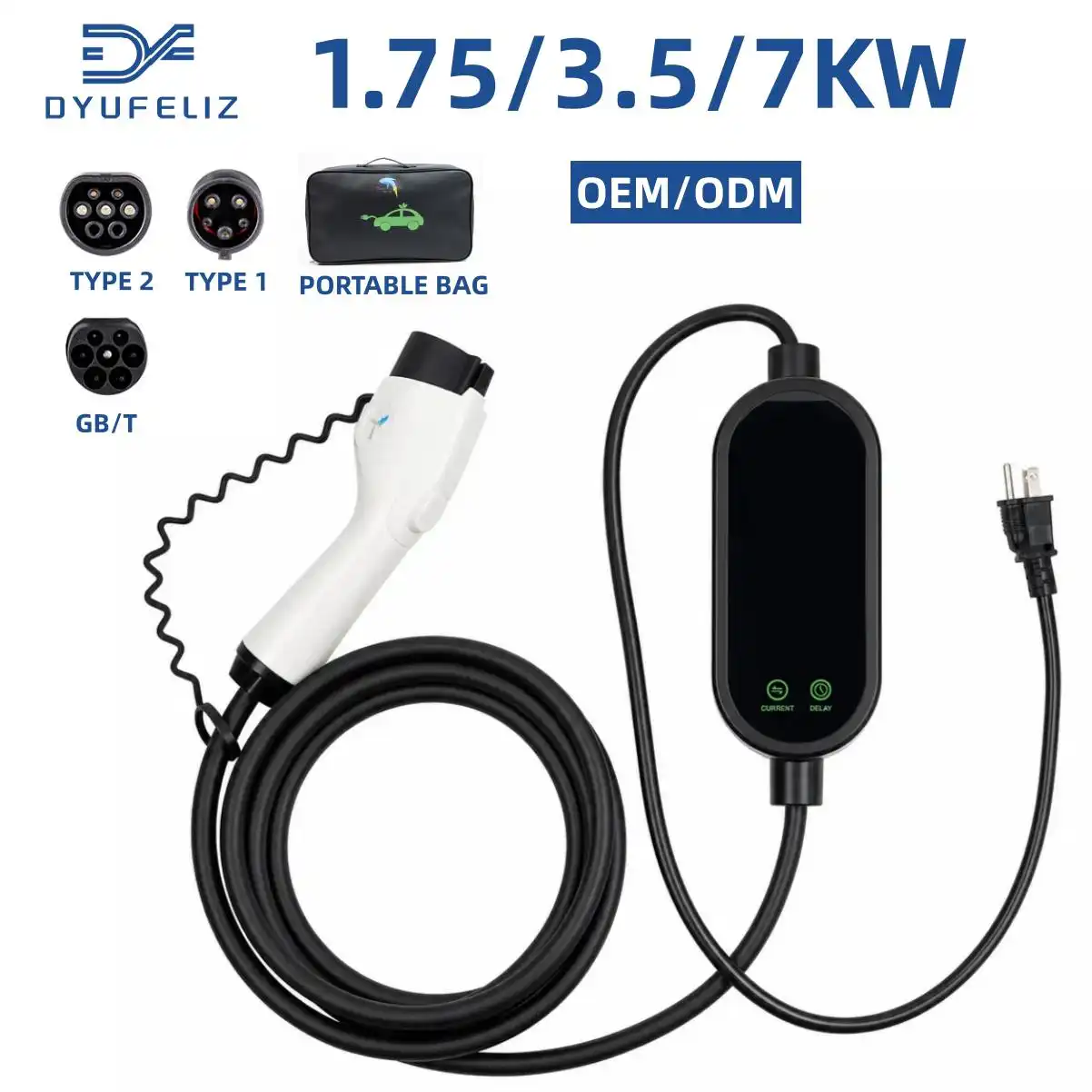
Level 1 is the entry-level AC charging option, typically using a portable Mode 2 Type 2 charger connected to a domestic socket. With 10–13 A single-phase input and around 1.75–3.5 kW output, it provides approximately 10–20 km of range per hour. It is ideal for overnight home charging, travel, and rental use.
Level 2 provides dedicated Mode 3 AC charging through a fixed wallbox or charging station, delivering 7.4 kW on single-phase 230 V / 32 A circuits and 11–22 kW with three-phase 400 V power. Advanced solutions can integrate RCD-DD, PEN-fault monitoring, load balancing, RFID access, MID metering, and OCPP communication.
Match the output to the supply you actually have. The four standard ratings differ in current, phase count and cable size.
| Output | Supply | Current | Typical cable | Best for |
| 3.5 kW | 1-phase 230 V | 16 A | 3 × 2.5 mm² | Portable and travel charging |
| 7 kW | 1-phase 230 V | 32 A | 3 × 6 mm² | Single-phase homes, overnight charging |
| 11 kW | 3-phase 400 V | 16 A | 5 × 2.5 mm² | Three-phase homes, offices, hotels |
| 22 kW | 3-phase 400 V | 32 A | 5 × 6 mm² | Commercial, fleet and public stations |
Phase count is the biggest single determinant of charging speed in Europe.
Three-phase units need a 400 V supply and a five-core cable; single-phase units work from the standard 230 V domestic circuit.
| Voltage | 230 V line-to-neutral |
| At 32 A | 7.4 kW maximum output |
| Cable | 3-core |
| Building | Existing domestic board |
| Markets | UK, Spain, Italy |
| Notes | No phase imbalance to manage |
| Voltage | 400 V line-to-line |
| At 32 A | 22 kW maximum output |
| Cable | 5-core |
| Building | Three-phase supply and 5-core cabling |
| Markets | Germany, Netherlands, France, Norway, Austria |
| Notes | Balanced 11 kW is possible at only 16 A per phase |
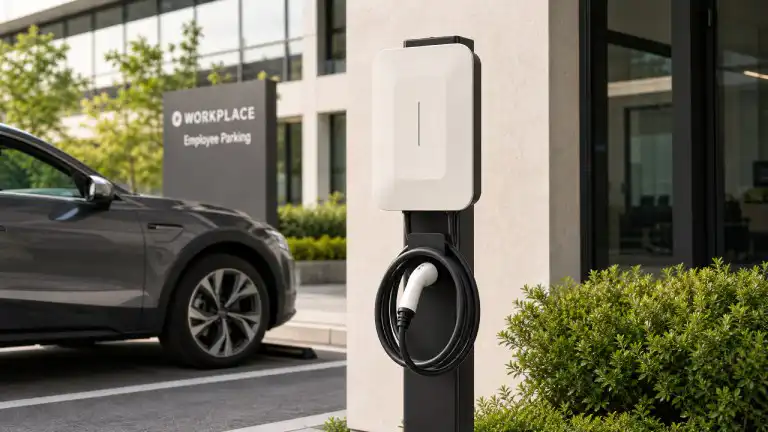
Different charging environments require different installation approaches. Our solutions can be adapted to different site layouts, available space, and installation requirements. DongYu provides Type 2 EV charger solutions with multiple installation and mounting options, enabling flexible deployment in homes, residential parking areas, commercial facilities, workplaces, and public charging locations.

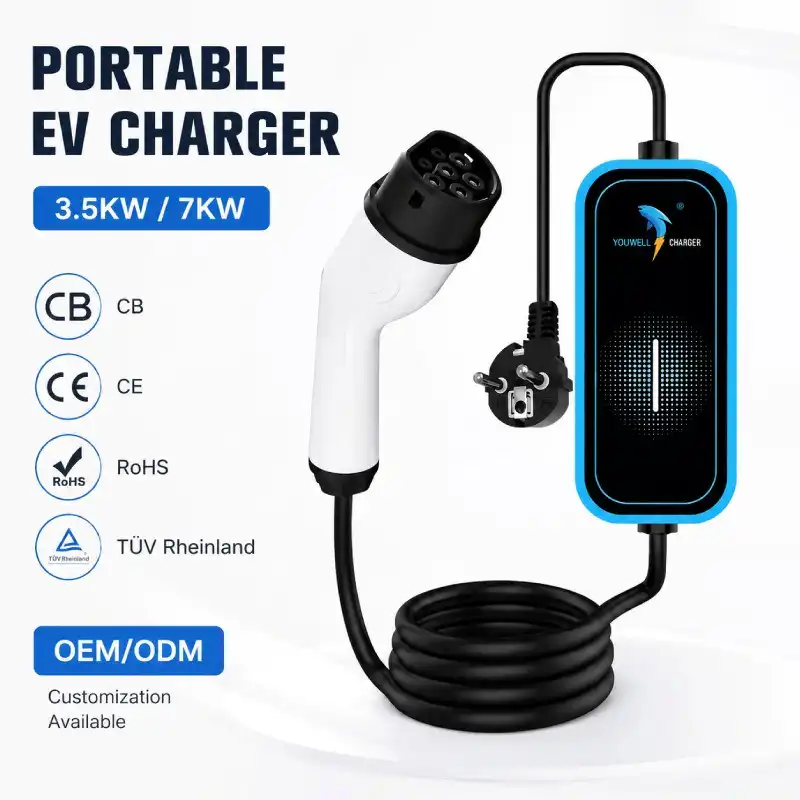
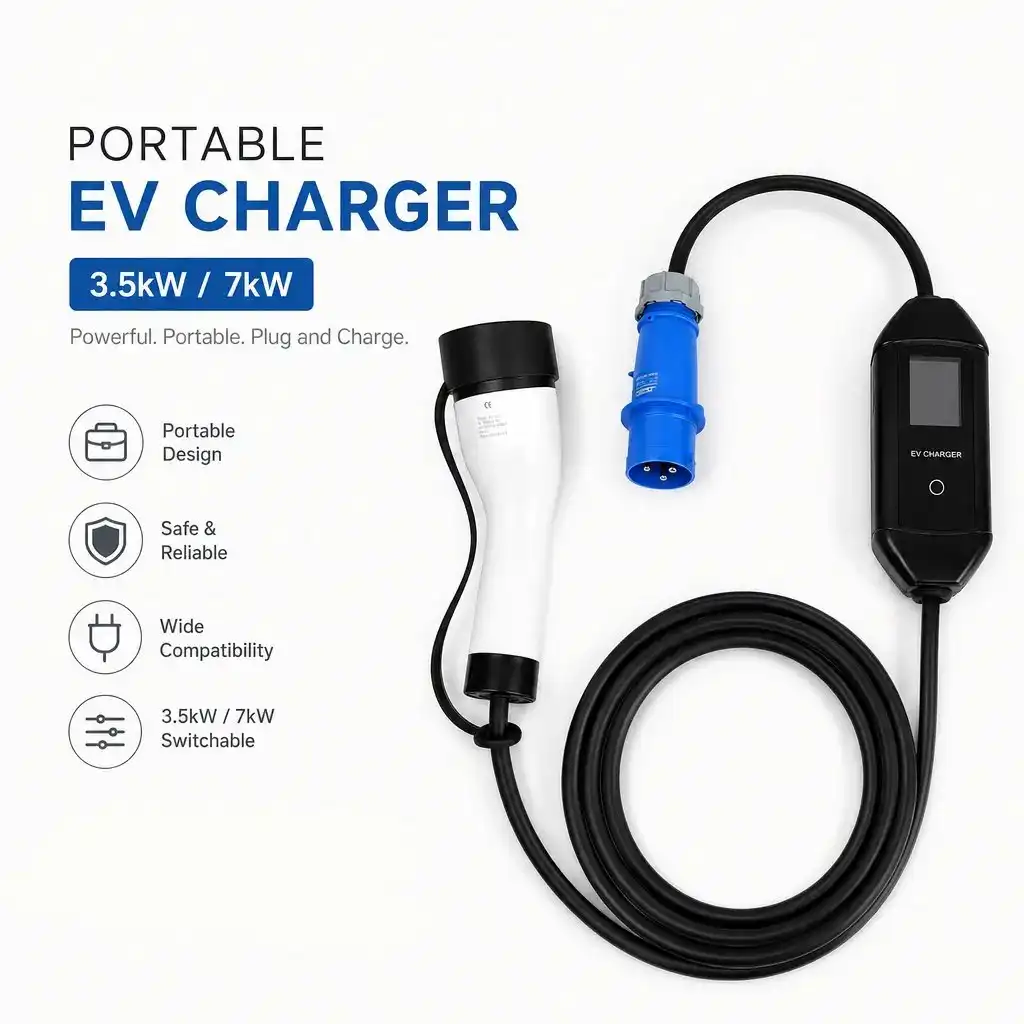
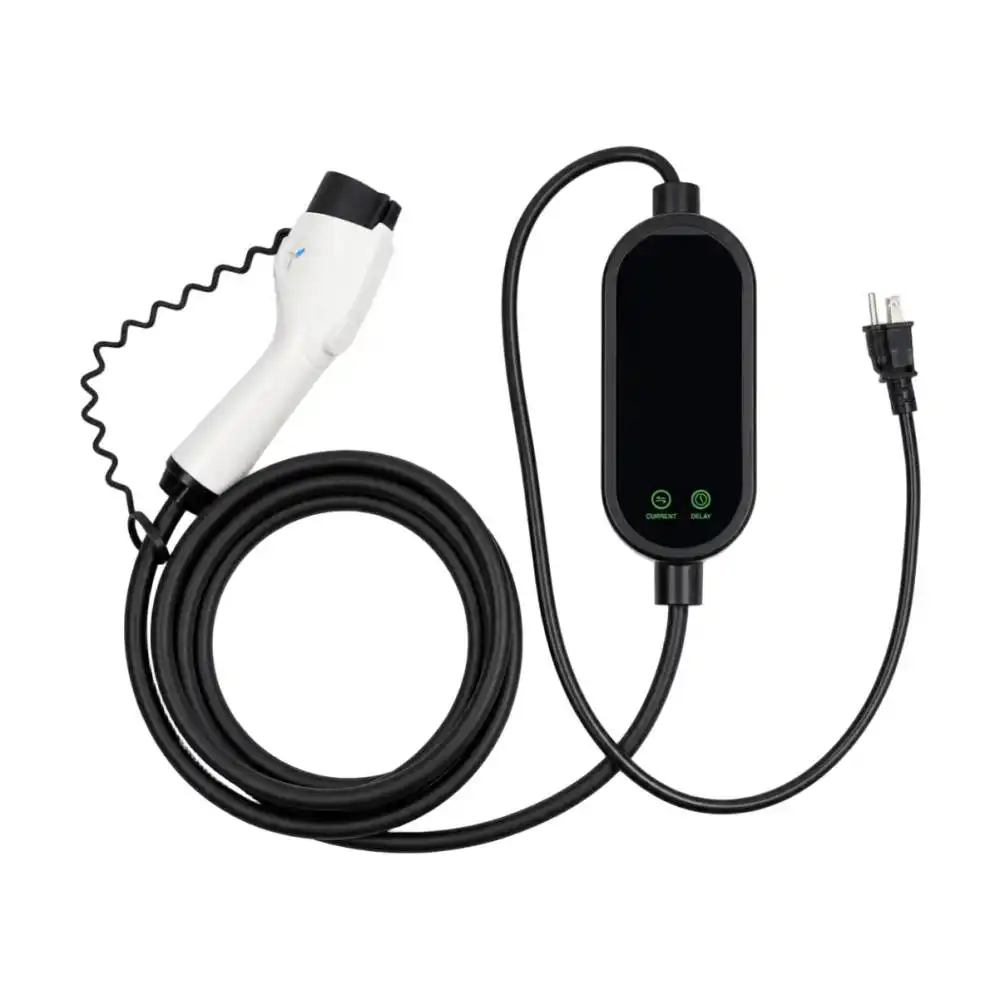
Portable Type 2 chargers require no fixed installation. Simply plug into a Schuko or CEE outlet and connect to the vehicle, making them ideal for temporary, mobile, or multi-location charging.
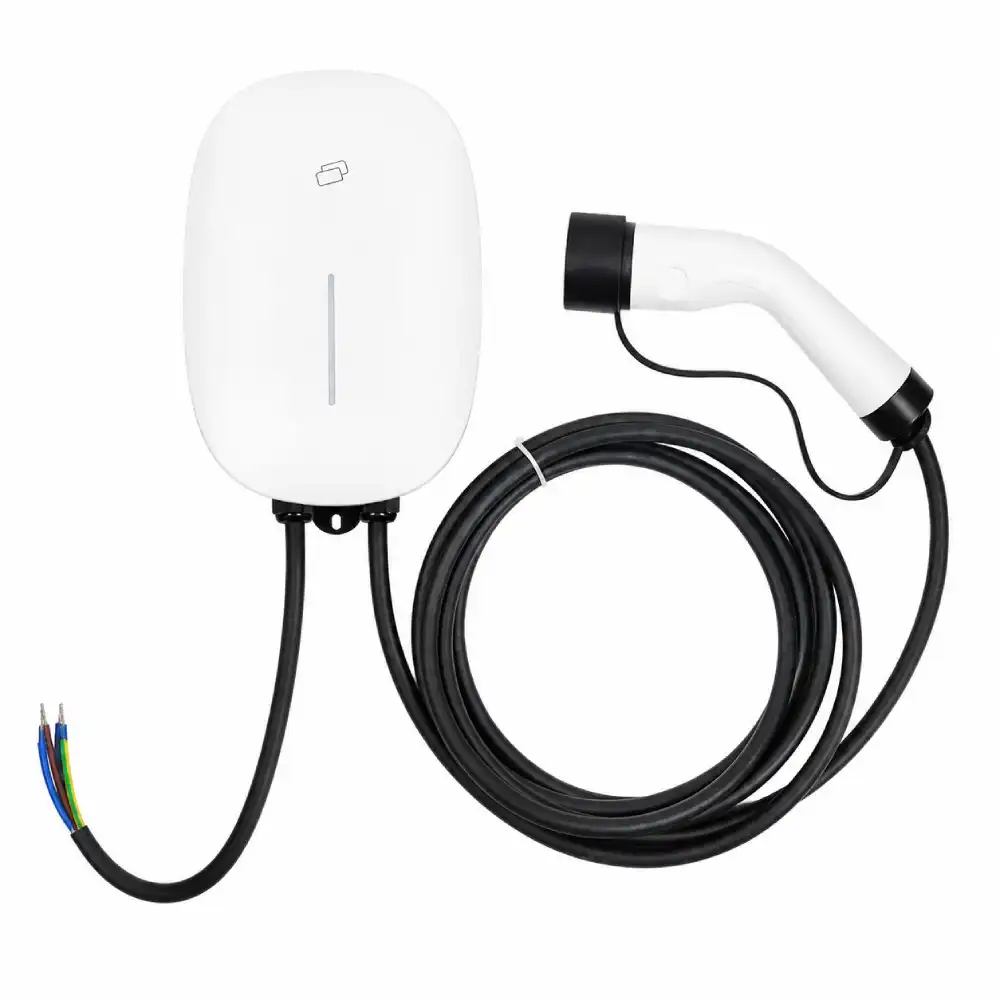
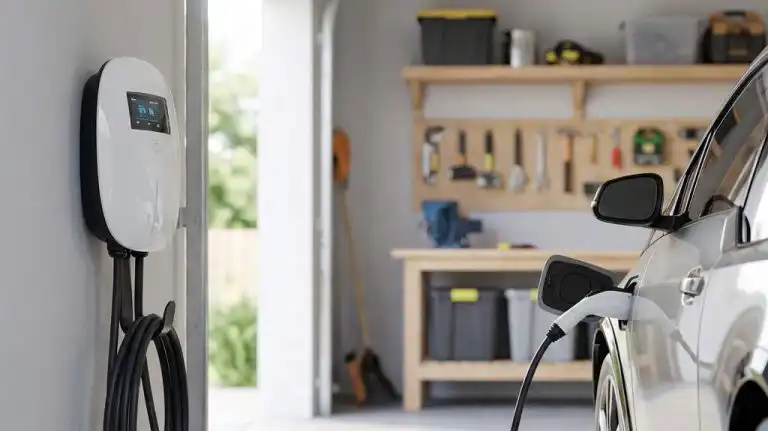
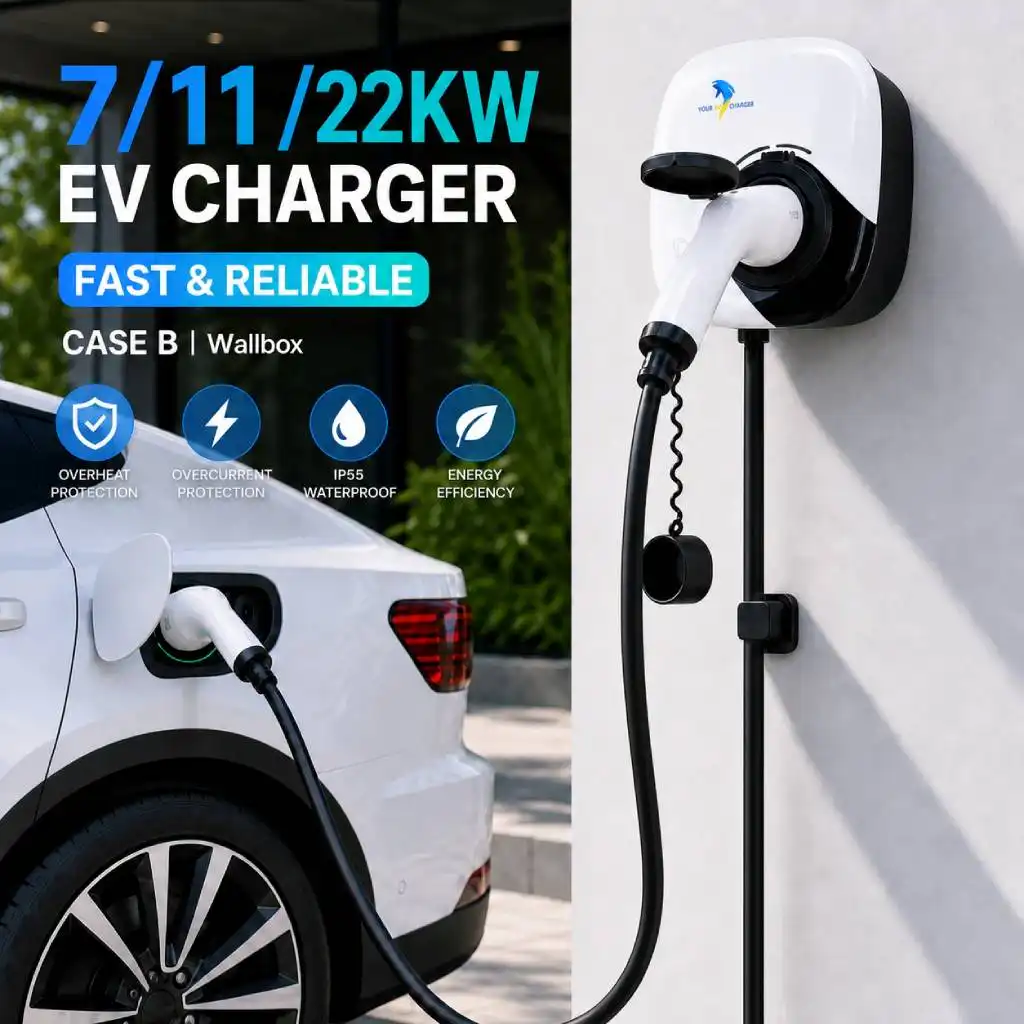
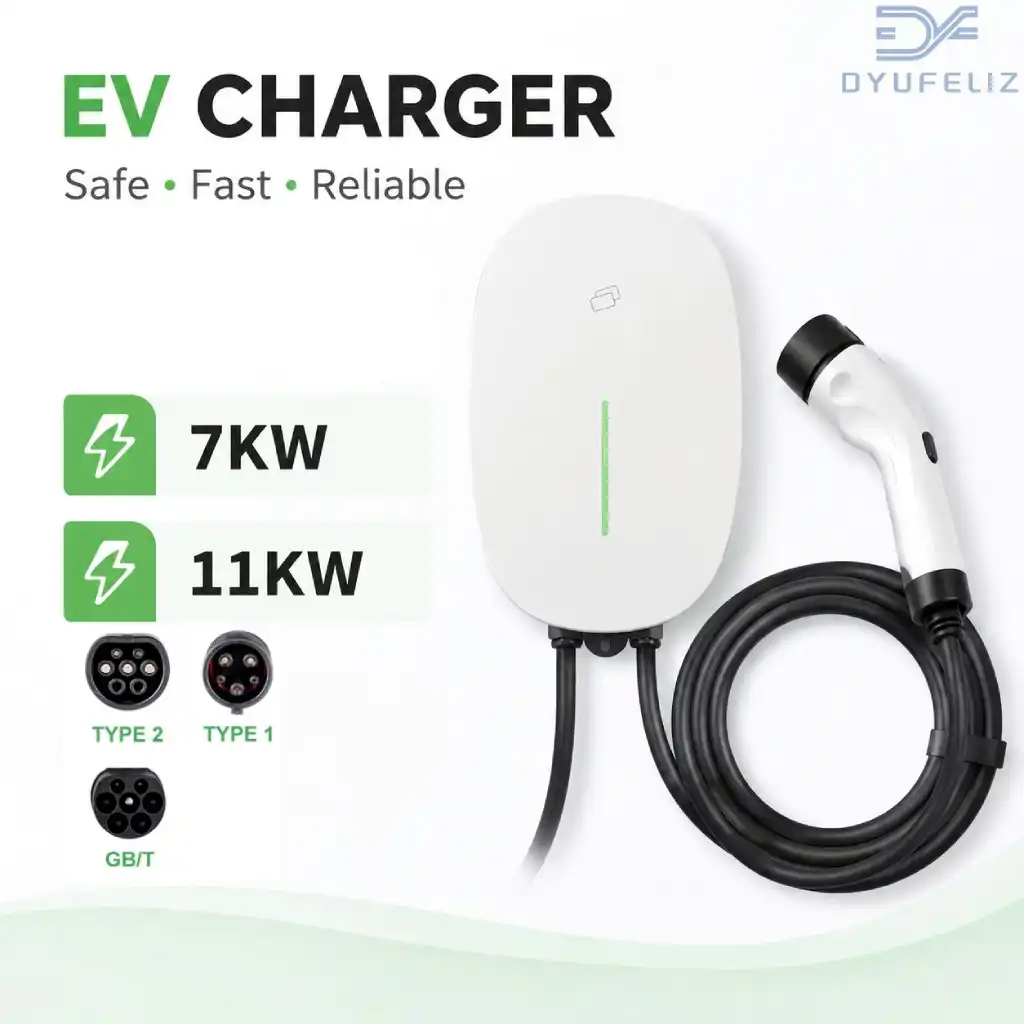
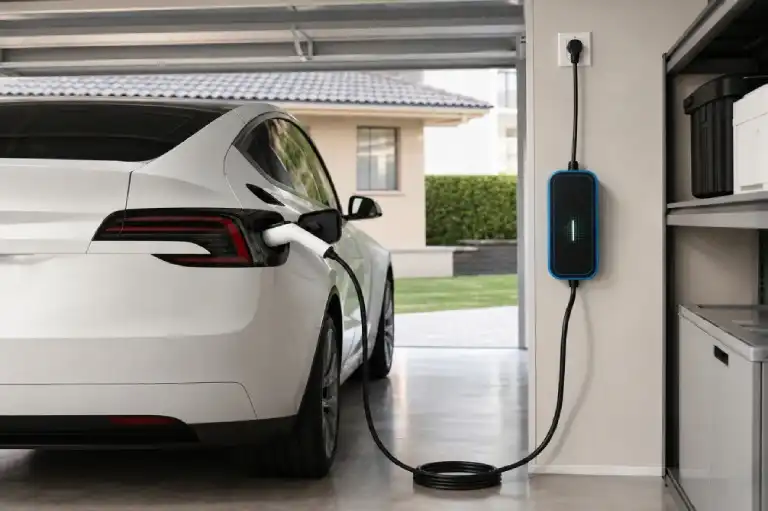
Wall-mounted Type 2 chargers are permanently fixed to a wall and connected to a dedicated 230 V or 400 V circuit, providing a clean, stable solution for homes, garages, and workplaces.
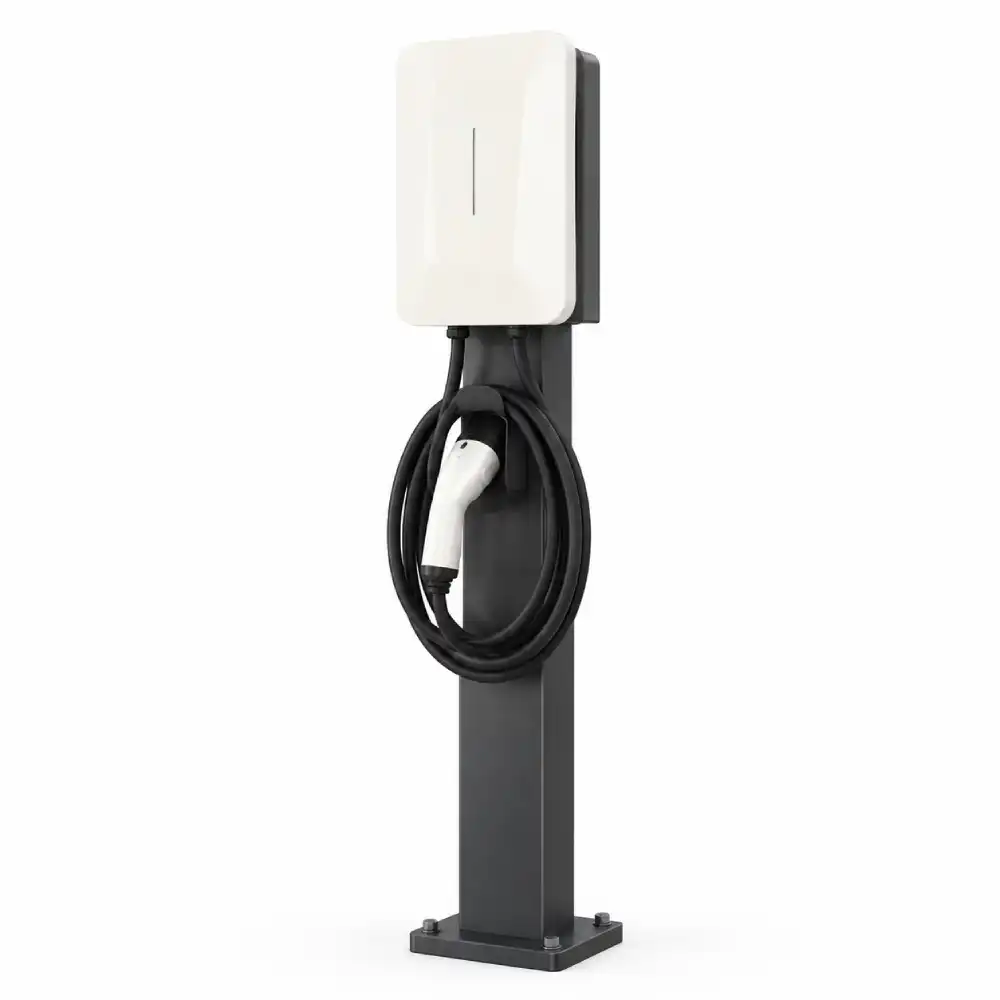
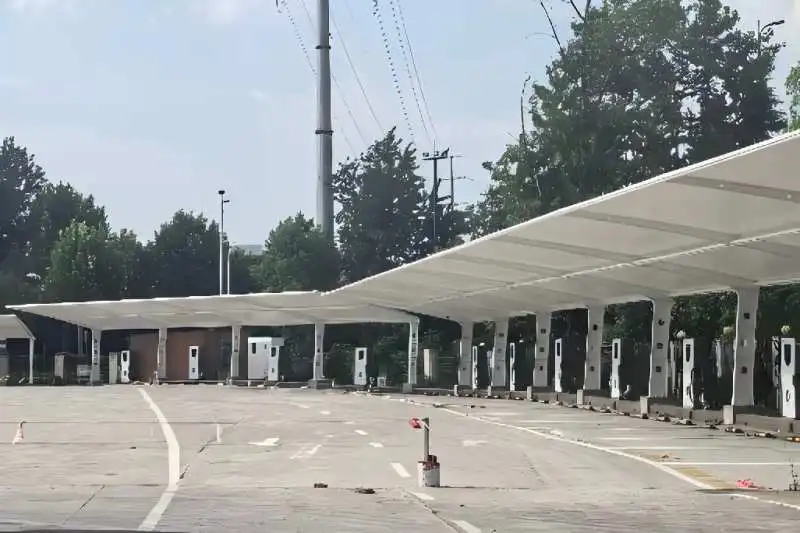
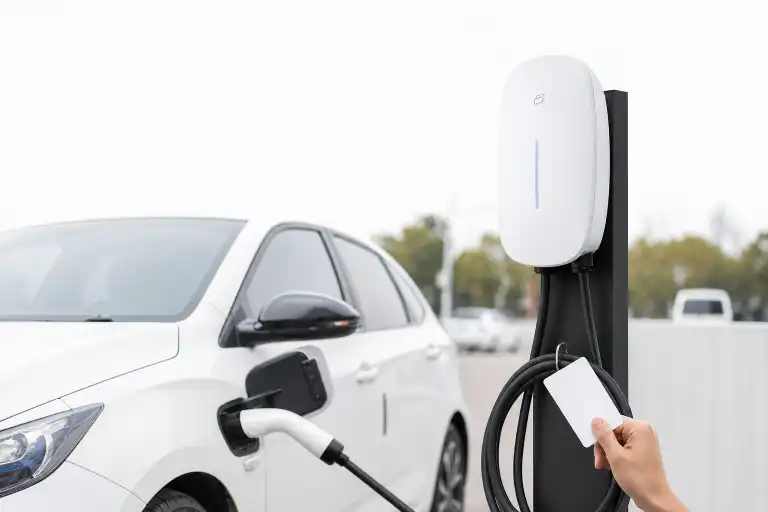
Pedestal-mounted Type 2 chargers are installed on columns, bollards, or dedicated foundations instead of walls. They suit open parking areas, public sites, and depots where wall mounting is unavailable.
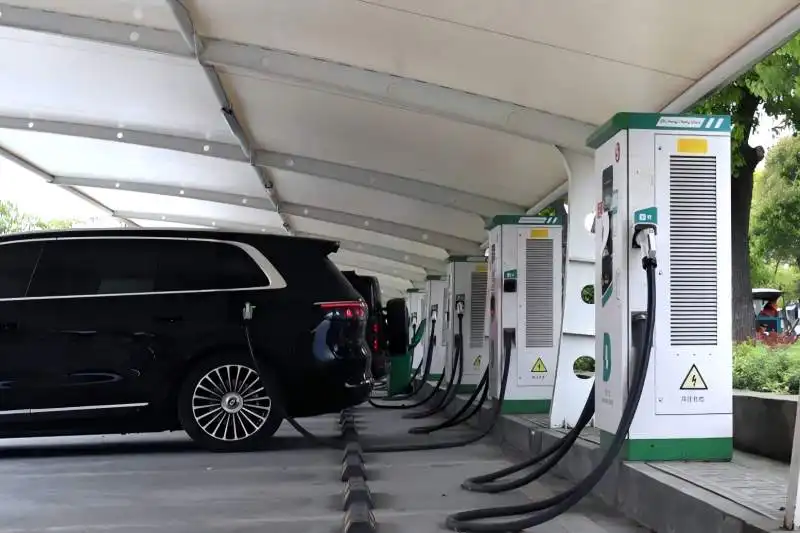
One supplier covers the whole range: 3.5 kW portable units, 7 and 11 kW wallboxes, 22 kW commercial units and single or twin-outlet pedestals — all sharing one firmware base and one connector tooling set.
Units are designed against IEC 61851-1 and IEC 62196-2 and documented for CE, RoHS and REACH, with UKCA variants, MID-certified metering and third-party test reports from TÜV, SGS or Intertek arranged per project.
Every unit passes 100% functional and high-voltage testing before packing, with batch reports covering control-pilot signalling, insulation resistance, temperature rise, IP65 water ingress, IK10 impact and 10,000-cycle connector endurance.
Distributors, installers and operators get a dedicated account engineer, technical documentation in local languages, spare-parts kits, firmware updates and container-level scheduling from a single production facility.
Volume pricing by container, market-specific SKUs, marketing assets, local warranty handling and a stocked spare-parts programme, so you can support installers without holding inventory.
Single-phase and three-phase units with matching accessories, clear wiring diagrams, commissioning support and a technical helpline, so a two-person crew completes more sites per week.
Backend-agnostic hardware tested against the major European OCPP platforms, MID-certified billing meters, remote firmware management and uptime-focused spare-part kits.
Dealer-branded home chargers matched to vehicle launch schedules, integration testing with the brand's own app, and delivery windows aligned to model roll-out.
DongYu delivers OEM and ODM Type 2 EV charger solutions with customizable hardware, software, branding, appearance, and specifications to meet diverse business and market requirements. Our customization capabilities support tailored Type 2 EV charger solutions for distributors, charging operators, energy companies, and other business partners.
Custom RAL body colours, silk-screened or embossed logos, moulded fascias and dedicated enclosure tooling for programmes above 1,000 units per year. The same tooling covers the portable housings and the wall-mounted enclosures, so a brand family stays visually consistent.
Cable lengths from 3 to 10 m, TPU jacket colours, straight or angled Type 2 plugs, custom connector housings and EN 50620 5 × 6 mm² three-phase assemblies — with Type 1, GB/T and CHAdeMO couplings produced from the same line.
OCPP 1.6J firmware can be private-labelled to your own app and network, with RFID UID whitelists, local load limits, delayed charging and configurable LED behaviour. We provide open API documentation and a test backend for integration sign-off.
Retail-ready cartons, multi-language manuals, energy labels, warranty cards and market-specific nameplates are prepared in-house. We localise documentation for English, French, Spanish, Portuguese and Japanese buyers and print barcodes to your GS1 or retailer requirements.
Send us a specification, a target price and a volume, and our engineers will return an OEM proposal
with tooling costs and lead times within five working days.
Type 2 is the mandated AC connector for public charging across the EU and UK, which makes compliance documentation as important as the hardware itself. DongYu designs to European requirements from the first prototype.
European AC charging is governed by IEC 61851-1 for the Mode 3 control pilot and IEC 62196-2 for the connector, with EN 50620 specifying the charging cable. Above that sit OCPP 1.6J and 2.0.1 for back-office communication and ISO 15118-2/-20 for plug-and-charge — a feature AFIR now expects on new public AC points.
IEC 61851-1
Mode 3 charging system and control pilot
IEC 62196-2
Type 2 connector and inlet geometry
EN 50620
EV charging cable construction and testing
OCPP 1.6J / 2.0.1
Back-office protocol and smart charging profiles
ISO 15118-2 / -20
Plug & Charge, vehicle-to-grid readiness
AFIR (EU) 2023/1804
Smart charging and ad-hoc payment on public points
A compliant unit carries CE marking under the Low Voltage Directive, the EMC Directive and — for Wi-Fi or 4G models — the Radio Equipment Directive, plus RoHS and REACH declarations. Billable charging adds a MID-certified Class B meter, and German installations require Eichrecht-compliant metering. UKCA marking covers Great Britain, and third-party reports from TÜV, SGS or Intertek can be supplied per order.
| Regulation / standard | What it covers |
| LVD 2014/35/EU | Electrical safety of mains-powered units |
| EMC 2014/30/EU | Emissions and immunity |
| RED 2014/53/EU | Wi-Fi, Bluetooth and 4G modules |
| RoHS 2011/65/EU · REACH | Material and substance restrictions |
| MID 2014/32/EU (EN 50470) | Billable energy metering, Class B |
| IEC 61851-1 · IEC 62196-2 · EN 50620 | Charging system, connector, charging cable |
| OCPP 1.6J / 2.0.1 · ISO 15118 | Back-office protocol, plug-and-charge |
| AFIR (EU) 2023/1804 · EPBD 2024/1275 | Smart charging and building pre-cabling |
Every battery-electric and plug-in hybrid sold in Europe since around 2018 carries a Type 2 inlet, and a CCS2-equipped car accepts a Type 2 cable for AC charging.
| Brand group | Examples with a Type 2 inlet |
| Tesla | Model 3, Model Y, Model S, Model X (European builds) |
| Volkswagen Group | ID.3, ID.4, ID.7, ID. Buzz, Škoda Enyaq, Cupra Born, Audi Q4 e-tron |
| BMW & MINI | i4, i5, iX1, iX3, Cooper SE, Countryman E |
| Mercedes-Benz | EQA, EQB, EQC, EQE, EQS |
| Stellantis | Peugeot e-208, Opel Corsa-e, Citroën ë-C4, Fiat 500e, Astra Electric |
| Renault Group | Zoe, Megane E-Tech, Scenic E-Tech, Twingo E-Tech |
| Hyundai & Kia | Ioniq 5, Ioniq 6, Kona Electric, EV3, EV6, EV9, Niro EV |
| Volvo & Polestar | EX30, EX40, EC40, Polestar 2, Polestar 4 |
| Nissan | Leaf (2018-on EU), Ariya, Townstar EV |
| Chinese brands in Europe | BYD Atto 3, Dolphin, Seal; MG4, MG5; ORA 03; NIO; XPeng |
Different parking contexts create different buying criteria. DongYu configures Type 2 EV charger solutions for each application segment from the same portable and wall-mounted families, with optional pole mounting for sites that have no suitable wall.
Most European homes run a 100 A single-phase board with no spare capacity for a second 32 A circuit. Our 7 kW wallbox draws 32 A from one existing circuit and includes dynamic load balancing, so a 22 kW load at home never trips the main fuse.
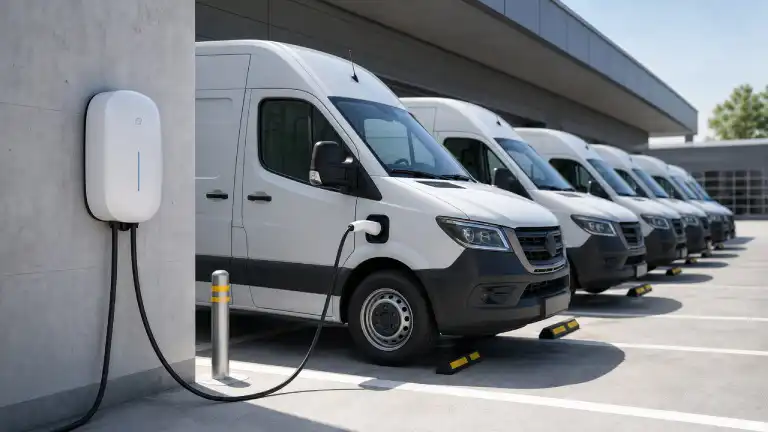
Forty vans returning at 18:00 would overload the site transformer if every bay charged at a full 22 kW. Depot columns share a dynamic load management controller that spreads the available capacity across the fleet overnight, restoring 22 kW per outlet as demand falls.
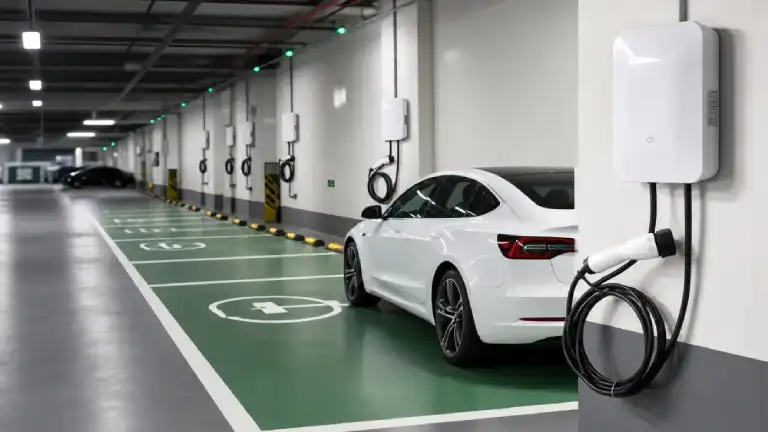
Workplaces must bill or reimburse individual drivers without adding a metering contractor to every bay. Each 11–22 kW unit meters every session with a MID-certified meter, authenticates drivers by RFID or app, and reports usage over OCPP 1.6J to your billing platform.
Guests arrive once and should not have to download an app or open an account before they can plug in. Destination stations run in plug-and-charge or RFID guest mode, with tariffs set per property and enclosures finished in your own brand colours.
A type 2 EV charger is AC charging equipment built around the IEC 62196-2 Type 2 connector — a seven-pin plug that carries single-phase or three-phase power at up to 22 kW. It is the standard AC connector for Europe, so any EU-market EV can charge from one.
Type 2, Type 1 and CCS2 are connector standards. Type 2 is the seven-pin AC connector widely used in Europe, while Type 1 is a five-pin AC connector mainly used in North America. CCS2 adds two DC pins to the Type 2 interface for fast DC charging, while its AC charging function remains compatible with Type 2. DongYu offers Type 2, Type 1, GB/T and CHAdeMO configurations across the same enclosure platforms, supporting different regional charging requirements.
No. Type 2 describes the connector; Level 2 describes an AC power tier of roughly 7–22 kW. Most Level 2 chargers in Europe use a Type 2 connector, but a Level 2 unit can also carry a Type 1 connector in other markets.
Adapters exist, but they limit charging to 7.4 kW single-phase at best and bypass the vehicle’s locking mechanism, so they are not recommended for daily use. Where both formats must be served, specify a charger with a Type 2 socket.
7 kW is right for most single-phase European homes and adds around 40 km of range per hour. Choose 11 kW if the property has a three-phase supply; 22 kW is rarely worth the cabling cost at home.
Yes. Units are designed to IEC 61851-1 and IEC 62196-2 and supplied with CE, RoHS and REACH documentation. UKCA variants, MID-certified metering and TÜV or SGS test reports are available per order.