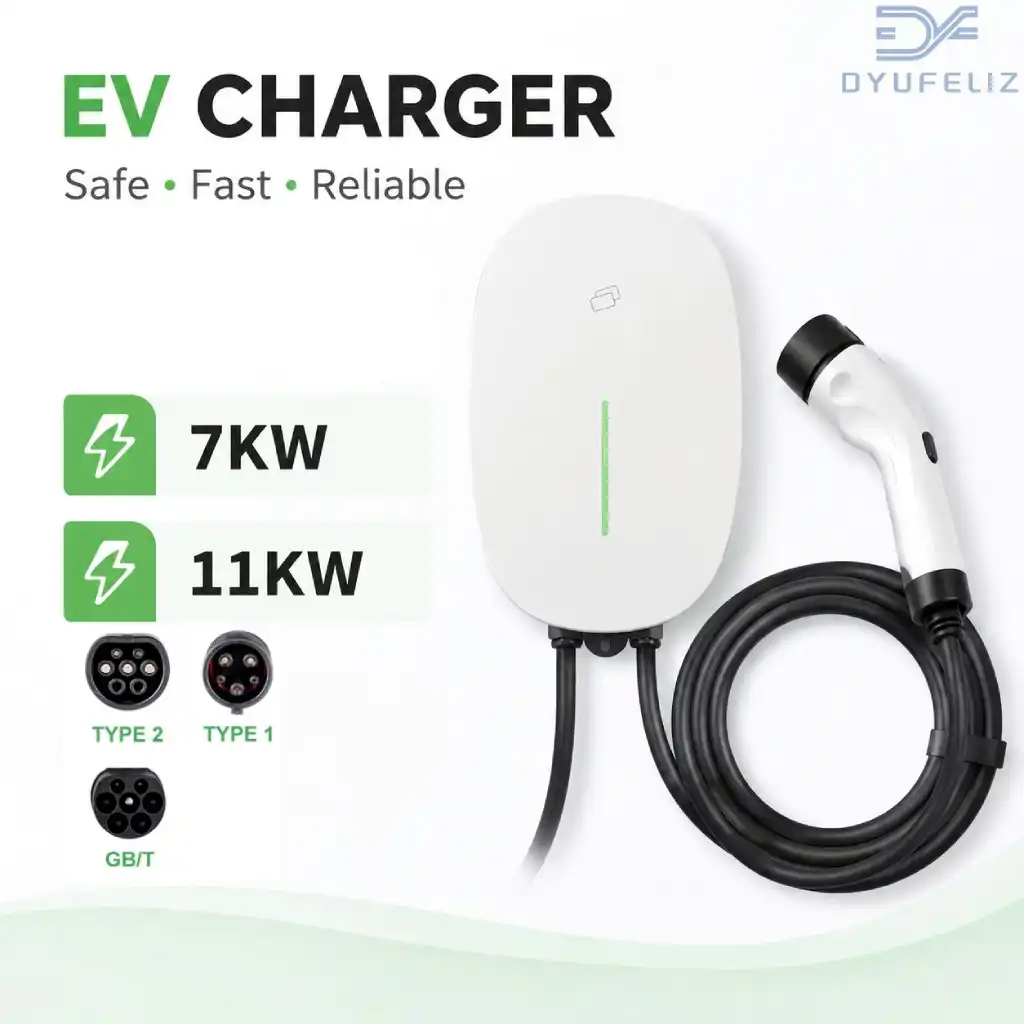
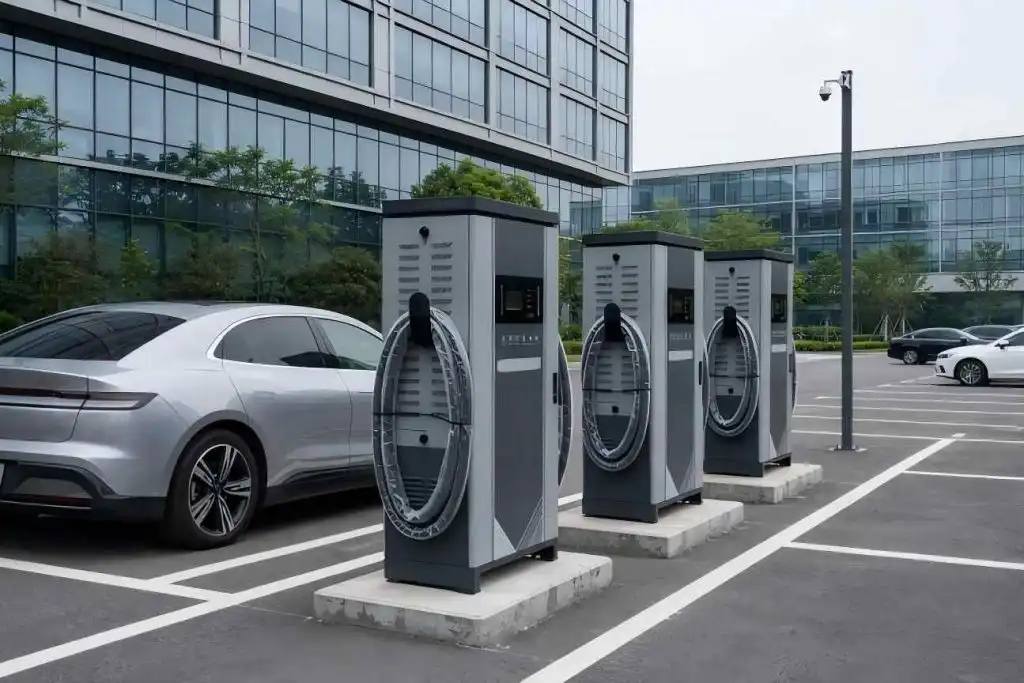
A hotel is the easiest place to charge a car: guests arrive in the evening and leave in the morning, which is exactly the profile AC charging is designed for. A handful of 7-22 kW bays covers most properties; DC is added only where turnover or premium service demands it.
DongYu supplies the whole stack for hospitality — wall-mounted AC chargers with RFID for guest bays, compact 20-30 kW DC units for valet and VIP top-ups, and 40-160 kW floor mounted stations for destination parking and events. Everything runs on OCPP 1.6J, so sessions can be allocated to a room, a folio or a guest account.
DongYu offers a complete range of EV charging stations for hotels, from 7–22 kW AC chargers for overnight guest parking to 20–30 kW DC chargers for valet and VIP services, plus 40–160 kW DC fast chargers for high-turnover parking and events. Choose the right charging solution based on your hotel’s parking layout, guest dwell time, and charging demand.
Hotel EV charging needs to do more than deliver power.
Restrict charging to registered guests and staff, and link each session to a room, cost centre or guest account for clean billing.
Open-protocol chargers connect to most charging management platforms, so session data can feed guest apps, PMS or a loyalty programme.
Share spare site capacity across all connected chargers, so cars still fill overnight without threatening the main fuse or forcing a supply upgrade.
Fixed-power, fixed-amount and fixed-time modes plus 0-8 h delayed starts shift demand to the cheapest hours or on-site generation.
Sealed IP55 enclosures and quiet forced-air cooling suit posts near guest rooms and arrival areas.
Live status, energy delivered, session history and fault codes are visible remotely, with a 12-month full-unit warranty and bilingual support.
Two charging levels matter to a hotel. Level 2 AC matches the guest who arrives at six and leaves at eight; DC fast charging covers the valet, the drive-in visitor and the shuttle that has to turn around in half an hour. Almost every property needs the first, and the second only where turnover or premium service justifies the extra electrical capacity.
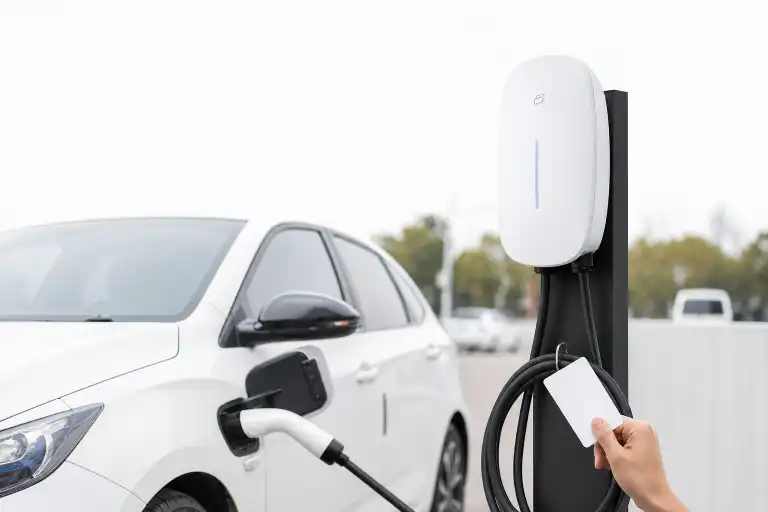
Level 2 · AC
A 7 kW Level 2 charger adds roughly 40 km of range per hour, which is why it fits hotel dwell time so well: a car plugged in at 19:00 is full before breakfast. DongYu AC chargers run at 3.5 kW, 7 kW, 11 kW or 22 kW from a single-phase 230 V or three-phase 400 V supply, with Type 1, Type 2 or GB/T connectors.
Level 3 · DC
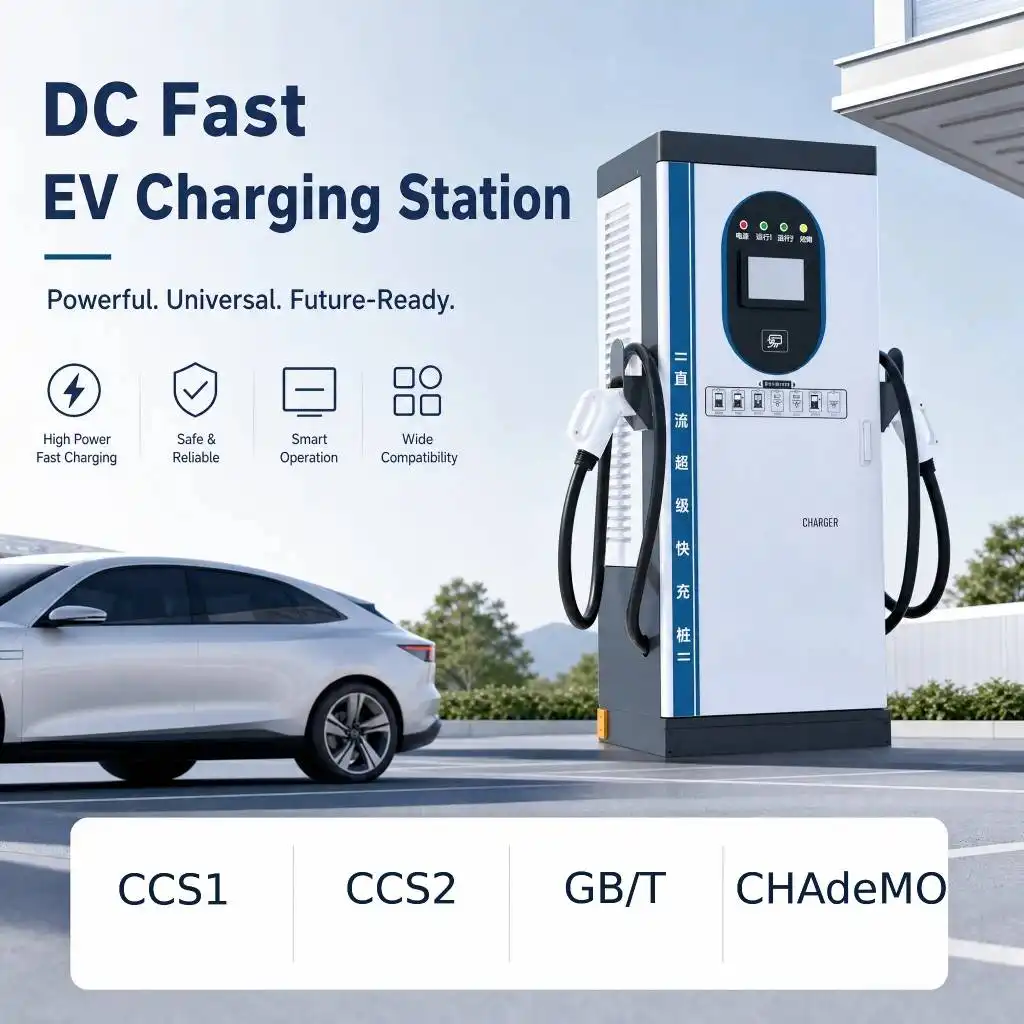
Level 3 means the rectifier sits inside the station, so the car's onboard charger stops being the bottleneck. DongYu DC stations span 20 kW to 160 kW with output from DC 200 V to 1000 V and up to 80 A per gun, in single-gun and double-gun versions with CCS1, CCS2, GB/T and CHAdeMO connectors.
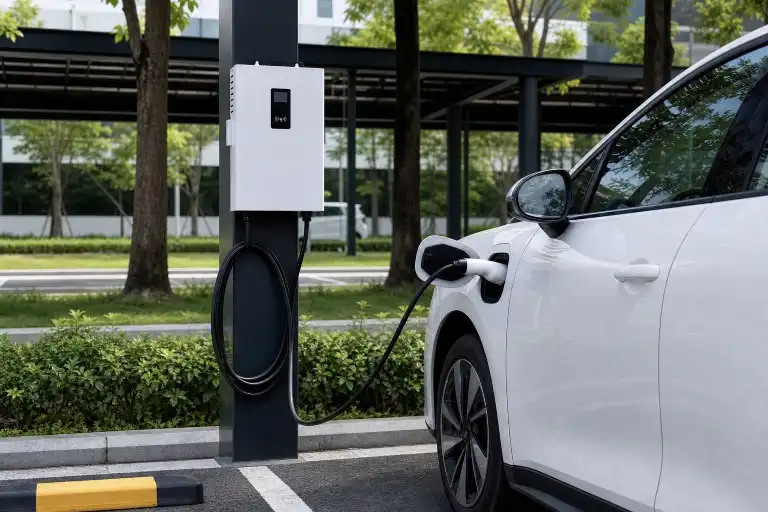
The mounting form decides where a charger can stand and what it costs to install. Most hotels need more than one: wall-mounted units along the guest bays, pedestal posts in the open car park and arrival court, and floor standing cabinets wherever valet or destination charging has to be fast.
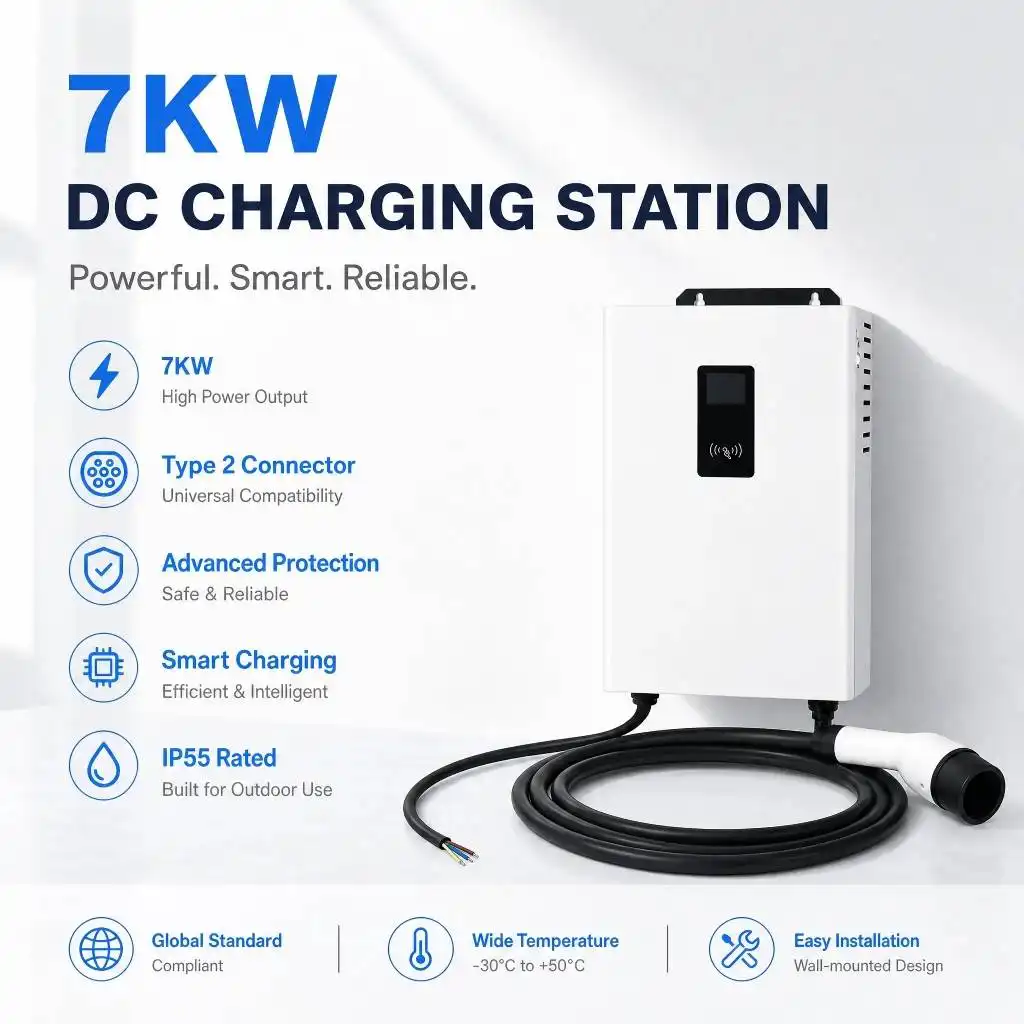
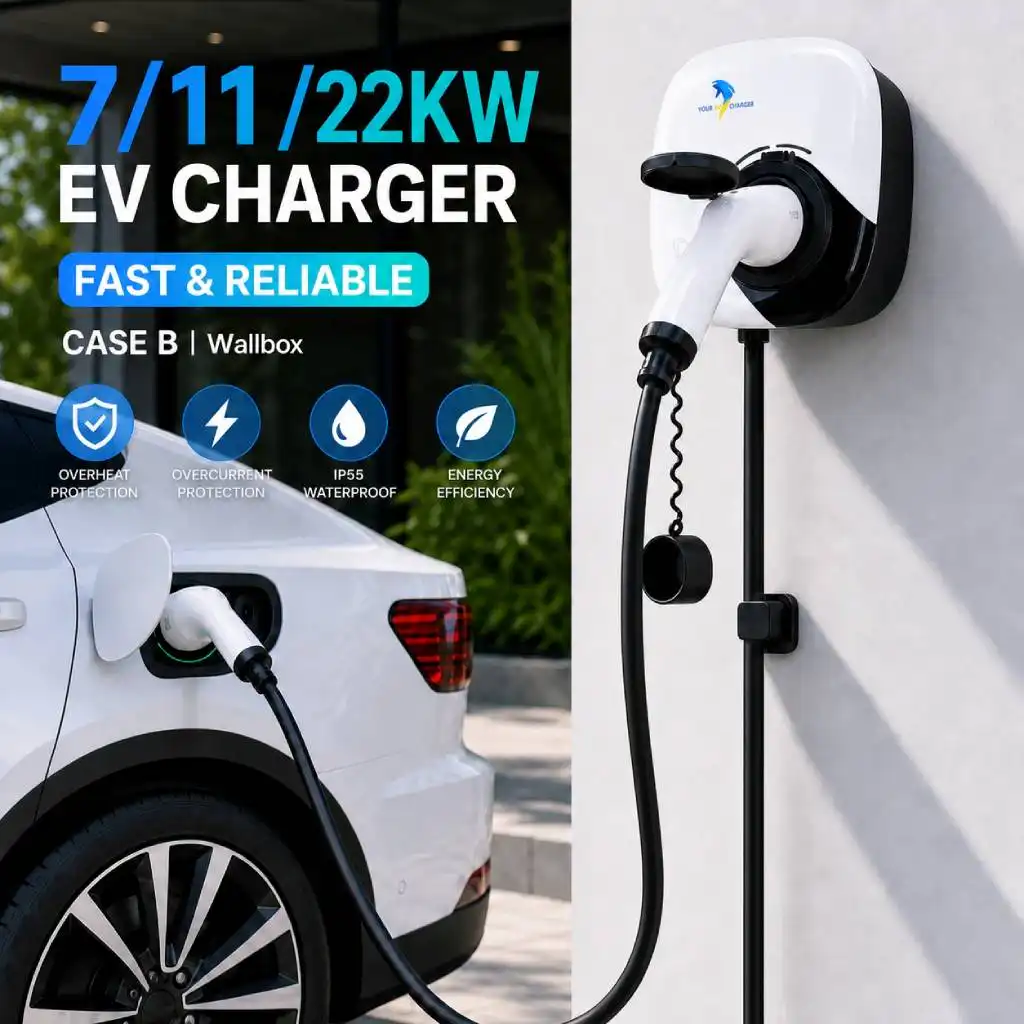
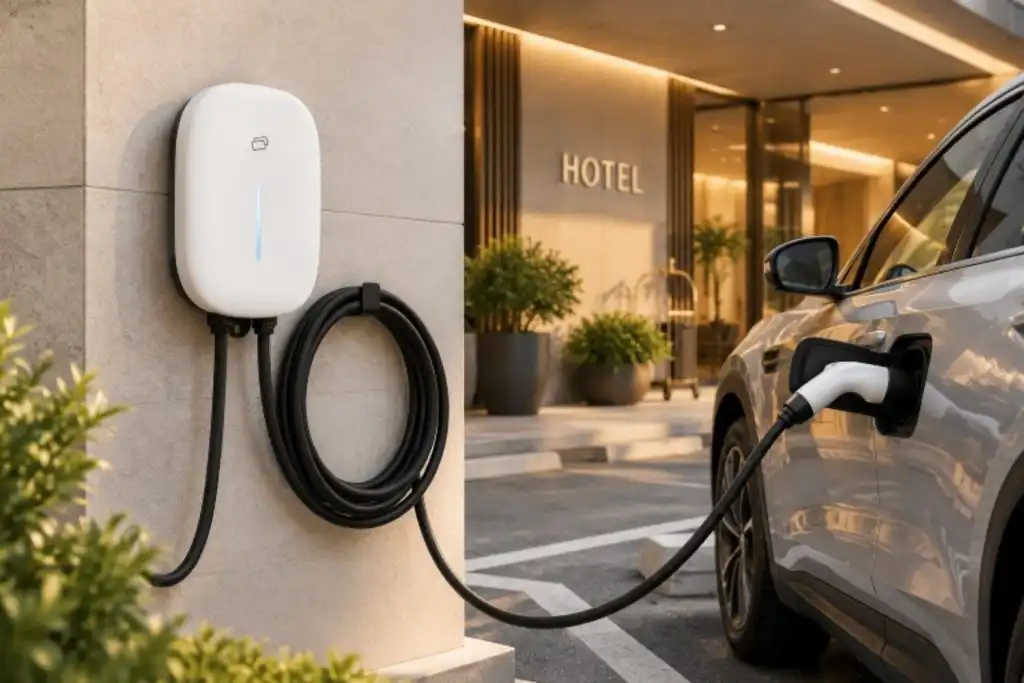
The default for hotel guest parking, because the building is already there and the cable run is short. DongYu wall boxes cover 7 kW, 11 kW and 22 kW in Type 1, Type 2 and GB/T, sealed to IP55 in a UL94-V0 enclosure, and they fix to a garage wall, a service column or the side of a carport — no ground works and no lost bay.
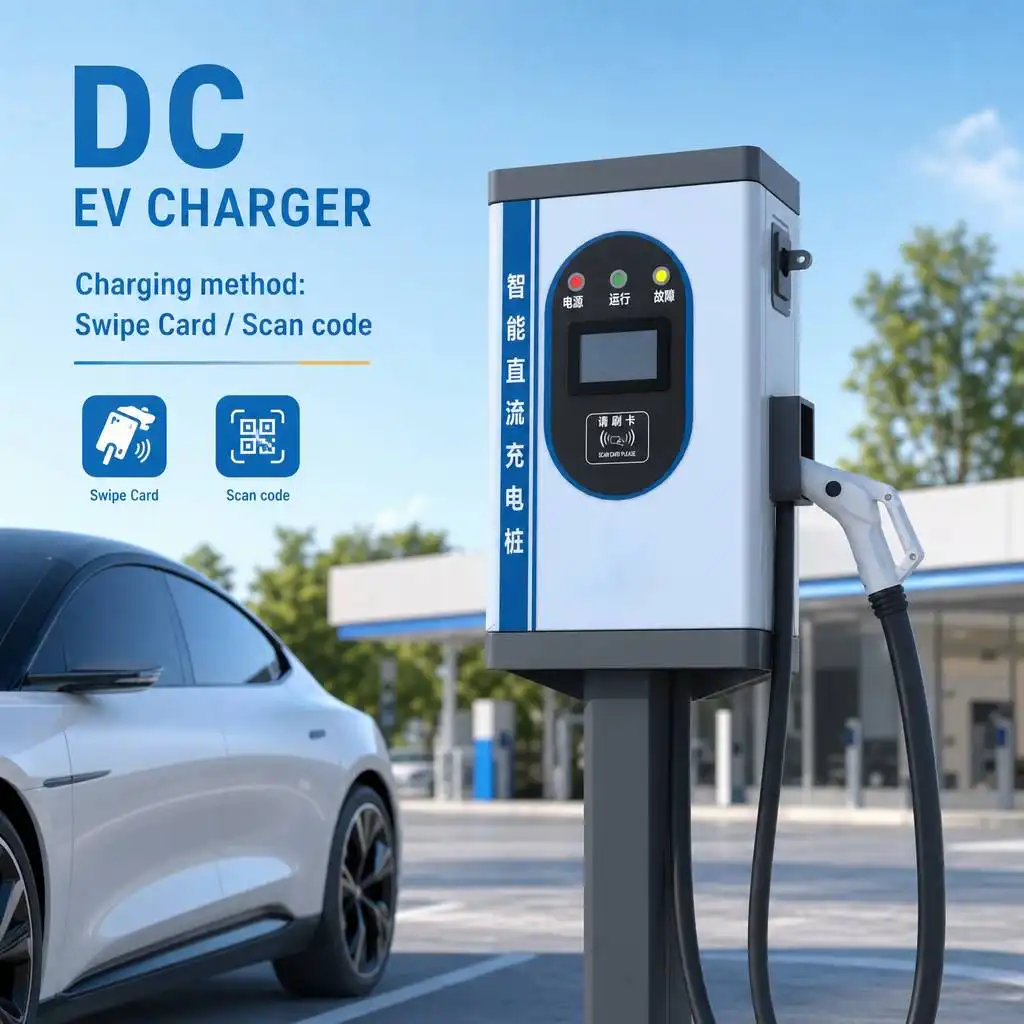
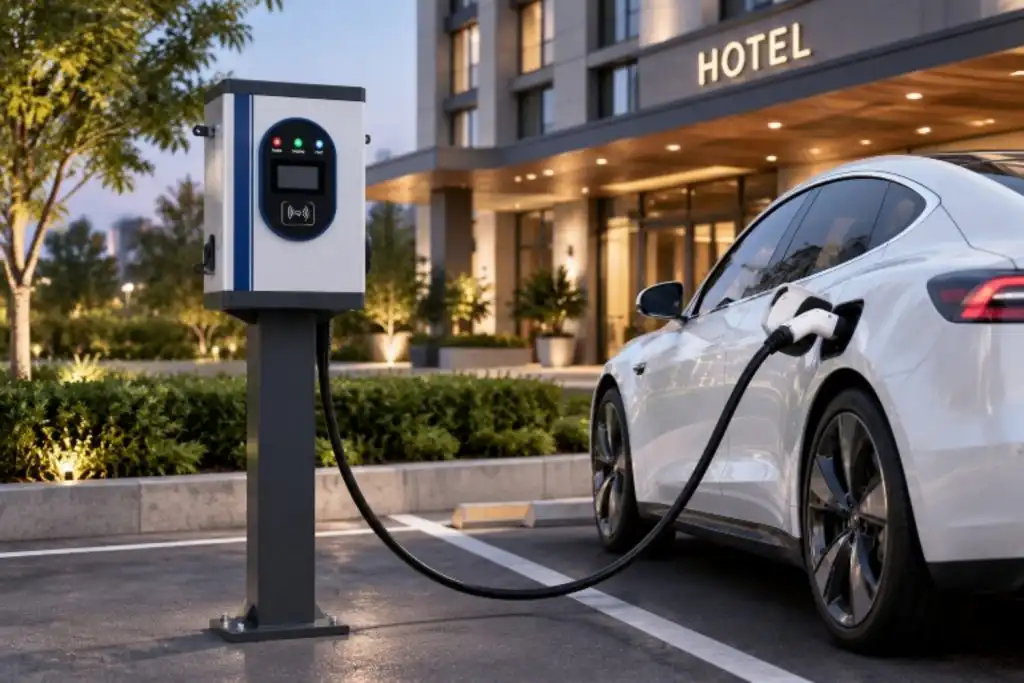
An arrival court or open car park rarely has a wall in the right place, which is where a pedestal post earns its keep. The same charging module sits on a free-standing column bolted to a concrete base, so bays follow the guest journey instead of the building. Hotel posts also take signage or an advertising panel above the module.
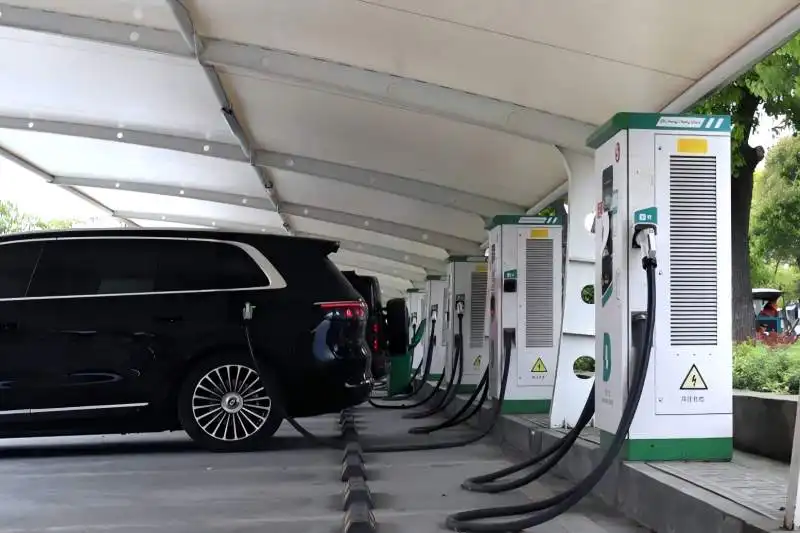
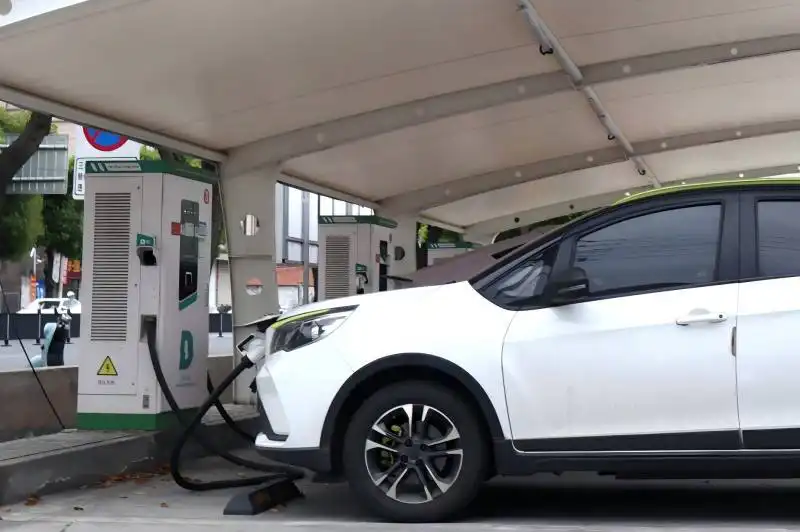
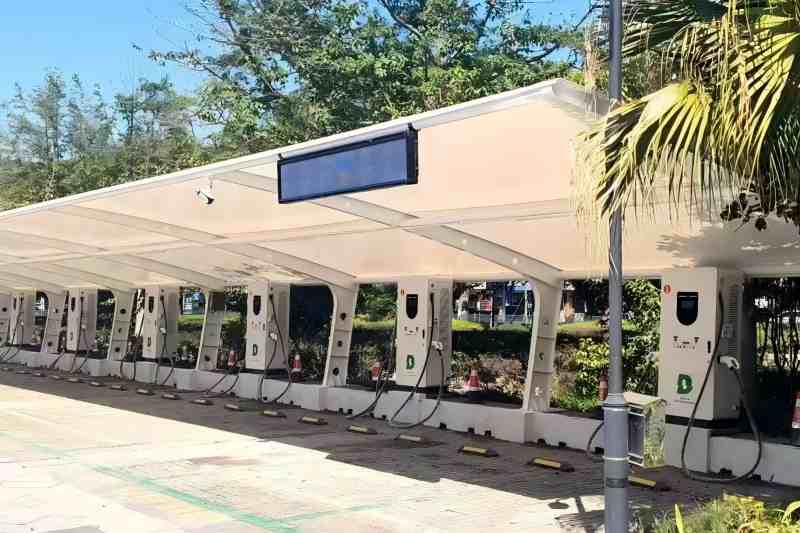
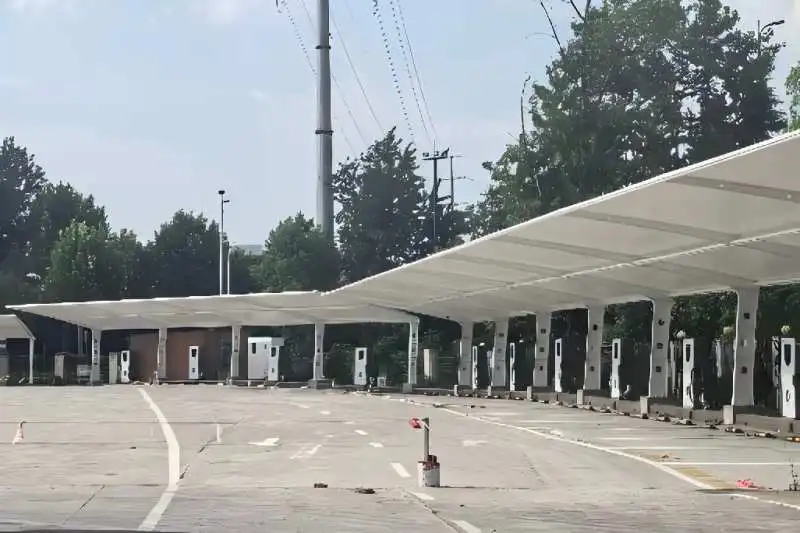
Where a hotel sells valet charging, a drive-in dining bay or a shuttle service, the station has to be fast enough that the car is ready before the guest is. Floor standing cabinets carry the rectifier, cooling and cable management that DC power needs, from 20 kW and 30 kW compact columns up to 40–160 kW dual-gun units.
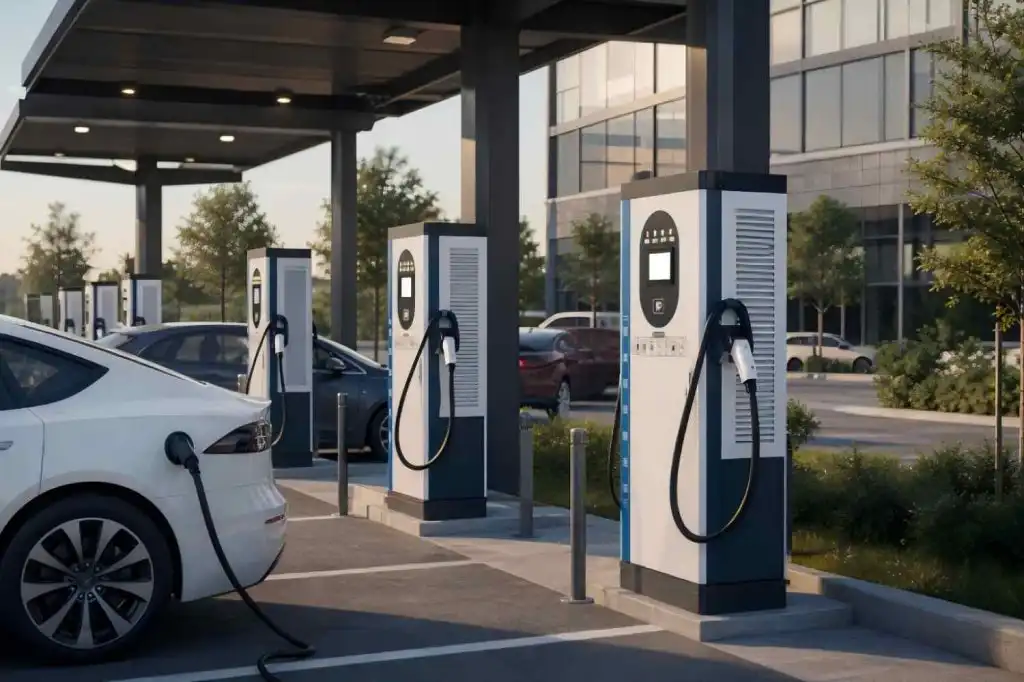
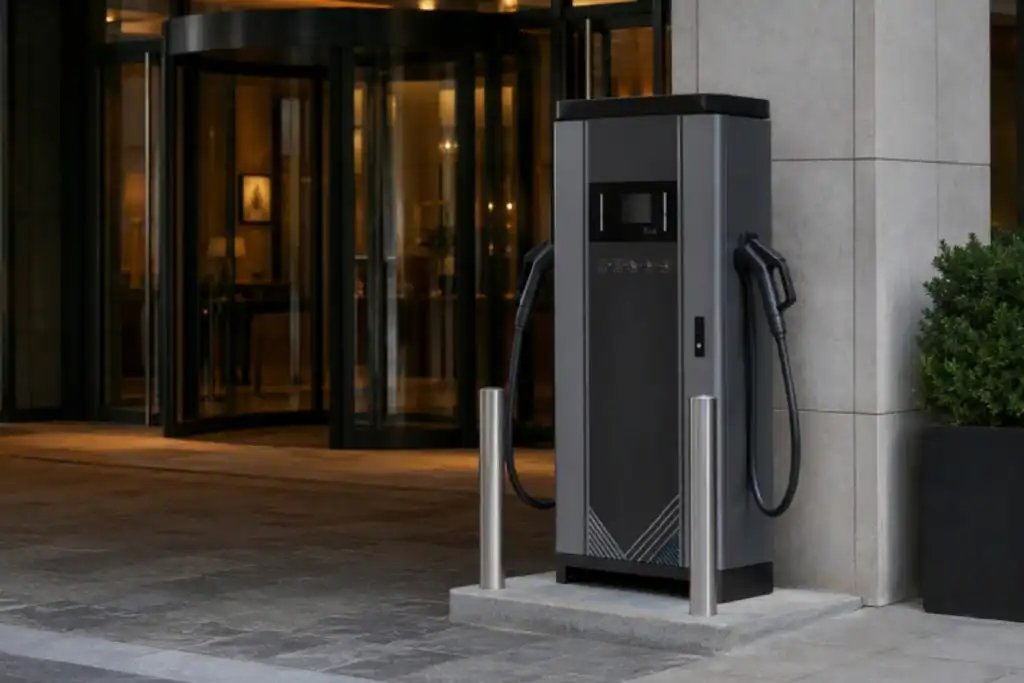
Single-port units cost less per point and are simpler to load-balance, which suits designated guest bays where one car stays plugged in all night. Dual-port cabinets serve two vehicles from one enclosure, cutting cost per bay and forecourt clutter, and they are the practical choice above 40 kW DC.
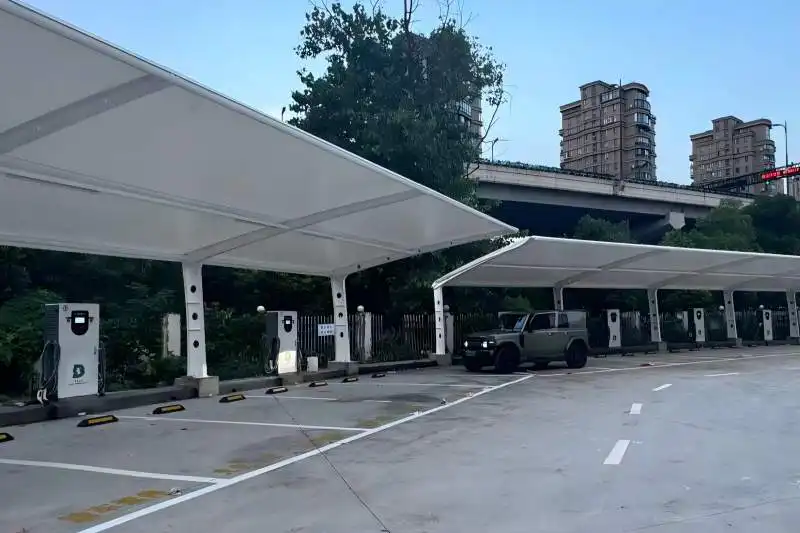
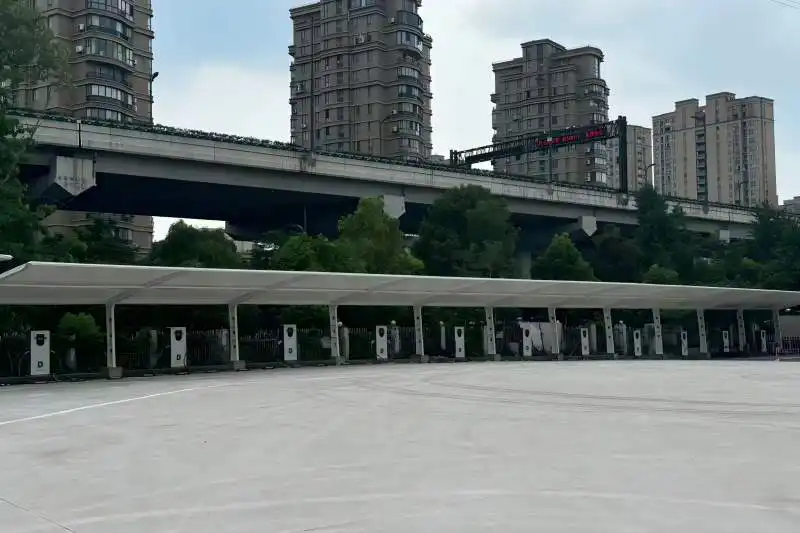
Plan the property as zones rather than one charger type.
Each zone has a different dwell time, and therefore a different power level.
| Hotel zone | Recommended charger | Power | Why it fits |
| Guest overnight parking | Wall-mounted AC with RFID | 7-22 kW | Matches overnight dwell; lowest cost per bay; RFID allocates the session to a room or folio |
| Valet / VIP arrival court | Wall or pedestal DC | 20-30 kW | 30-60 minute top-up without a full DC hub; fits a compact 1551 mm column with bottom entry |
| Drive-up / destination & events | Floor mounted DC, double gun | 40-160 kW | Short-dwell visitor throughput plus advertising screen revenue on the same footprint |
| Staff, shuttle & fleet | Wall-mounted AC | 7-11 kW | Scheduled charging and dynamic load balancing keep main-fuse demand under control |
| Car park / overflow bays | Portable Level 2 | 3.5-7 kW | Low-cost top-up where a dedicated circuit is not yet available; 8-32 A adjustable |
| Expansion / hub build-out | Floor mounted DC hub | 180-480 kW | Scales the same architecture when the property adds a public charging hub |
From site assessment and charger selection to installation, commissioning, and ongoing management, every hotel EV charging project requires careful planning.
01
Review bay counts, arrival flow, existing electrical capacity and the route from the main board to the car park or arrival court.
02
Set the ratio of guest AC bays to valet DC posts by room count and expected EV share, then confirm connector standard for your market.
03
Apply OEM branding, set RFID rules, tariffs and load-balancing limits, and approve a physical sample before volume production.
04
DongYu supports packaging, customs clearance and shipping for one-stop delivery, then helps commission the site onto your management platform.
Send your room count, available electrical capacity and target market. DongYu will come back with a recommended charger mix,
OEM branding options and a full quotation covering chargers, cables, accessories and packaging.
Portable and wall-mounted AC chargers from 7 kW to 22 kW, DC fast chargers to 480 kW, plus connectors, cables and adapters — one supplier for guest bays, the valet stand and a future hub.
A 12-month full-unit warranty on every charger, and OEM & ODM programmes covering logo, enclosure, power, connector, cable length and packaging.
Our Cixi, Ningbo factory integrates R&D, production and quality control across five production lines — and runs live charging projects of its own, so failures reach us first.
Over-load, ground, over/under-voltage, over-temperature and leakage protection with IP55 ratings, plus CE, CB, RoHS and TUV Mark alignment. Design follows IEC 61851-1 and IEC 62196-2.

Most properties start with AC bays sized to a share of their room count — for example one 7-22 kW bay per block of rooms or per set of premium suites — then add a 20-30 kW DC unit for valet or VIP use. DongYu engineers confirm the ratio against your supply capacity, room count and expected EV share.
AC is the natural fit for hotels because guests stay overnight and the car sits idle for hours. DC is added where turnover matters — valet, drive-in dining, events or a shuttle fleet — where a 30-60 minute top-up justifies the extra cost.
Yes. RFID authentication restricts charging to authorised users and can be linked to a driver, room or cost centre for individual billing. OCPP 1.6J connectivity lets sessions be reported to a guest app, PMS or loyalty programme.
Dynamic load balancing measures total site demand and shares spare capacity across all connected chargers, so cars still fill overnight while the main fuse is never threatened. This frequently removes the need for an expensive supply upgrade.
OEM and ODM support covers logo and branding, enclosure appearance, output power, connector and plug type, cable length, packaging and firmware defaults, with a physical sample approved before volume production.
Every charger carries a 12-month full-unit warranty covering free repair and spare parts for non-man-made damage, supported in Chinese and English. The minimum order quantity is 50 units for AC chargers and 1 unit for DC chargers, and lead time is typically around 30 days after specification approval.