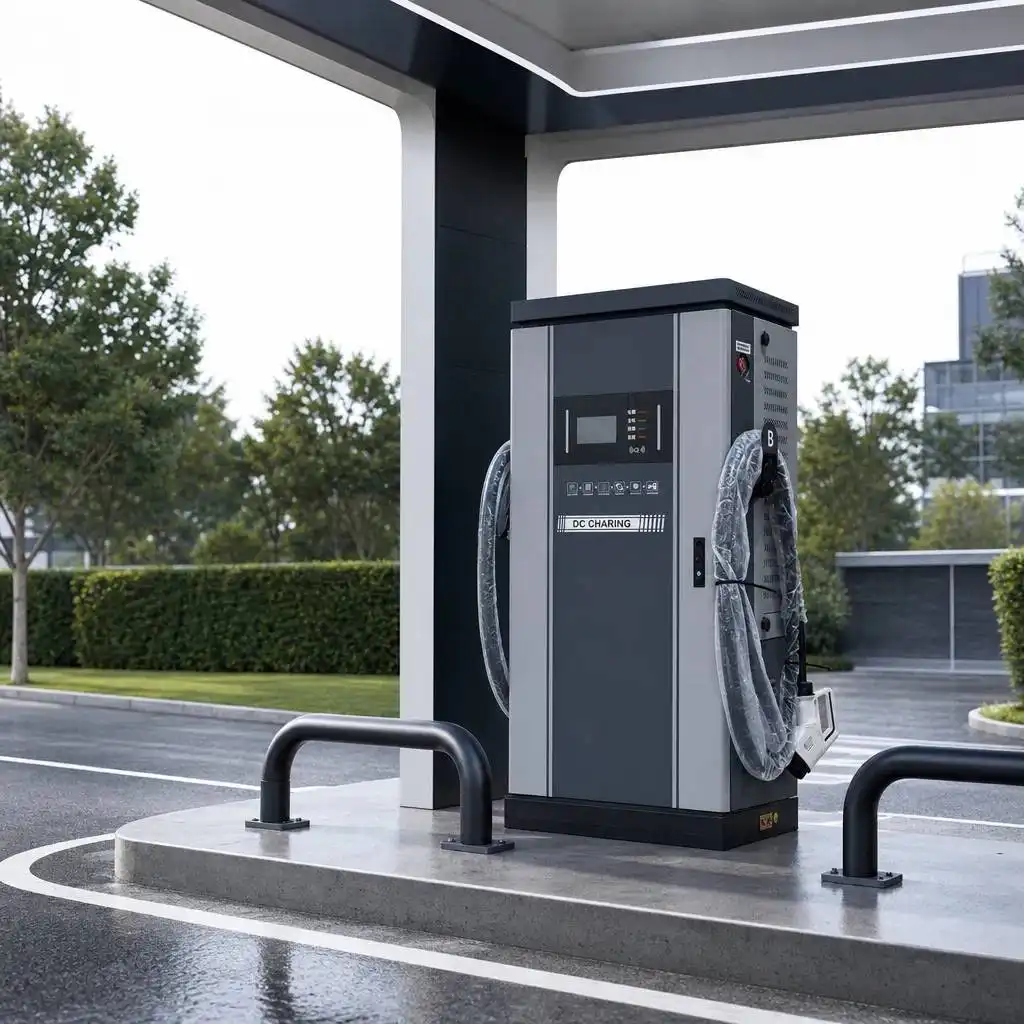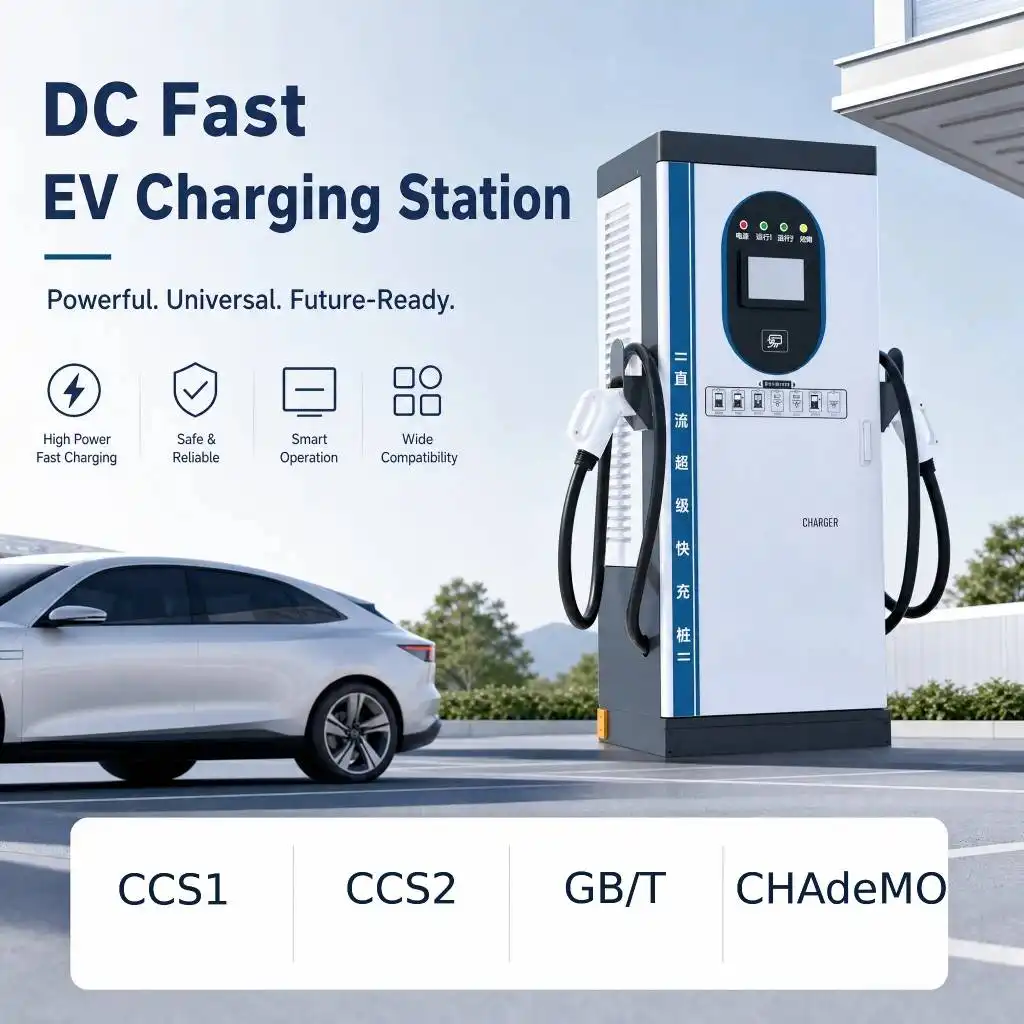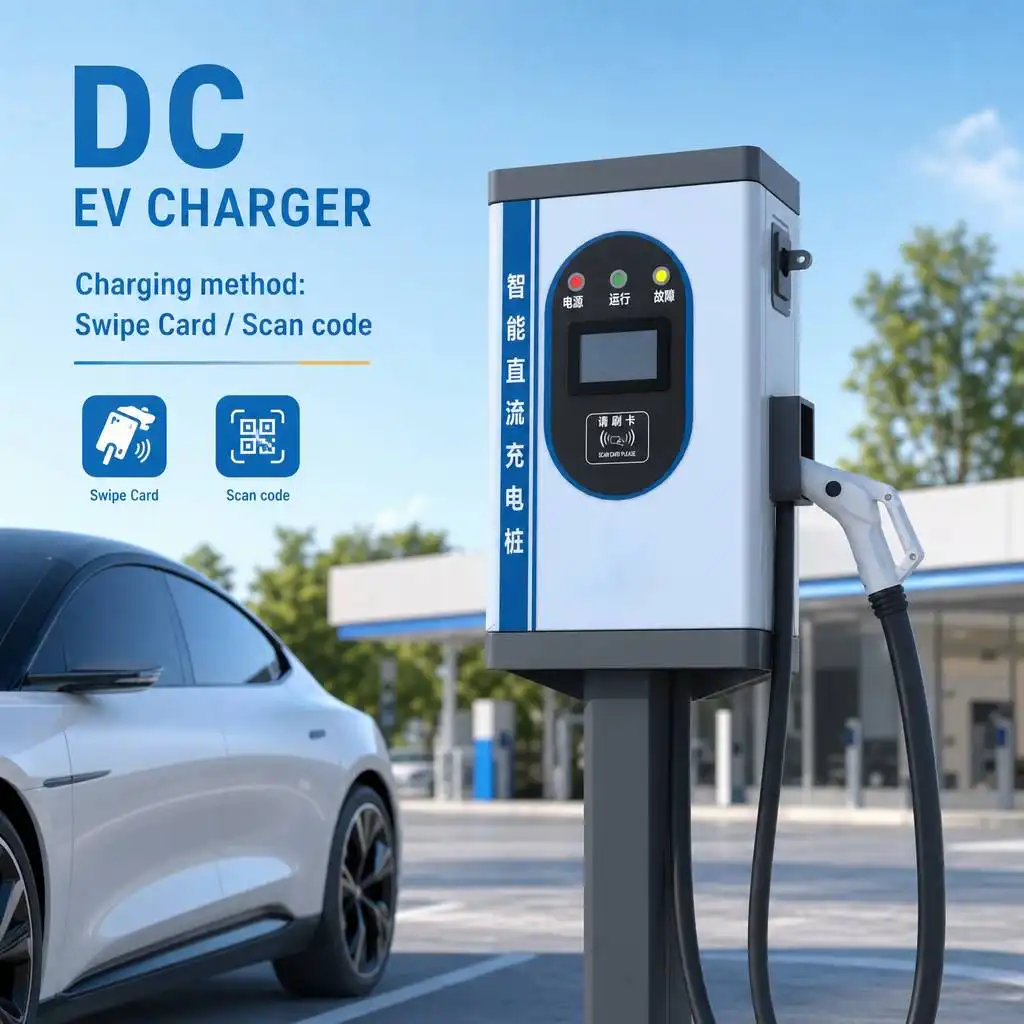
DongYu is a CHAdeMO EV charger manufacturer supplying 20 kW to 480 kW DC fast charging hardware — from compact wall-mounted units to dual-gun public stations. Every model is available with the CHAdeMO connector, supports OCPP 1.6J back-office communication, and ships with OEM options for branding, cables and firmware.
Every CHAdeMO unit is DC, so the real decision is not the charging level but the output your site can justify.
The ratings below map station power against supply capacity, dwell time and the vehicles you expect to serve.
Level 3 is the DC tier. The rectifier sits inside the station rather than on board the vehicle, so the battery receives DC directly. A CHAdeMO station typically restores a passenger EV from 20% to 80% in 20 to 40 minutes, depending on pack size and the vehicle's own charge curve.
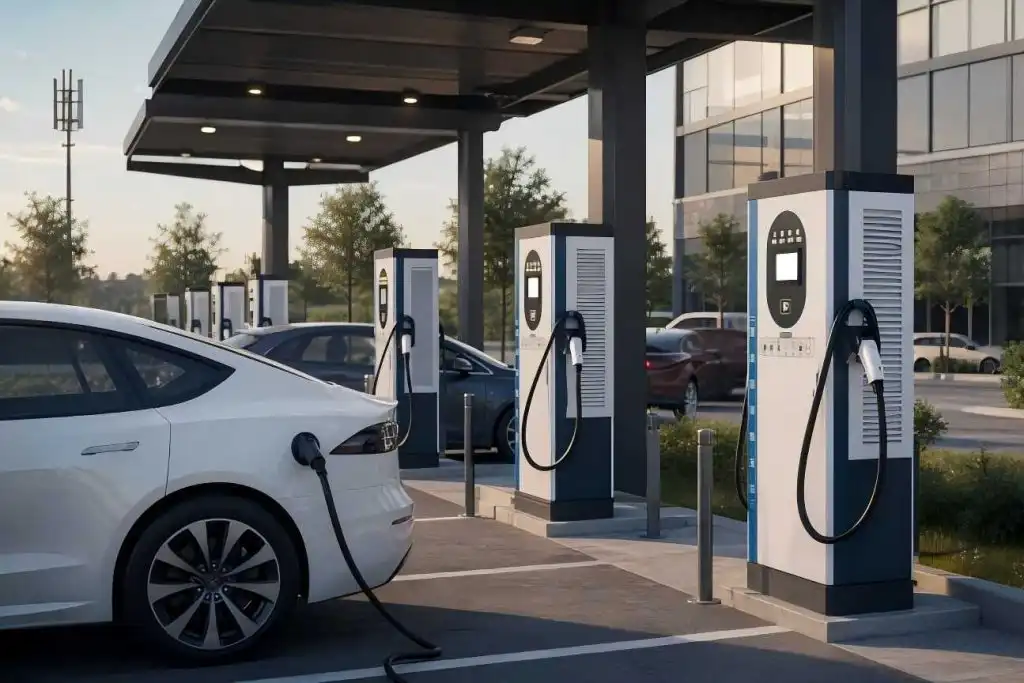
Match the output to the supply and the dwell time you need. Higher tiers raise the DC current, add gun count and require larger cabinet footprints and cooling.
| Output | Typical use | DC voltage | DC current | Guns | Best for |
| 20 kW | Wall / small commercial | 200–500 V | up to 50 A | Single | Parking lots, small business, home |
| 30 kW | Small commercial | 200–500 V | up to 75 A | Single | Convenience stores, workshops |
| 60–80 kW | Standard DC | 200–750 V | up to 200 A | Dual | Retail, hotels, fleet depots |
| 120–160 kW | Fast DC | 200–750 V | up to 250 A | Dual | Highway service areas, depots |
| 180–480 kW | Ultra-fast DC | 200–1000 V | up to 600 A | Dual / split | Public fast-charging hubs |
A charger only suits a site when its enclosure and foundation suit the ground it stands on.
Parking islands, curbside bays and depot aprons each call for a different mounting format, from pedestal posts to floor-mounted cabinets bolted to a concrete pad.
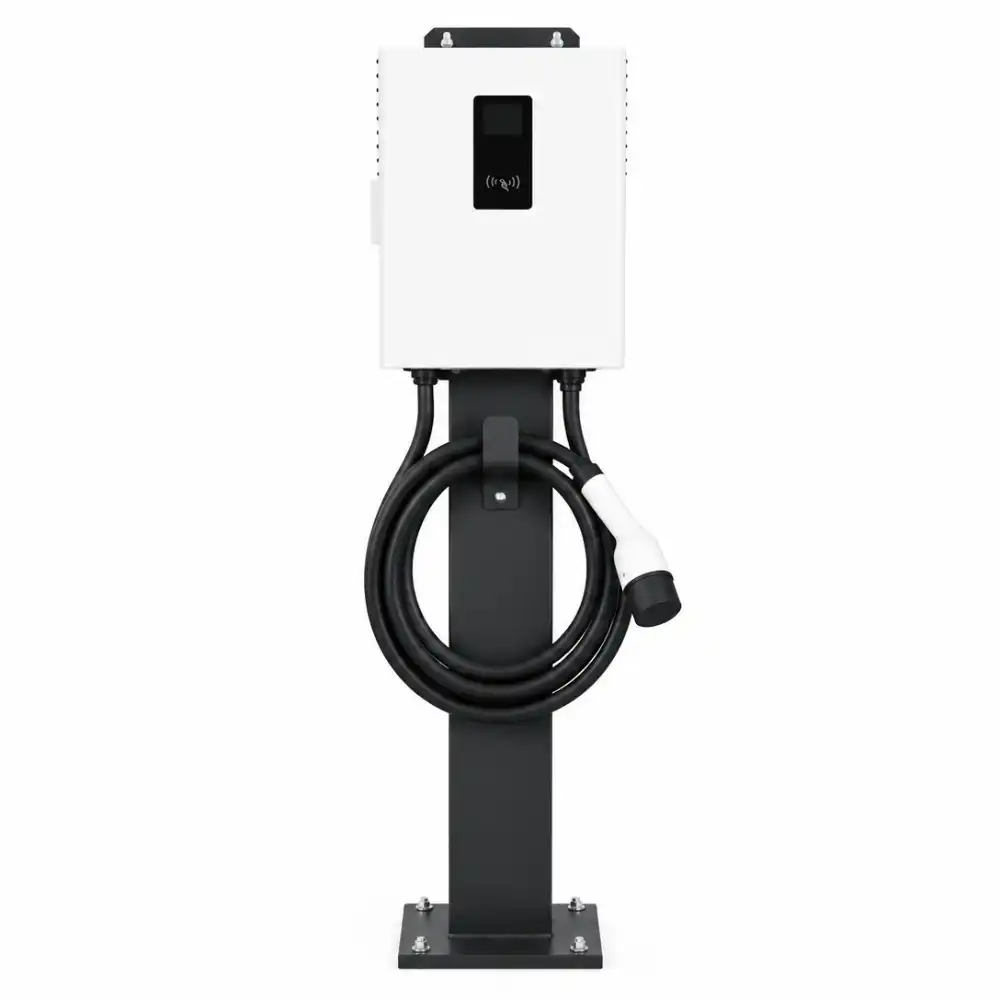
Pedestal and post-mounted stations put the CHAdeMO gun at an accessible height where no wall exists — parking islands, curbside bays and dealer forecourts. Enclosures run to IP55 / IK10 with foundations that accept bollards.
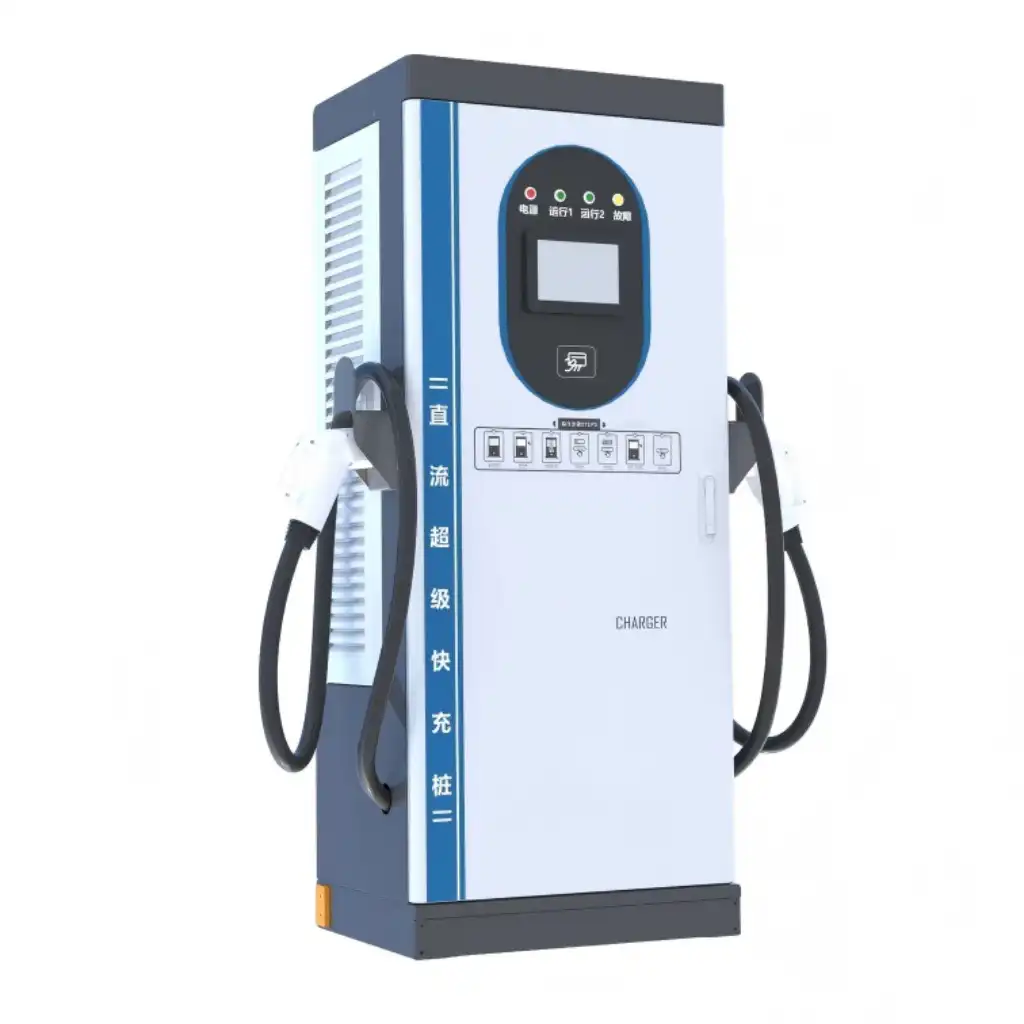
Column and cabinet units carry the heavy DC range from 40 kW to 480 kW, with bottom cable entry, forced-air cooling and dual-gun output. They are bolted to a concrete pad and are the default format for highway, depot and public hubs.
The hardware specification rarely changes between buyers; the commercial terms almost always do. So we shape pricing, support and documentation around the role you buy in and the volume you commit to.
01
Volume pricing by container, market-specific SKUs, marketing assets, local warranty handling and a stocked spare-parts programme, so you can support installers without holding inventory.
02
Pre-commissioned DC cabinets with matching accessories, clear wiring and foundation drawings, commissioning support and a technical helpline, so a two-person crew completes more sites per week.
03
Backend-agnostic hardware tested against the major OCPP 1.6J platforms, MID-certified billing meters on AC models, remote firmware management and uptime-focused spare-part kits.
04
Dealer-branded CHAdeMO and AC chargers matched to vehicle launch schedules, integration testing with the brand's own app, and delivery windows aligned to model roll-out.
Send us a specification, a target price and a volume, and our engineers
will return an OEM proposal with tooling costs and lead times within five working days.
Japan is the home of the CHAdeMO standard, and its electrical and certification requirements are specific.
DongYu designs to Japanese expectations from the first prototype, with JP-specific plugs, documentation and test evidence.
Japanese DC charging is governed by the CHAdeMO Association's protocol revisions for the connector and communication, with IEC 61851-23 covering the DC charging system and IEC 62196-3 defining the vehicle coupler. Above that sit OCPP 1.6J for back-office communication and the JIS-aligned labelling and documentation that Japanese buyers expect.
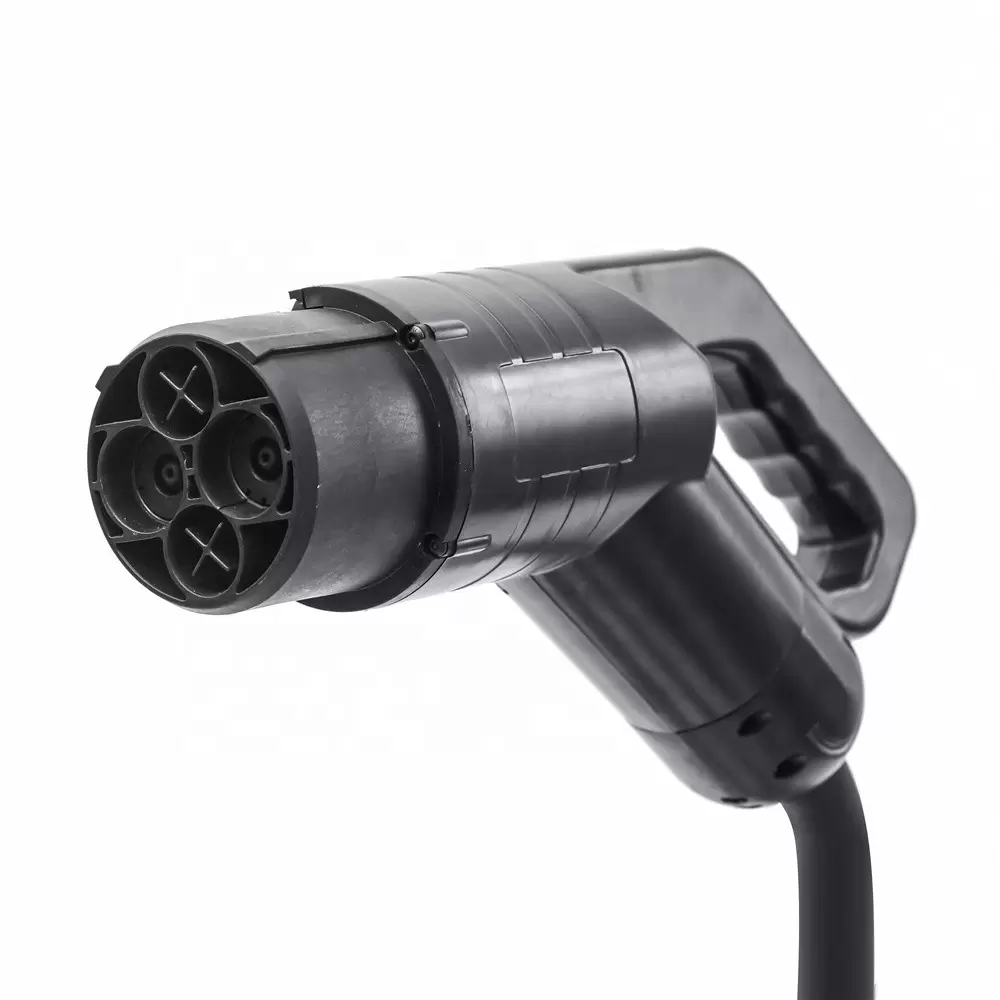
A compliant unit carries the marking its market requires, plus the declarations and test reports that support procurement and utility incentive files.
| Standard / Regulation | What it covers |
| CHAdeMO Protocol | DC connector, locking and communication protocol revisions |
| IEC 61851-23 | DC electric vehicle charging system safety |
| IEC 62196-3 | DC vehicle coupler and inlet geometry |
| PSE / DENAN | Japanese Electrical Appliance and Material Safety Act |
| VCCI / EMC | Emissions and immunity for the Japanese market |
| OCPP 1.6J | Back-office protocol and smart charging profiles |
| CE / RoHS / REACH | Export variants for the EU and other global markets |
CHAdeMO is the DC fast charging standard adopted by Japanese and several Asian and European automakers.
The table below maps the model families most commonly charged with CHAdeMO hardware.
| Brand group | Examples fitted with a CHAdeMO inlet |
| Nissan | Leaf, Ariya, e-NV200, Townstar EV |
| Mitsubishi | Outlander PHEV, i-MiEV, Eclipse Cross PHEV |
| Toyota & Lexus | Prius PHV, C-HR EV, UX 300e (JP-market builds) |
| Honda | Honda e, e:N series (JP-market builds) |
| Mazda | MX-30 EV |
| Kia & Hyundai | Soul EV (older), Ioniq Electric (older), Kona Electric (early builds) |
| Subaru & Suzuki | Solterra, e-Vitara (regional variants) |
| Chinese brands in Japan | BYD Atto 3, Dolphin (JP-market builds) |
| Tesla in Japan | Via the Tesla CHAdeMO adapter on supported models |
Different parking contexts create different buying criteria.
DongYu configures CHAdeMO DC charging solutions for each application segment, each with dedicated models and feature sets.
A CHAdeMO EV charger is DC fast charging equipment built around the CHAdeMO connector, a standard originally developed in Japan. Power electronics inside the station convert grid AC into DC, delivering up to 1000 V through a dedicated locking coupler.
Most CHAdeMO stations restore a passenger EV from 20% to 80% in 20 to 40 minutes. Actual time depends on station output, battery capacity and the vehicle’s charge curve, which tapers above 80% and slows in cold weather.
Nissan Leaf, Ariya and e-NV200, Mitsubishi Outlander PHEV and i-MiEV, Toyota and Lexus plug-in models, Honda e, Mazda MX-30 and early Kia or Hyundai EVs. Japanese-market BYD and Tesla vehicles can also charge through CHAdeMO.
CHAdeMO still serves a large installed base of Japanese vehicles in daily use, and Japan continues to fund its roll-out. Sites charging Leaf, Ariya or Outlander drivers, or applying for Japanese incentives, still need CHAdeMO outlets beside any CCS gun.
Both are DC fast charging standards, but they use different connectors and cannot share a plug. CCS adds DC pins to a Type 1 or Type 2 AC interface, while CHAdeMO uses a dedicated coupler. CCS dominates Europe; CHAdeMO dominates Japan.
Not directly, because Tesla models use their own inlet or CCS. Tesla has offered a CHAdeMO adapter in some markets, but it limits charging speed. For native support, specify a charger fitted with the Tesla or CCS connector.
Japan-bound units follow the CHAdeMO protocol revisions, IEC 61851-23 for the DC charging system and IEC 62196-3 for the coupler, plus PSE/DENAN safety and VCCI emissions approval. JIS-aligned nameplates, Japanese manuals and test evidence ship with each order.
Yes. We manufacture rather than resell, so units can carry your logo, custom colours, branded cables and your own firmware build. Tooling costs, minimum order quantities and lead times are quoted within five working days of your specification arriving.