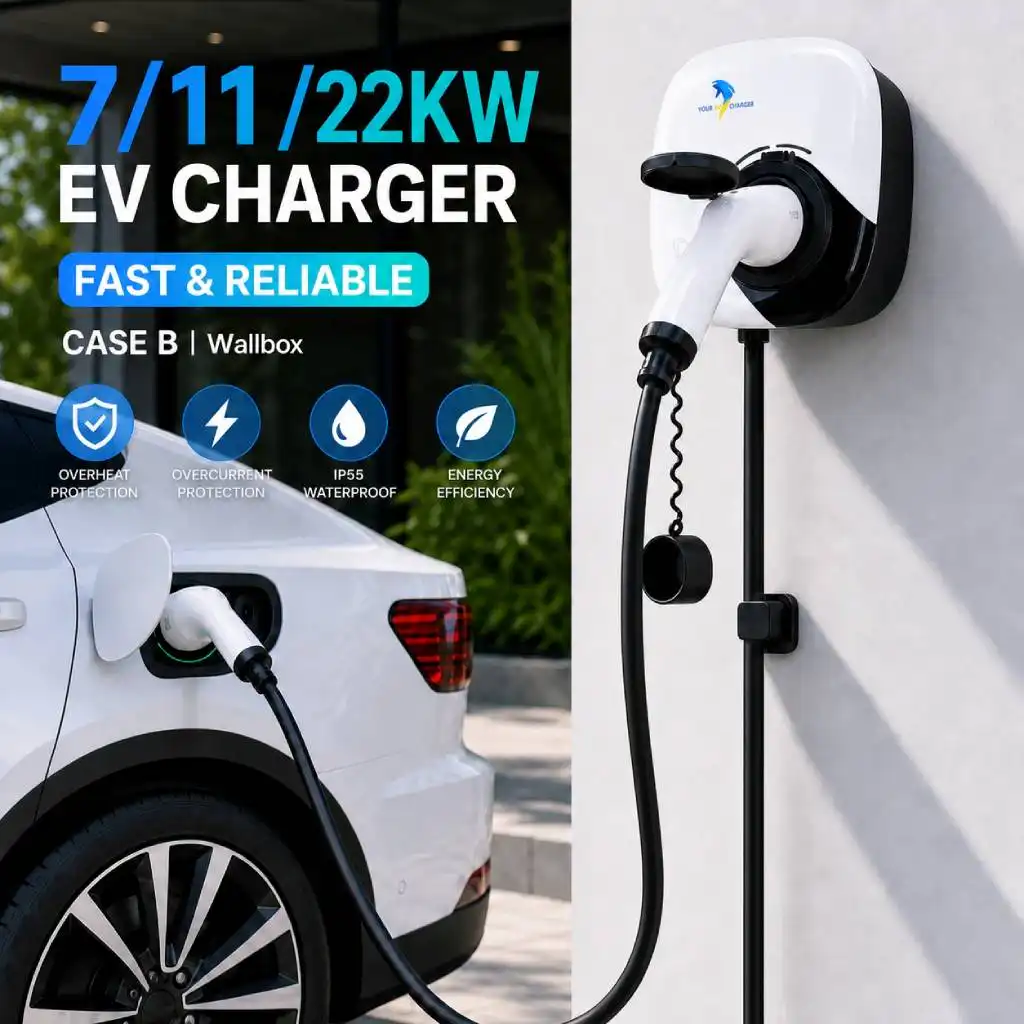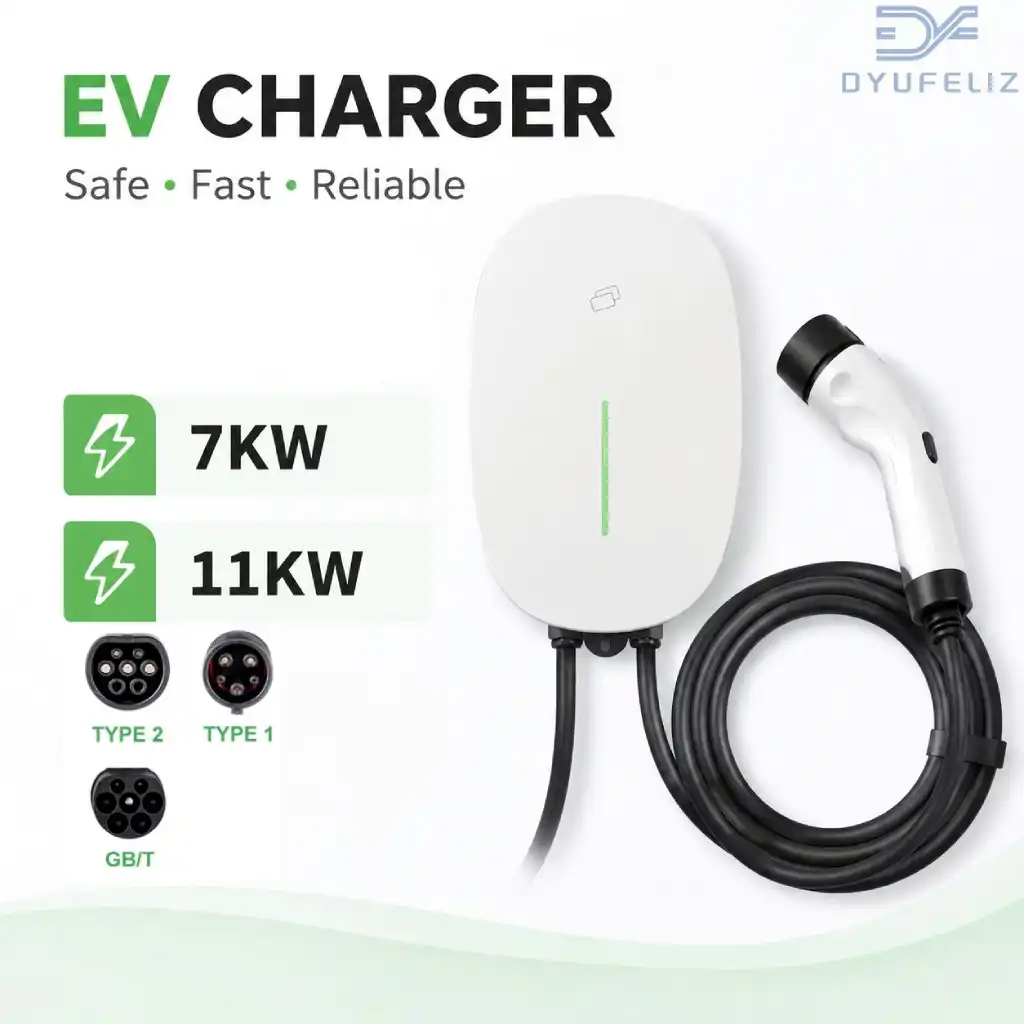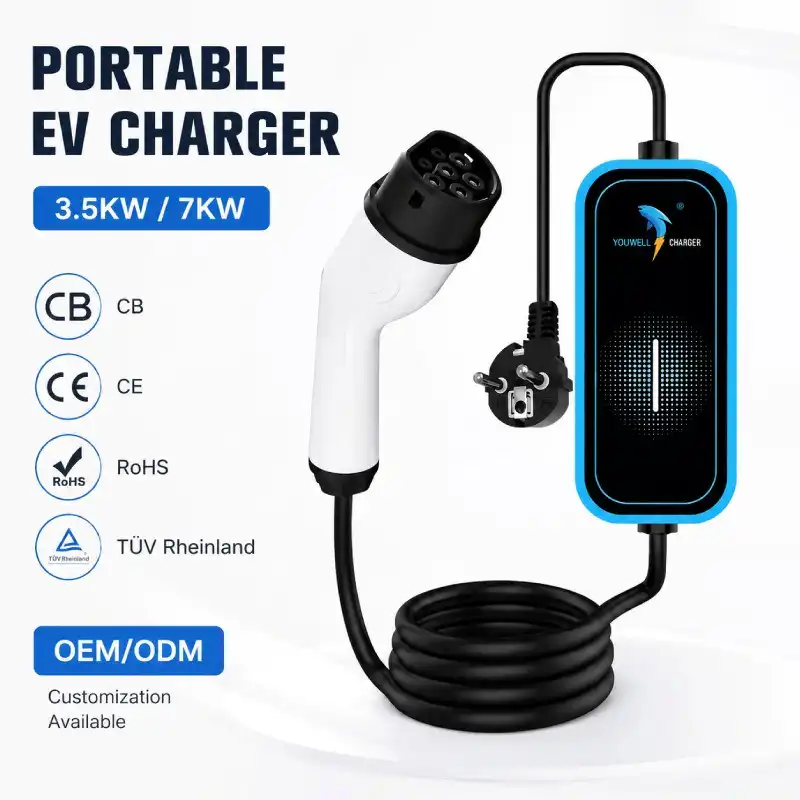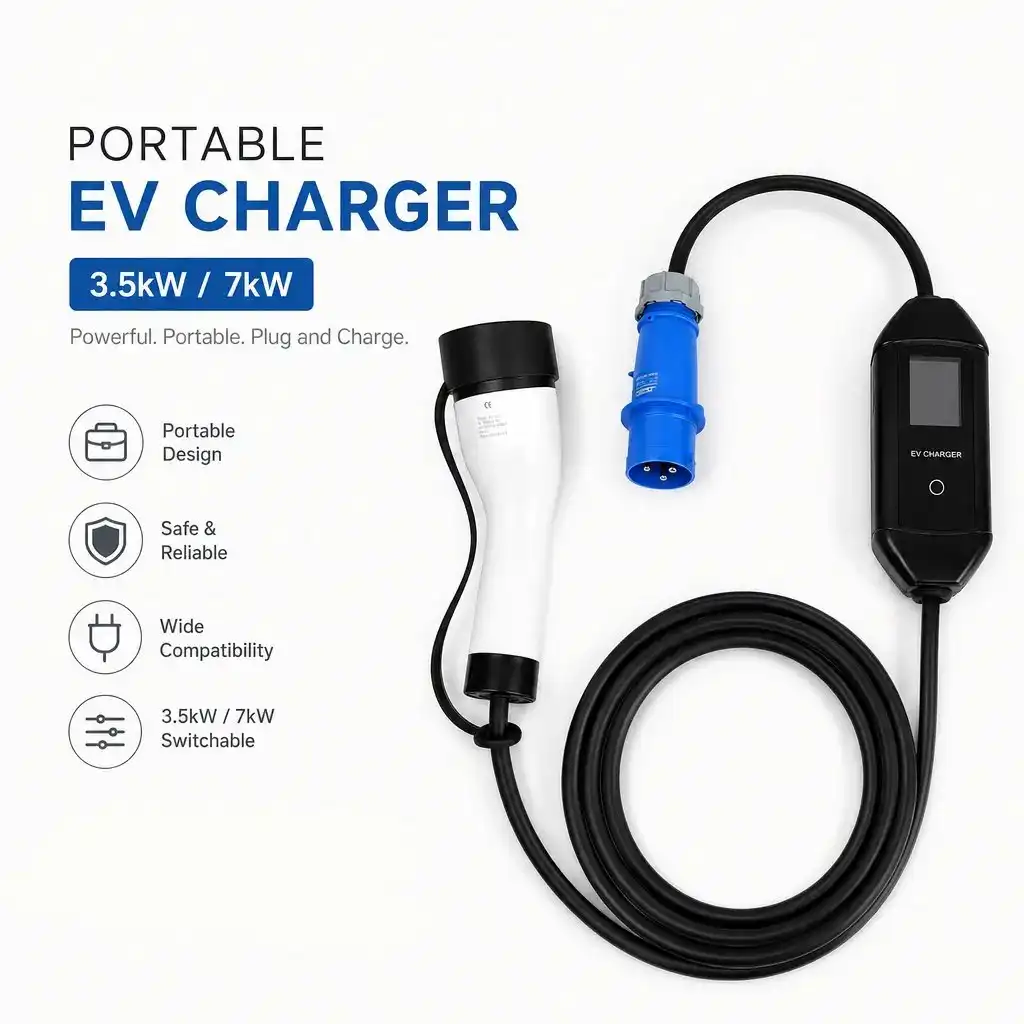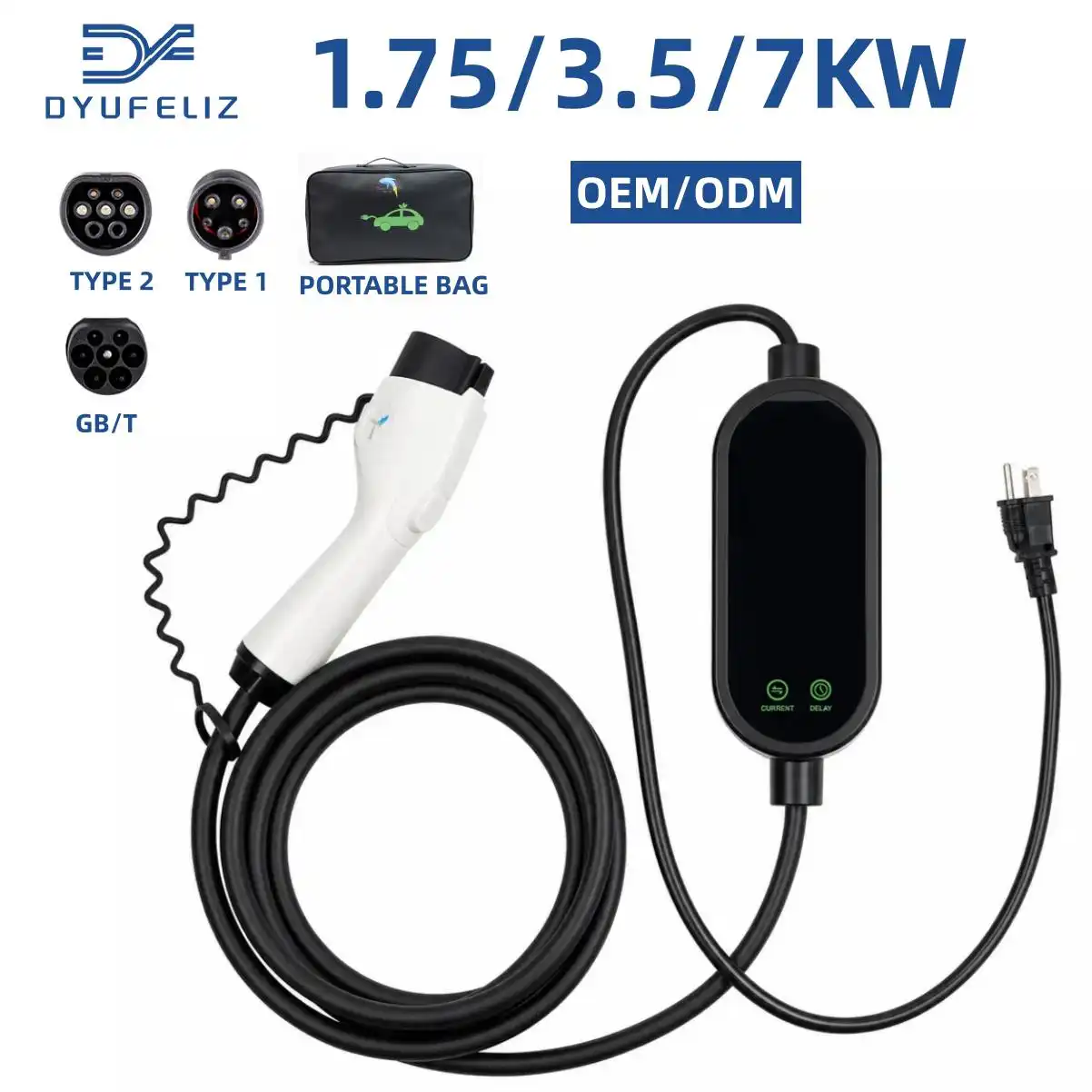
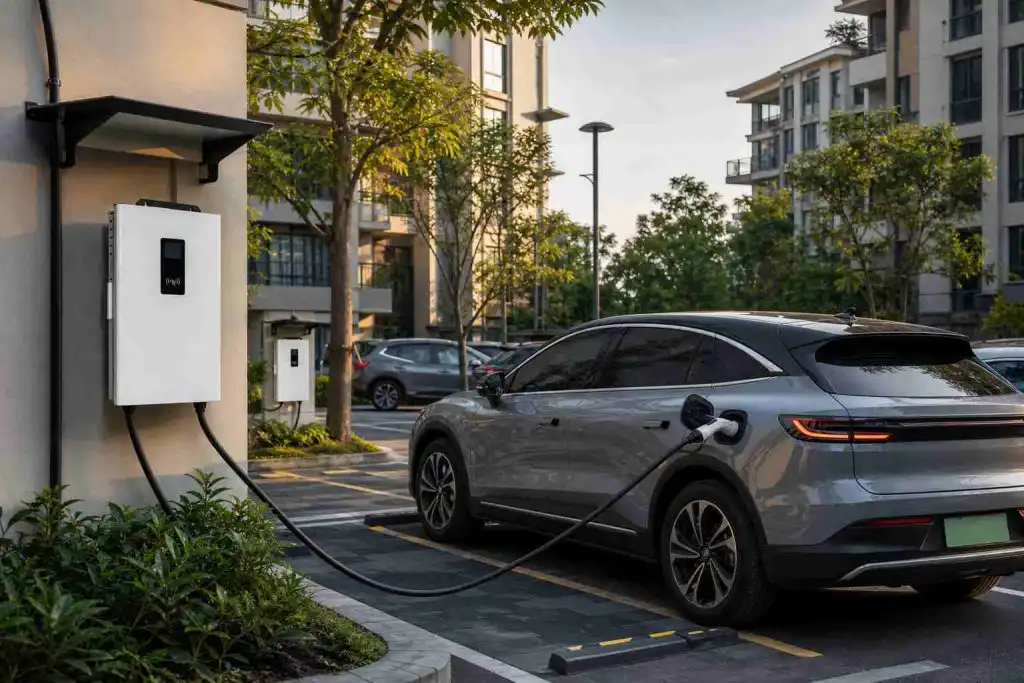
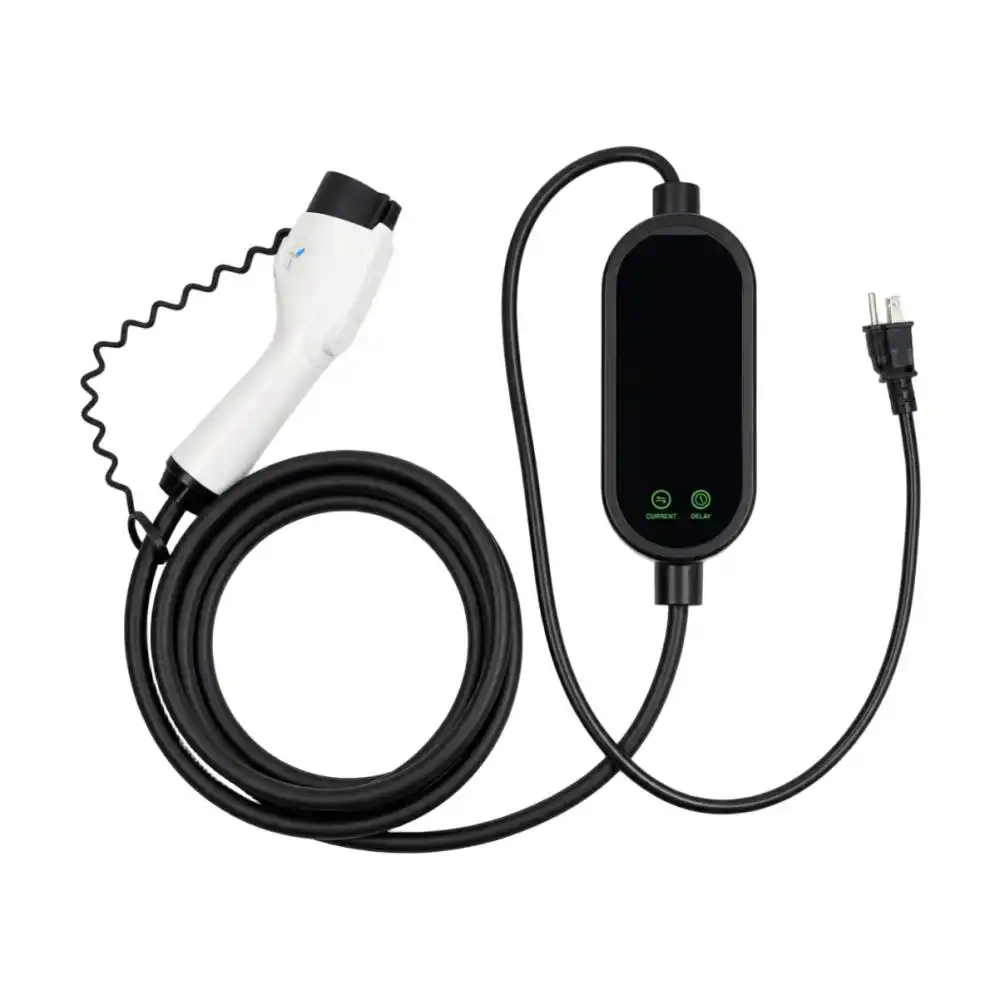
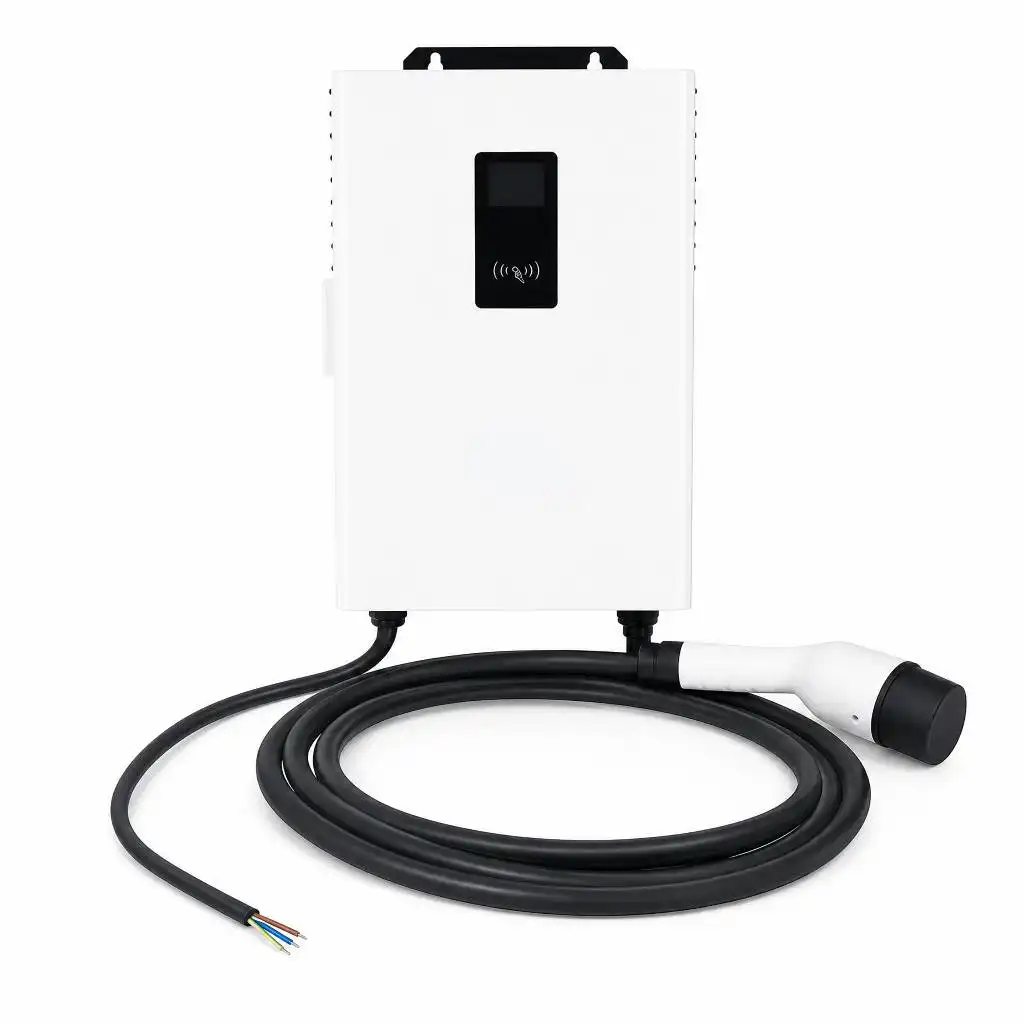
Charging at home covers the bulk of most EV owners’ annual mileage. DongYu builds home EV chargers for that daily reality — 1.75 kW portable cables, 7 kW and 22 kW wallboxes, and a 7 kW DC home station — with IP55 or IP65 protection, full electrical safety, OCPP 1.6J control and Type 1, Type 2, GB/T or CCS2 connectors.
A home charger is a permanent electrical installation, not an accessory. Every DongYu unit is engineered around the realities of residential power: protection, consistency, weather and correct installation.
Overload, voltage, temperature and leakage protection in UL94-V0 enclosures meet safety standards.
Pure copper conductors and thermal design ensure consistent charging, even with nightly use.
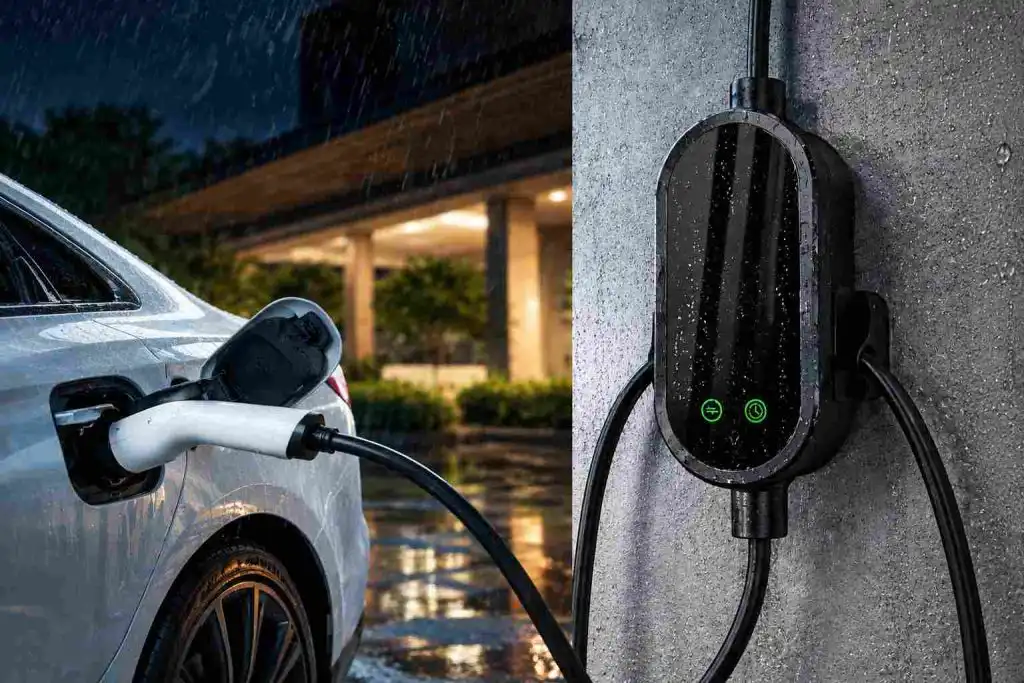
IP55 wallboxes and IP65 portable units withstand weather, dust and wash-down, with cable anti-theft protection.
Qualified electricians install systems with custom cables, voltage options and CE, CB, RoHS and TUV Mark documentation.
Bluetooth handles commissioning and diagnostics from a phone at the charger. Wi-Fi avoids new cable runs in retrofits, ethernet suits structured cabling, and 4G covers remote parking areas.
Drivers can start and stop sessions, set charging current, review energy delivered and check charger status from a mobile app — the same controls available locally on the LCD panel.
Scheduled starts of 0 to 8 hours move charging into off-peak windows. On the portable range the delay is set with the SET key; on connected units, in the app or via OCPP.
Load management monitors available supply and reduces charging current as household demand rises. An EV charger and an electric oven can share one service without tripping the main breaker.
OCPP 1.6J is offered as an optional feature. These charging units can connect to mainstream charging management platforms directly. Without requiring a proprietary gateway, they deliver real-time monitoring, full charging records and reliable energy metering to support billing and settlement.
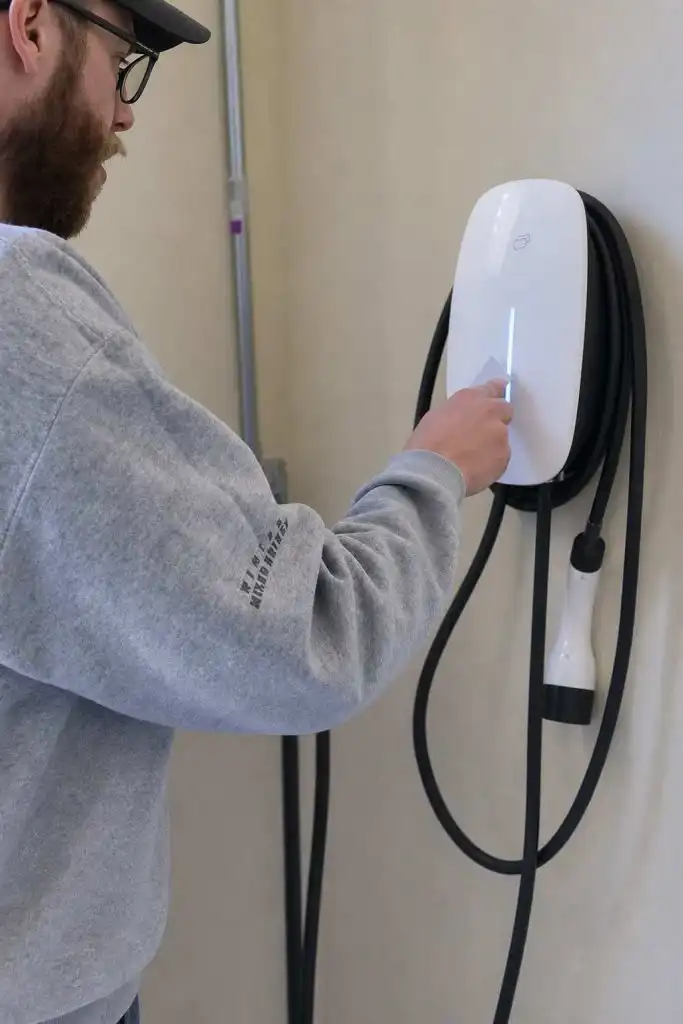
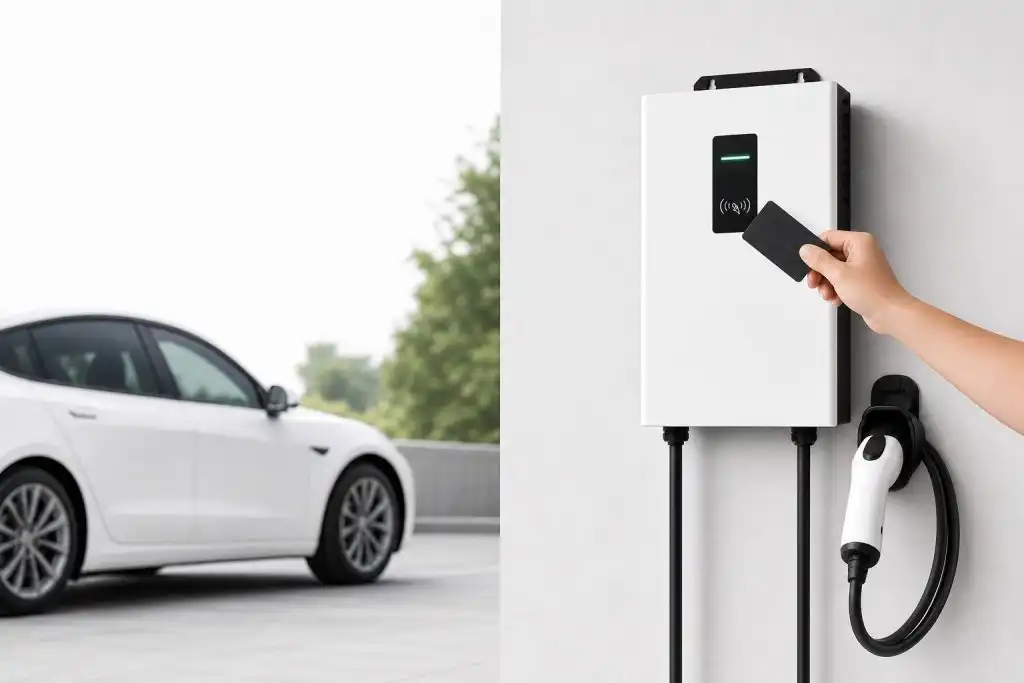
RFID authentication restricts charging to authorised users, the standard answer for shared residential bays, staff parking and fleet depots. Cards link to a driver or cost centre for individual billing.
Every residential setting has a different procurement problem — a shared supply, an exposed bay, a service contract, or a building that does not exist yet.
DongYu matches the charger, the mounting and the load strategy to each residential setting.
Single-family homes
Dedicated circuit
Off-peak cost
Cable reach
Detached houses usually have room for a dedicated 32A circuit and a private wall. A 7kW or 11kW AC wallbox on the garage wall delivers a full overnight charge, with a portable unit as backup for travel. Add scheduling to charge on off-peak tariffs and cut your running costs.
Multifamily properties
Shared incoming supply
Per-unit billing
No supply upgrade
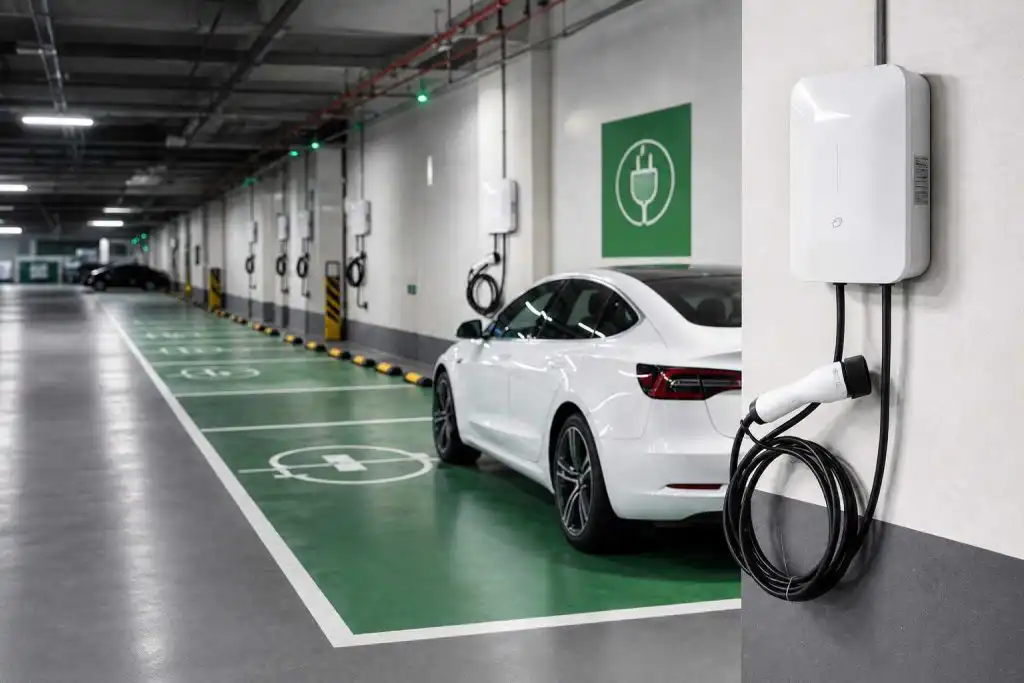
Apartment blocks share one incoming supply, so the challenge is fairness rather than raw power. Load-managed 7kW units with RFID or app authentication let residents charge on their own account while the property’s main fuse stays within limits. Dynamic load management spreads available capacity across bays without a costly supply upgrade.
Residential communities
Who pays for power
Access control
Estate-wide rollout
Shared parking in gated communities needs a model that works for every household. DongYu supplies pedestal and wall units with metered billing, access control and OCPP back-office integration, so residents pay for their own energy. The system is designed to scale from one pilot block to the full estate.
Outdoor driveways
Rain and frost
Cable storage
UV degradation
Driveways, carports and open-air bays expose equipment to rain, dust and frost. DongYu’s outdoor-rated chargers use IP65 sealed enclosures, UV-stable polycarbonate and operating ranges from -30°C to +55°C, with a holster and tethered cable that stay usable in winter. Every unit is tested for water ingress before it leaves the factory.
Developers & managers
Permit approval
Project pricing
Handover docs
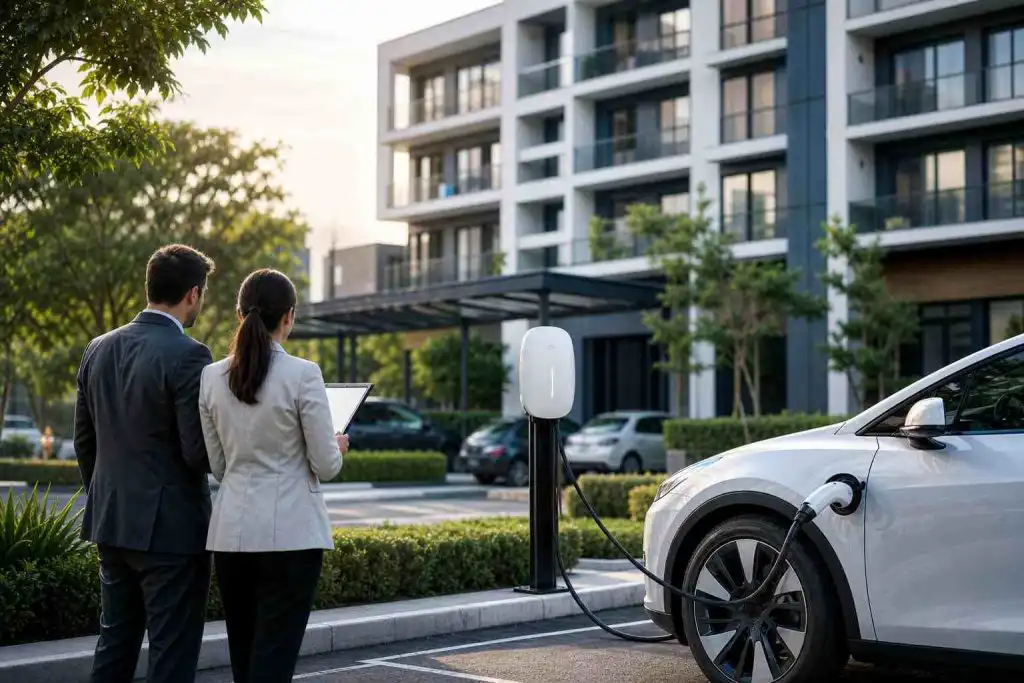
Developers need chargers that pass inspection, are simple to specify and cost predictable per bay. DongYu provides standardised wall and pedestal models, project pricing, technical drawings and documentation packs for permit approval, plus reliable lead times and consistent firmware across every unit in the development, so handover documentation stays simple.
Portfolios
One repeatable spec
Portfolio visibility
Spare parts
Portfolio owners need one specification they can repeat. DongYu supports ODM and OEM programmes with a single OCPP-compatible platform, per-property monitoring dashboards, spare parts stock and after-sales service across sites, so adding property number fifty is as simple as the first. Buying volumes are consolidated, so unit pricing improves as the portfolio grows.
Tell us your supply, parking layout and vehicle mix —
DongYu will recommend the right power rating, connector and mounting format, then quote it.
DongYu manufactures both sides of residential charging:
AC wallboxes for overnight charging from the grid, and compact DC units for households that need a fast top-up without leaving home.
DongYu AC home chargers cover 7kW single-phase and 11kW or 22kW three-phase models in type 1, type 2 and GB/T connectors, wall-mounted or pedestal, IP55-rated, with a built-in Type B RCD.
For homes with three-phase supply, DongYu builds 7kW, 20kW, 30kW wall-mounted DC chargers in GB/T and CCS — compact enough for a garage, adding 100km of range in well under an hour.
| Factor | Home AC EV charger | Home DC EV charger |
| Conversion | In the onboard charger | Inside the station |
| Home power | 1.75 – 22 kW | 7 kW; 20 – 30 kW shared |
| Supply | 230 V or 400 V | 176 – 264 V single-phase |
| Capped by vehicle OBC | Yes — usually 7.4 or 11 kW | No |
| Hardware cost | Lower | Higher |
| Best for | Overnight charging in houses, apartments and shared bays | High-mileage homes, compounds and small fleets |
| DongYu options | Portable, wall, pedestal · Type 1 / 2 / GB/T | Model 7100 · CCS2 / GB/T |
Charging levels describe how the electricity reaches your battery, and they set the ceiling on how fast you can charge at home. Level 1, 2 and 3 are not interchangeable.
No installation · 4–8km/h
A Level 1 charger plugs into a standard 120V or 230V socket and adds roughly 4–8km of range per hour. It needs no installation but is realistic only for plug-in hybrids and low daily mileage.
7–22kW · overnight
Level 2 is the standard for residential charging: a 7kW to 22kW dedicated circuit that refills most batteries overnight. It requires a qualified electrician, a protected supply and, in many regions, a permit.
Level 3 · 20 – 30 kW DC
Level 3 means DC fast charging. It is normally public infrastructure. In residential settings it appears as 20–30kW wall-mounted DC units where a three-phase supply and a genuine speed requirement exist.
Power output decides how quickly your car is ready in the morning, and what your supply can support.
Match the rating to your vehicle’s onboard charger and your available supply.
32A · Single-phase
The single-phase workhorse. Around 40–50km of range per hour, enough for most commuters to refill overnight on a standard 32A household supply.
16A · Three-phase
Three-phase 16A. Roughly 1.5× faster than 7kW and a good match for vehicles with larger onboard chargers and predictable, high daily mileage.
32A · Three-phase
The ceiling for most domestic AC supplies, needing three-phase 32A. Charge speed is capped by the car’s onboard charger, so confirm that first.
Connector standards differ by region, and the wrong one makes a charger useless.
DongYu builds every residential model in the standard your vehicles actually use.

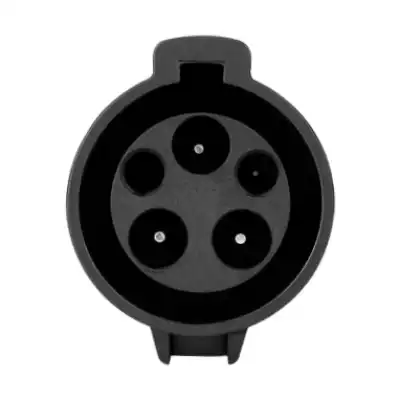
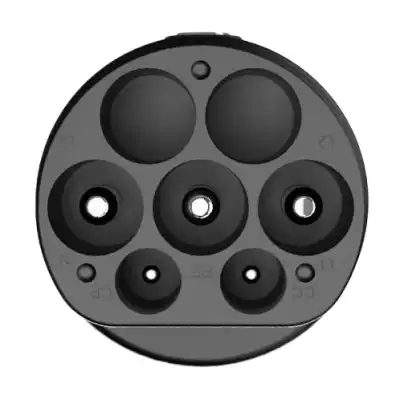
The five-pin connector used by older Japanese, American and Korean vehicles and most plug-in hybrids. Single-phase only, usually up to 7.4kW.

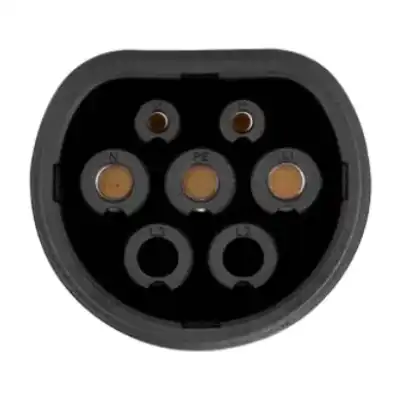
Europe’s standard seven-pin connector, supporting single-phase 7kW and 3 phase 11kW or 22kW with the same plug. It is today’s default choice.

China’s national standard, used by almost every domestic EV. DongYu manufactures GB/T AC wallboxes at 7kW and GB/T DC wallboxes at 20kW to 30kW.

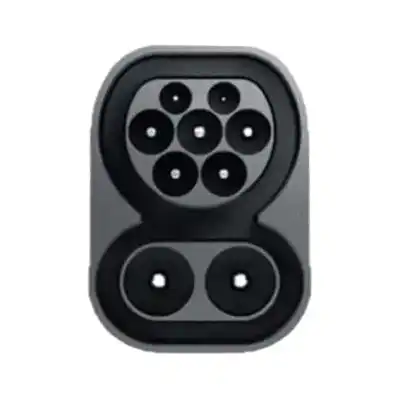
DC CCS2 Combined Charging System bundles AC and DC into one inlet across. DongYu supplies it on request for fleet and commercial projects.
The right form factor depends on where the car parks and who owns the wall.
All three DongYu formats share the same charging platform, controls and safety electronics.

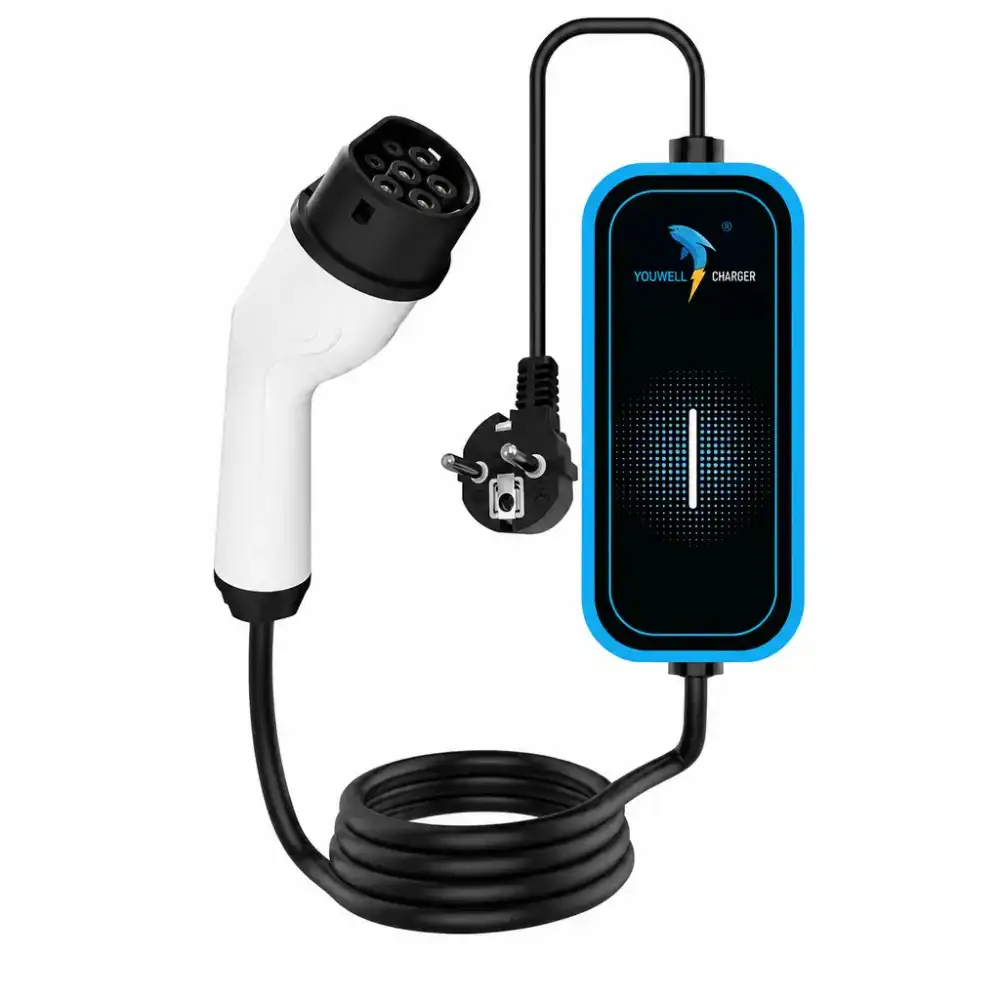
A 1.75kW to 7kW unit that travels in the boot and plugs into a socket or industrial outlet — useful as a second charger in rented homes.
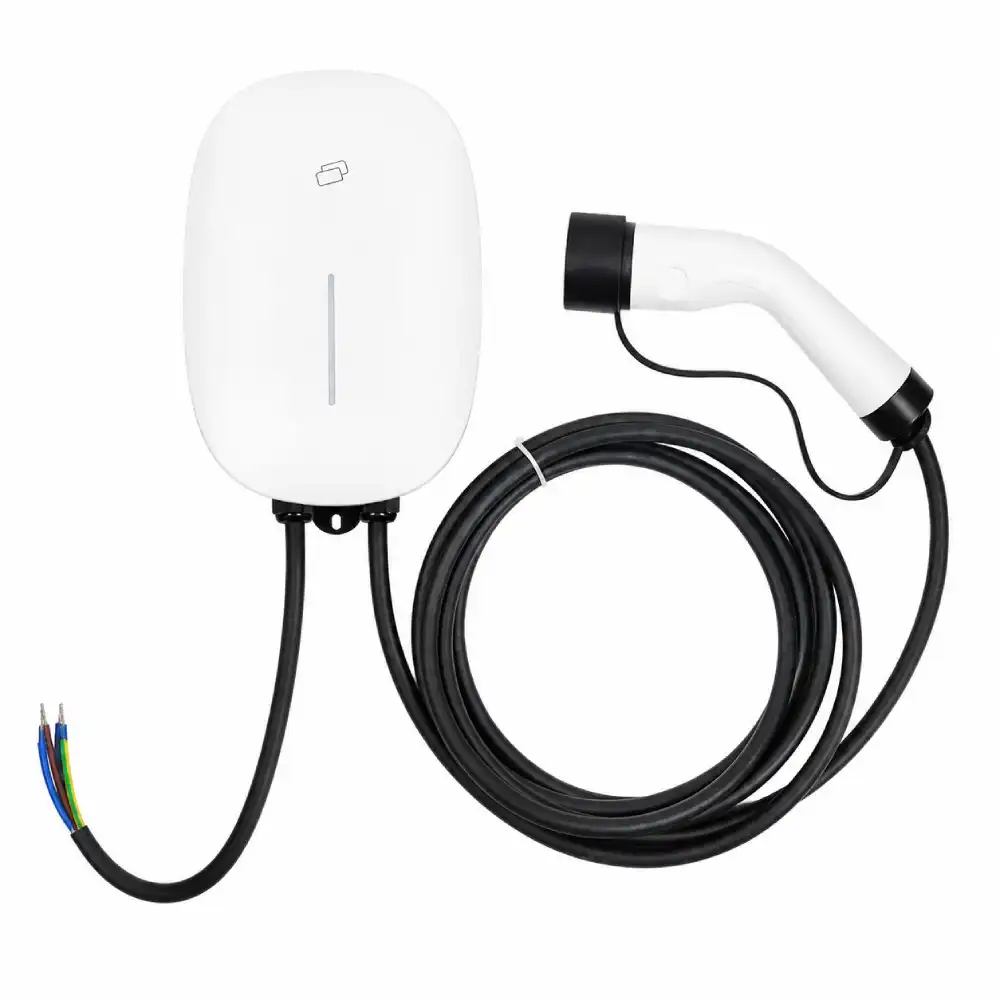
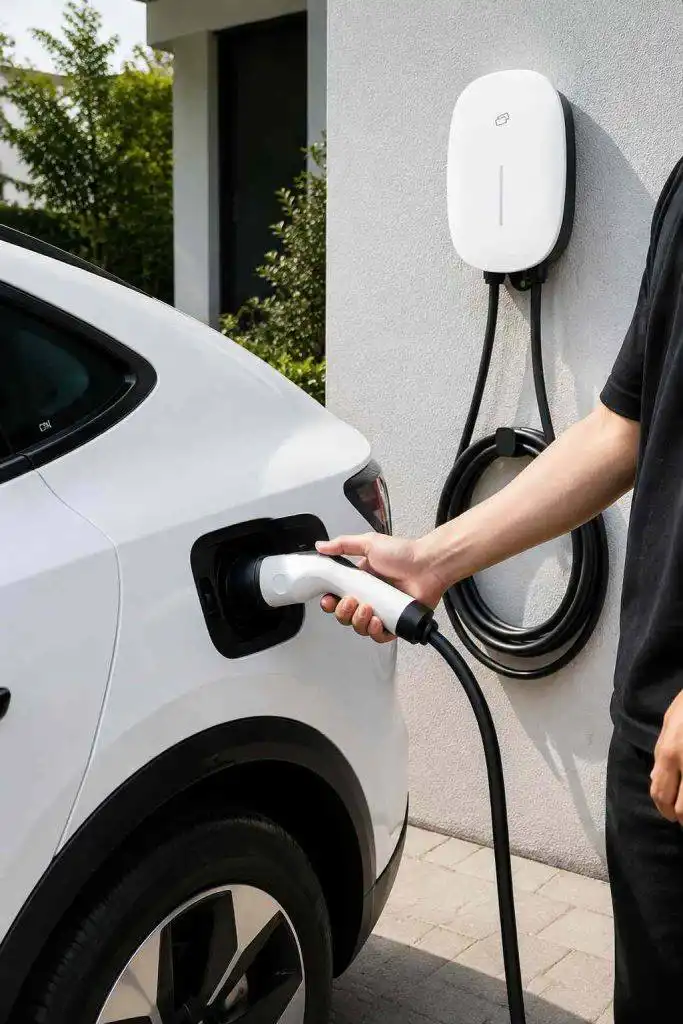
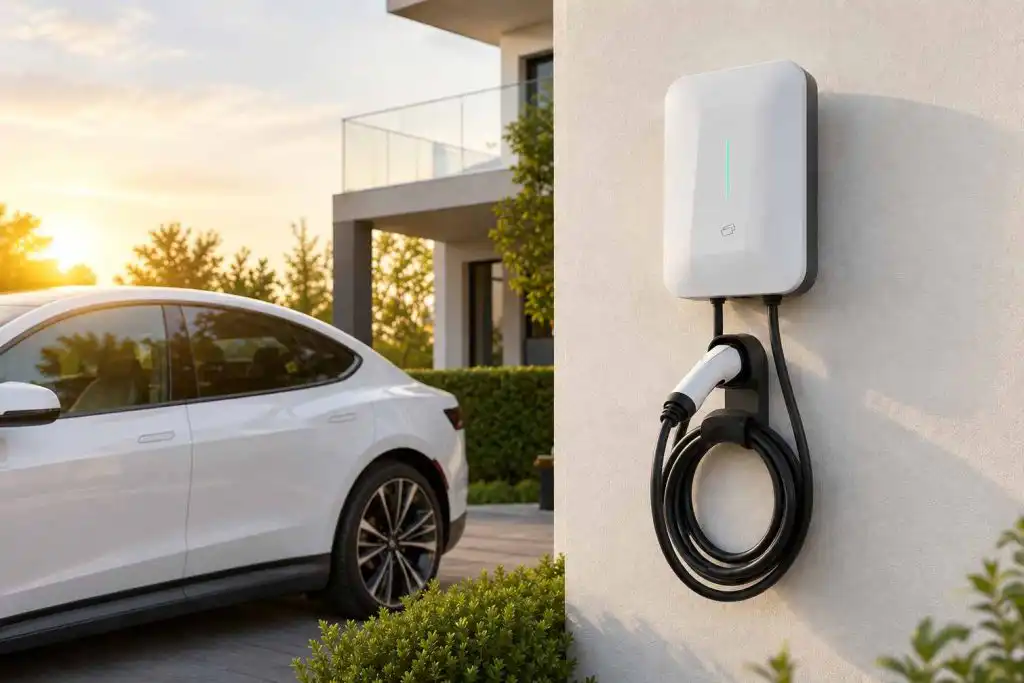
The default residential format: a compact wallbox with tethered or socketed output, rated IP55 for garages, carports and exposed exterior walls.
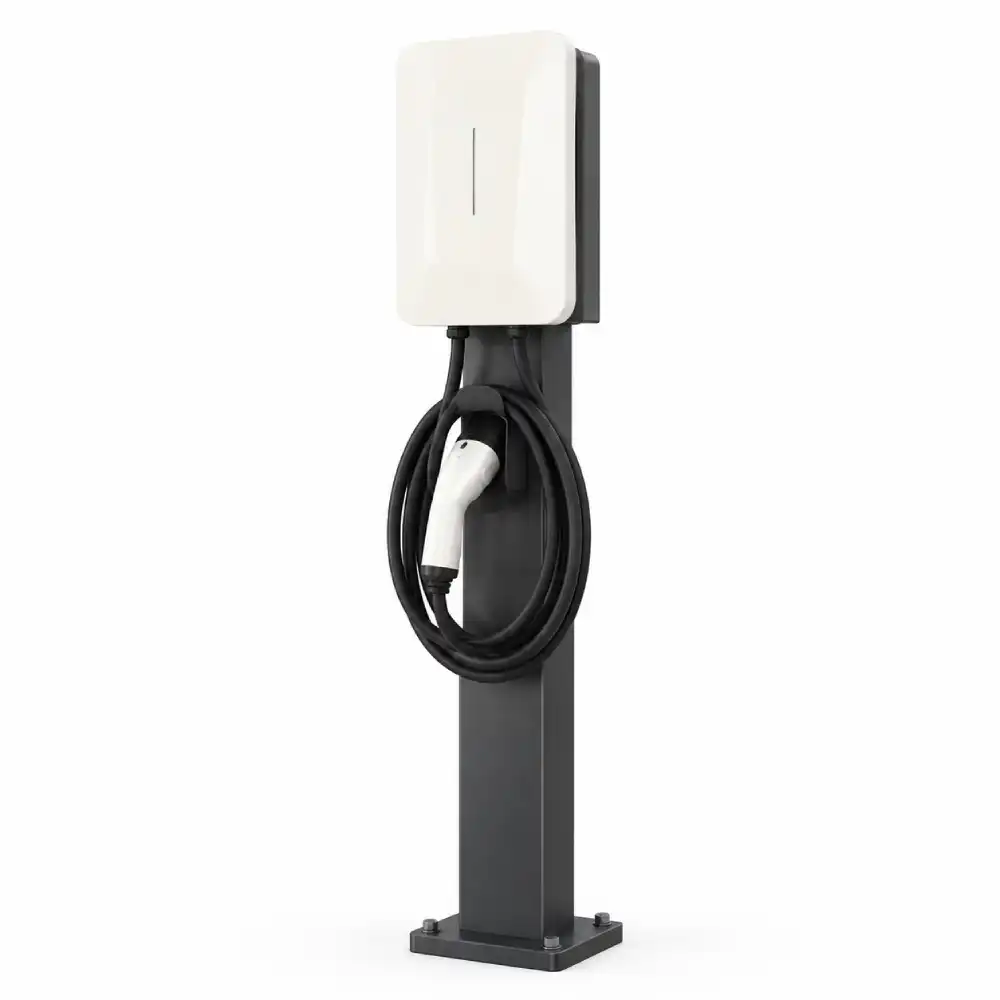
A free-standing post for driveways and shared bays where no suitable wall exists. Cable management and dual-output heads are available.
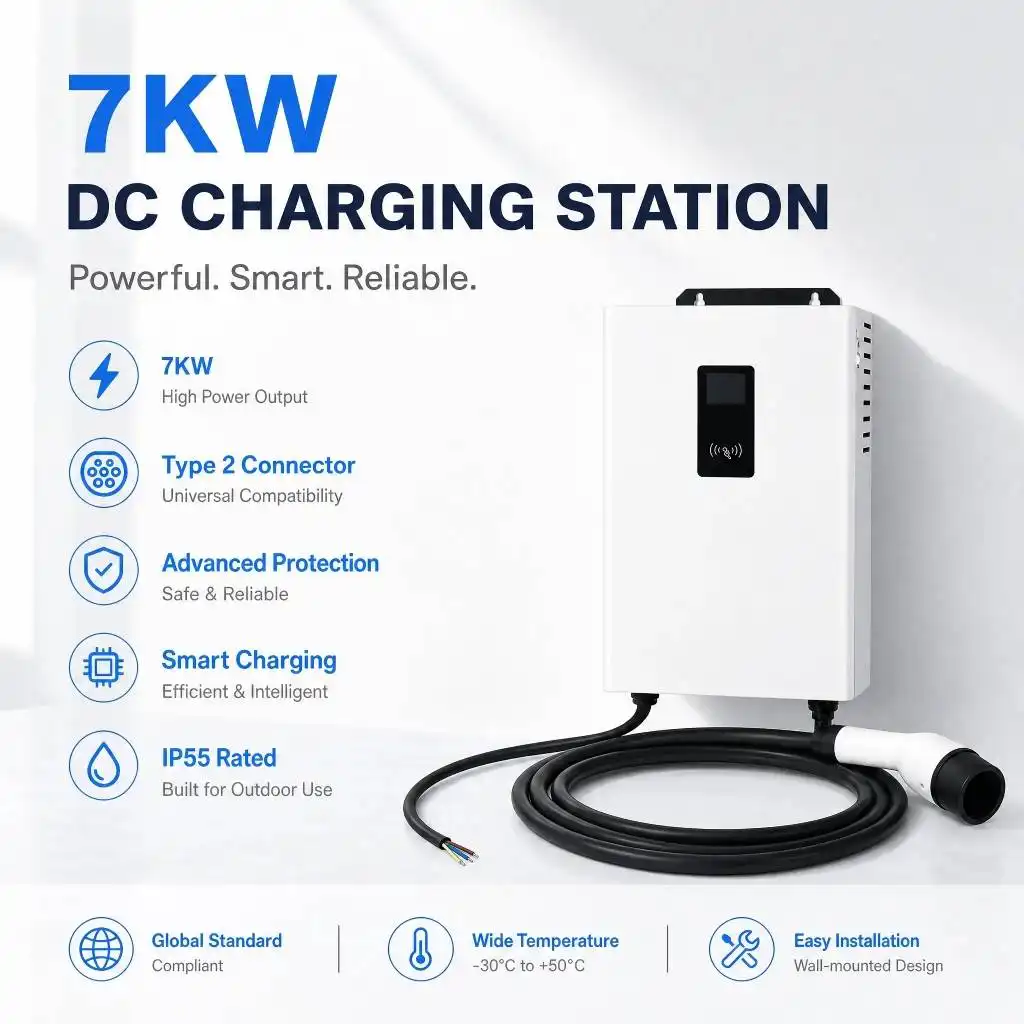
For most households a 7kW single-phase charger covers overnight charging. Choose 11kW or 22kW only if your car’s onboard charger supports it and your property has a three-phase supply. A 7kW home charger adds about 40–50km of range per hour; a 60kWh battery refills in eight to nine hours. Three-phase 22kW can cut that to under three.
No single unit covers every standard, but DongYu builds the same residential platform in type 1, type 2, GB/T and CCS connectors, plus 20–40kW DC. Confirm your region’s standard.
Yes, provided the unit is rated for it. DongYu outdoor-ready home EV chargers carry IP55 enclosures, UV-stable housings and a -30°C to +55°C range. Confirm the rating first.
Yes. DongYu home EV chargers offer Wi-Fi and Bluetooth control, scheduled off-peak charging, OCPP 1.6J and 2.0.1, and CT-clamp load management that trims output when household demand peaks.
Yes. DongYu runs ODM and OEM programmes for home EV chargers, covering custom connectors, power ratings, enclosures, branding and firmware, with project pricing and consolidated volumes for multi-property buyers.
All chargers are CE, CB, RoHS and TUV Mark certified and built under ISO 9001 quality control. Every unit carries a 12-month warranty.