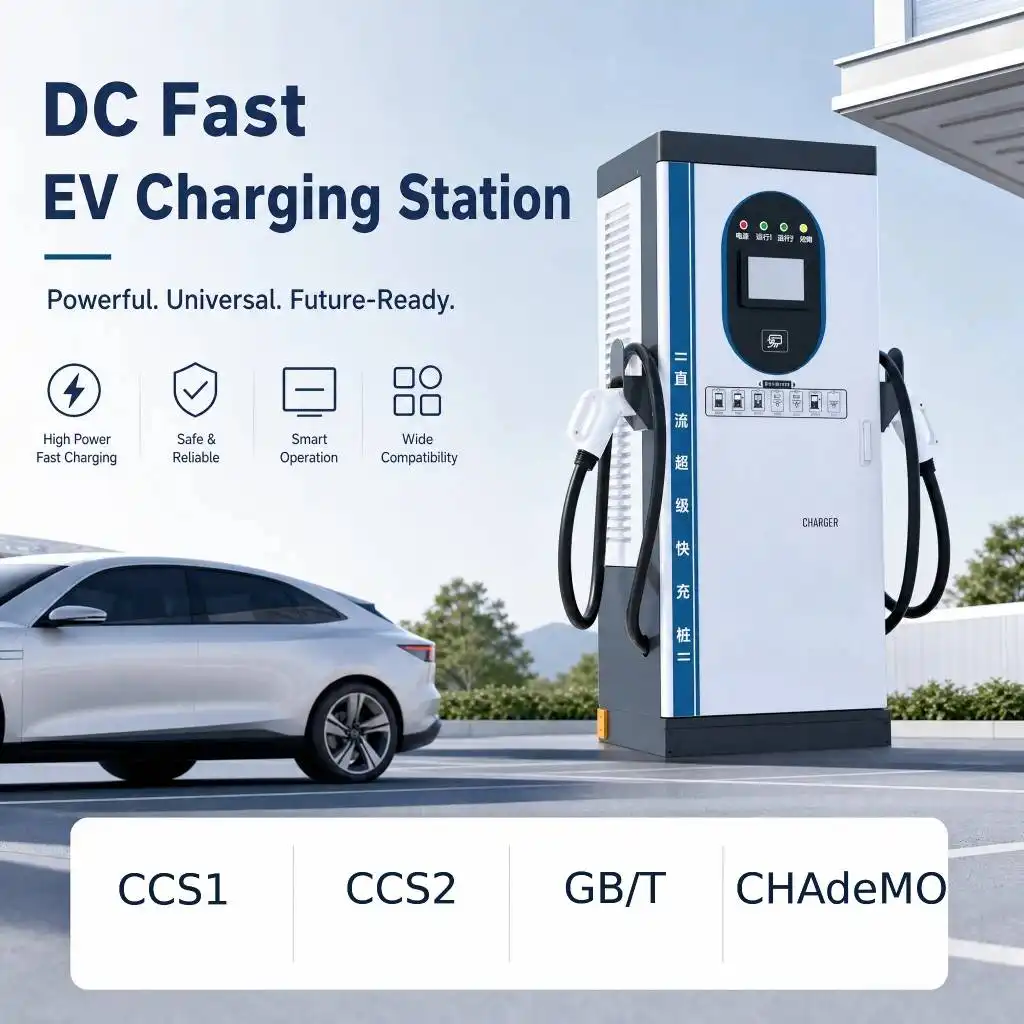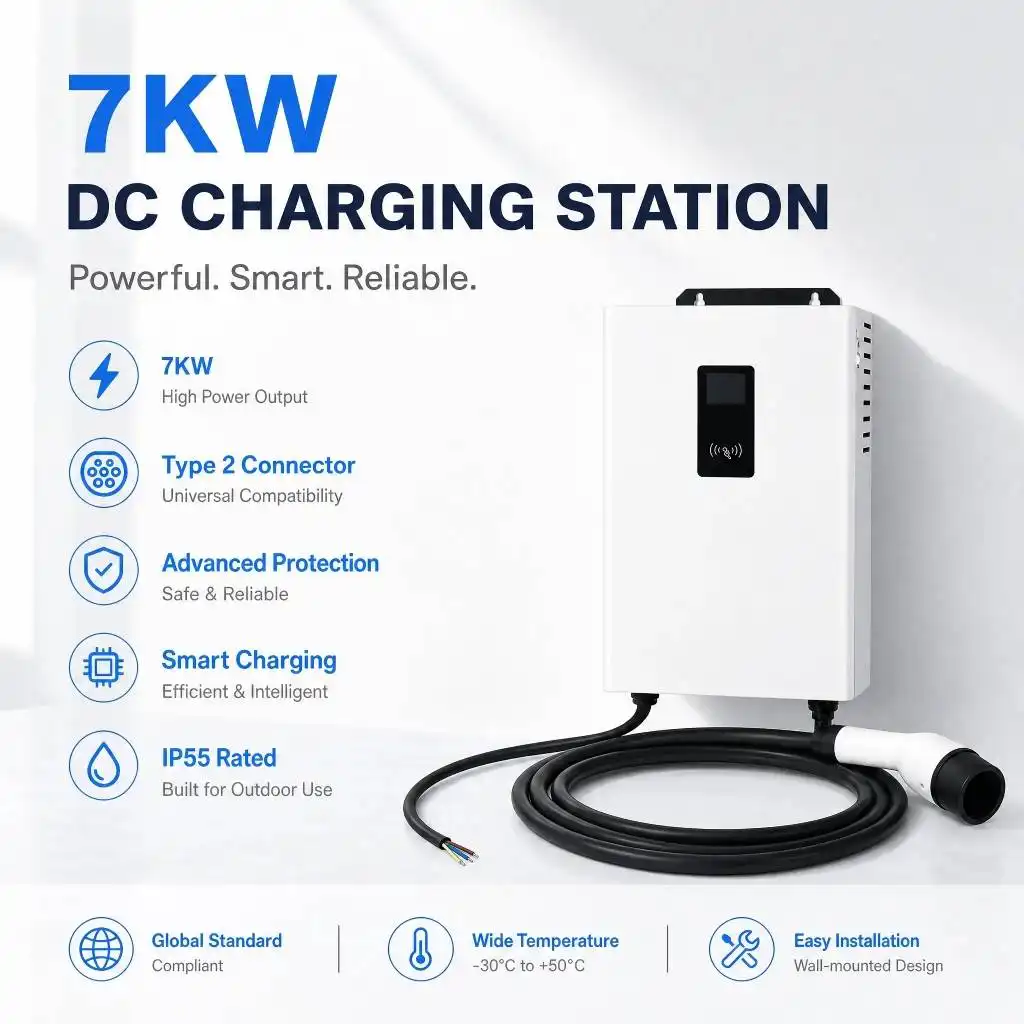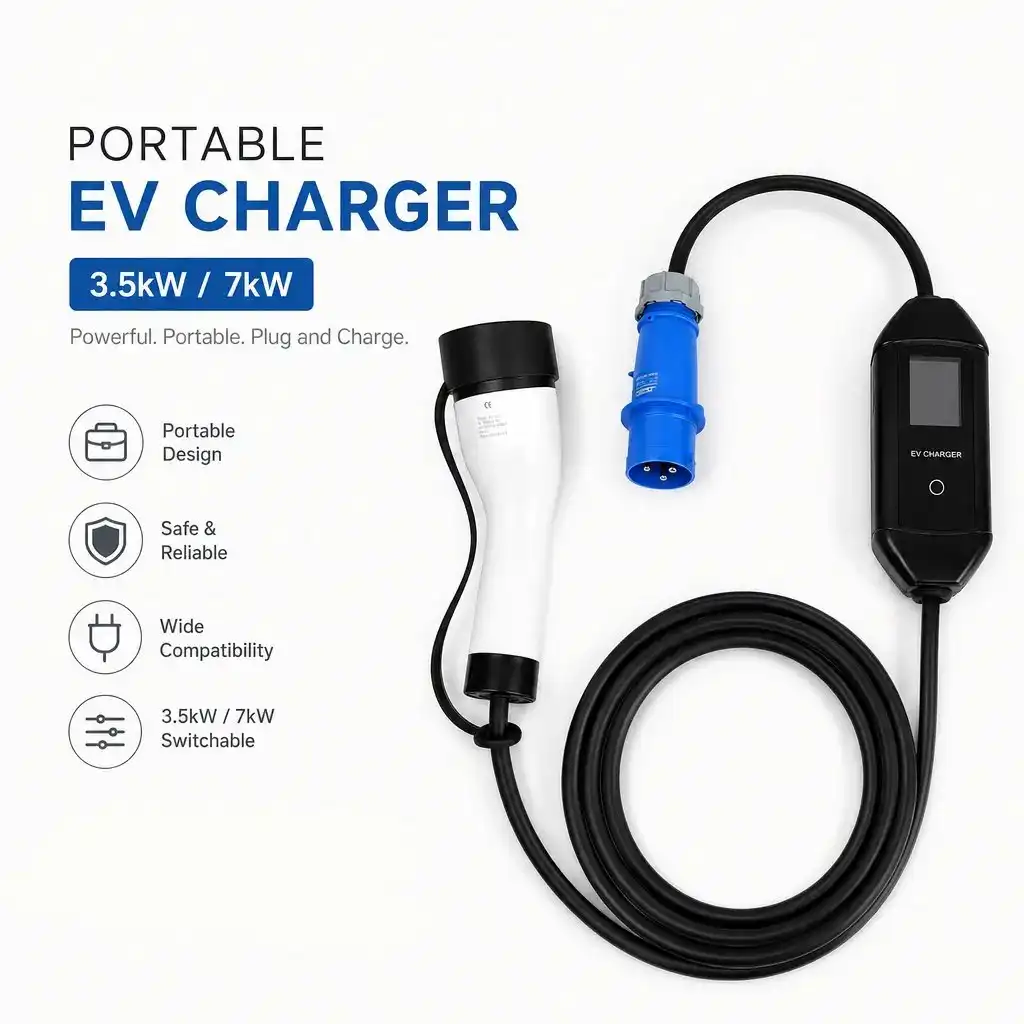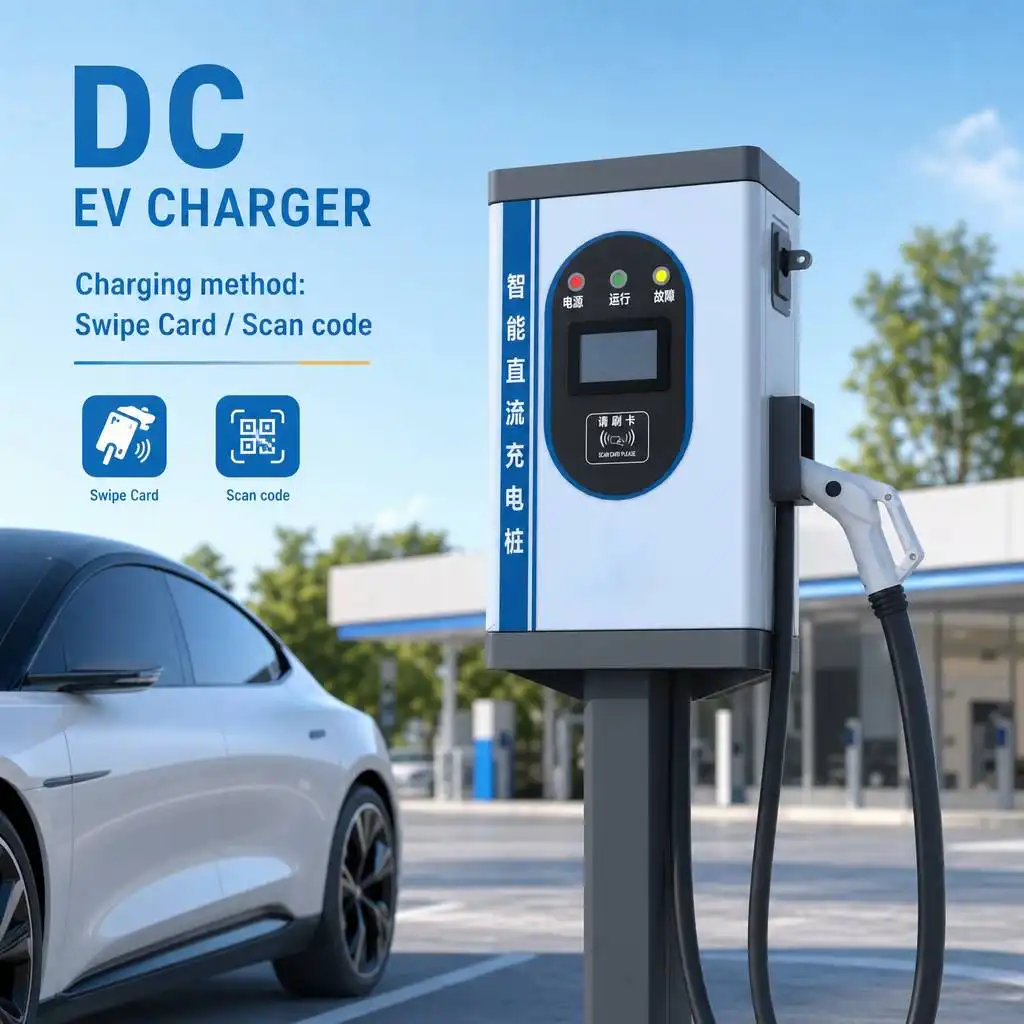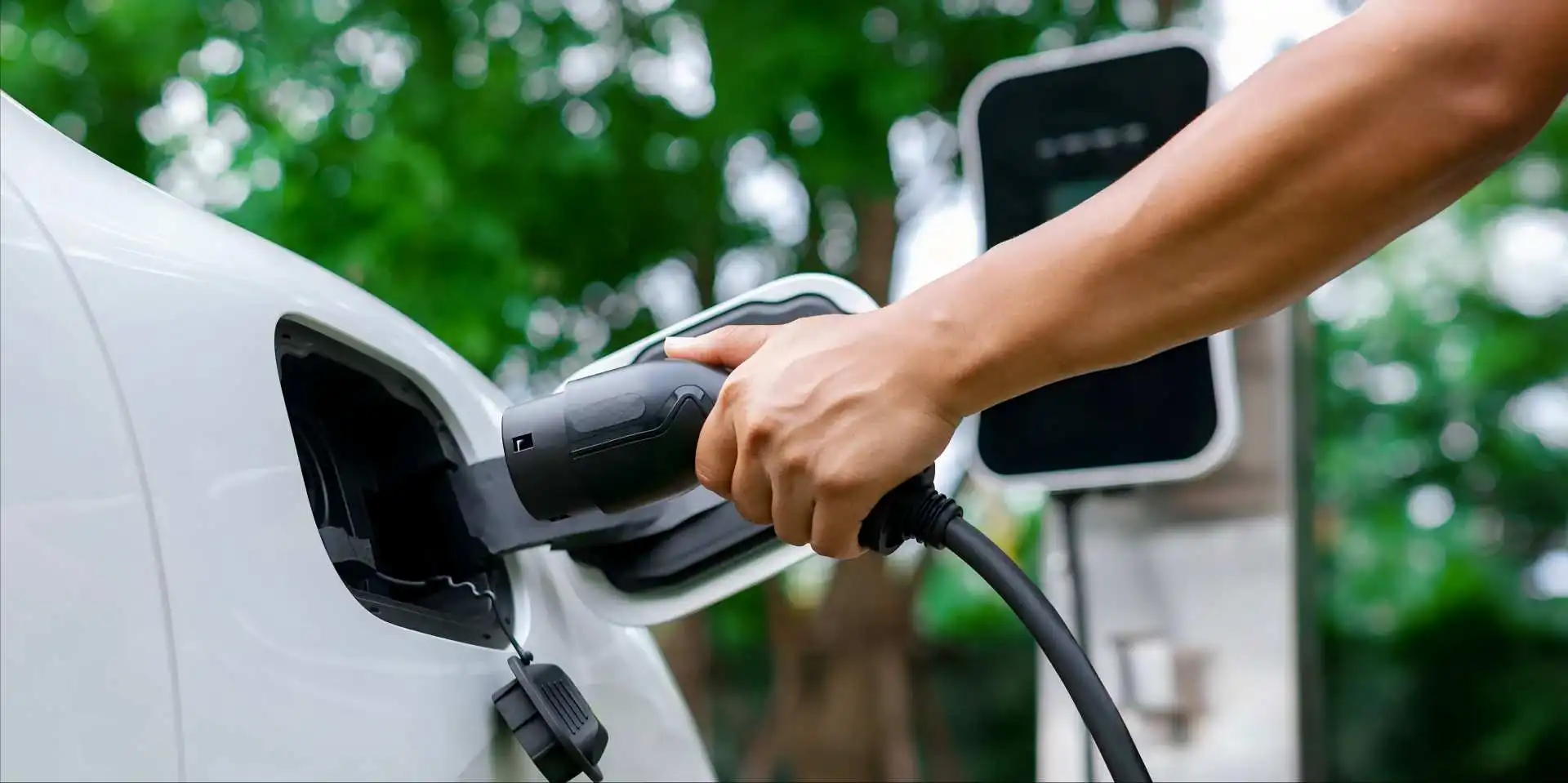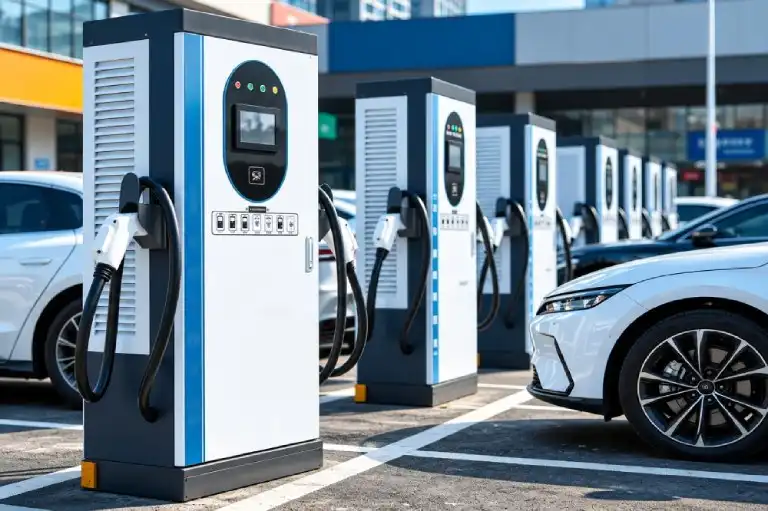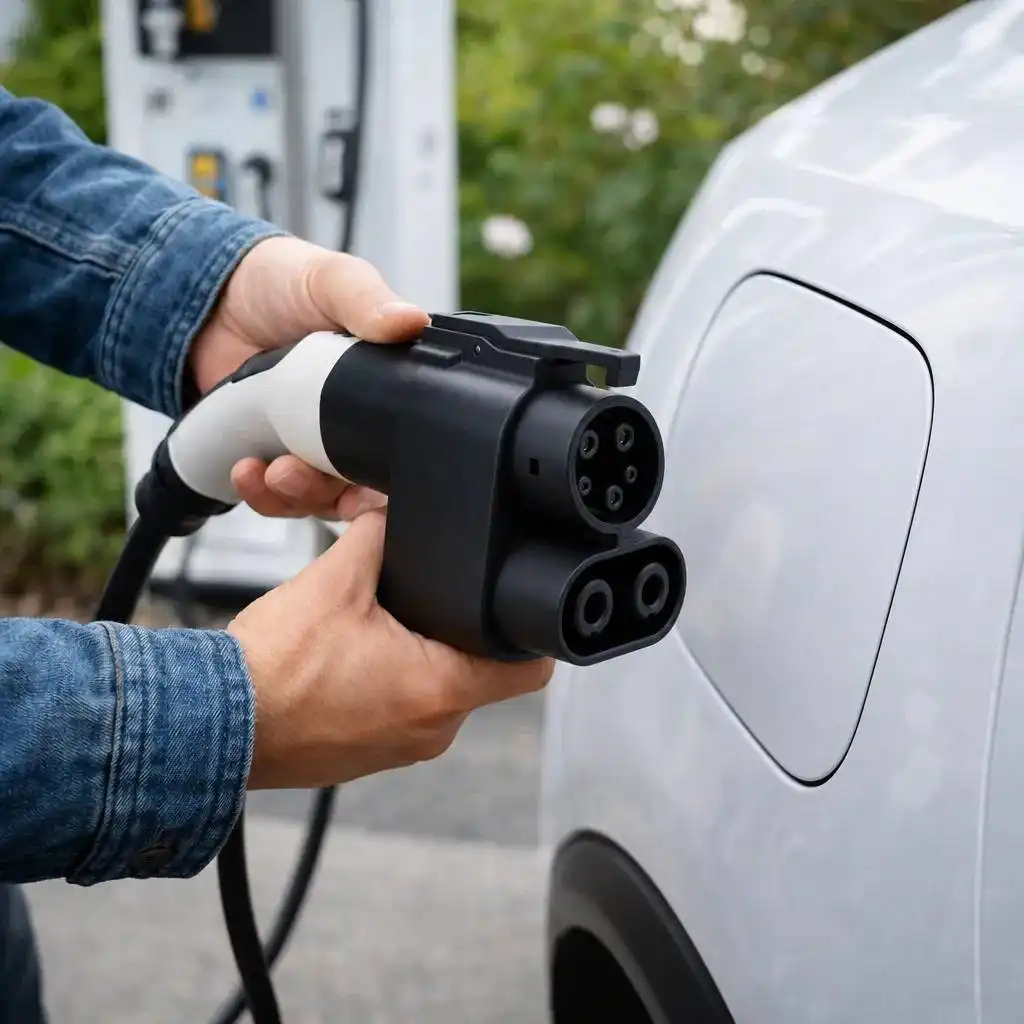
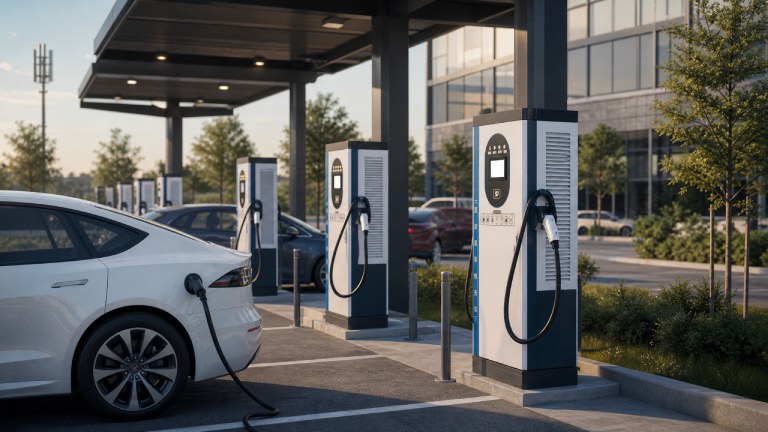
A DC fast charger can bring an electric vehicle to 80% state of charge in about 20 to 60 minutes. The exact time depends on the vehicle and the charger. These units deliver 15 to 350+ kW directly to the battery. That makes DC fast charging the quickest method available today. This speed suits long trips and quick top-ups perfectly. As of January 2025, roughly 25% of public electric vehicle chargers in the United States were DC fast chargers, totaling 49,916 units out of nearly 196,000 public chargers. A DC EV charger changes road trips by adding range fast.
Key Takeaways
- DC fast charging can charge an electric vehicle to 80% in about 20 to 60 minutes.
- Your car’s maximum acceptance rate controls how quickly it can charge, even on a powerful charger.
- Charging gets slower after 80% to protect the battery, so on road trips plan to stop at 80%.
- Cold weather makes charging slower, so warm up the battery before you charge in winter.
- To estimate charging time correctly, use the charger’s average power instead of its peak power.
How Fast Is a DC EV Charger at Different Power Levels?
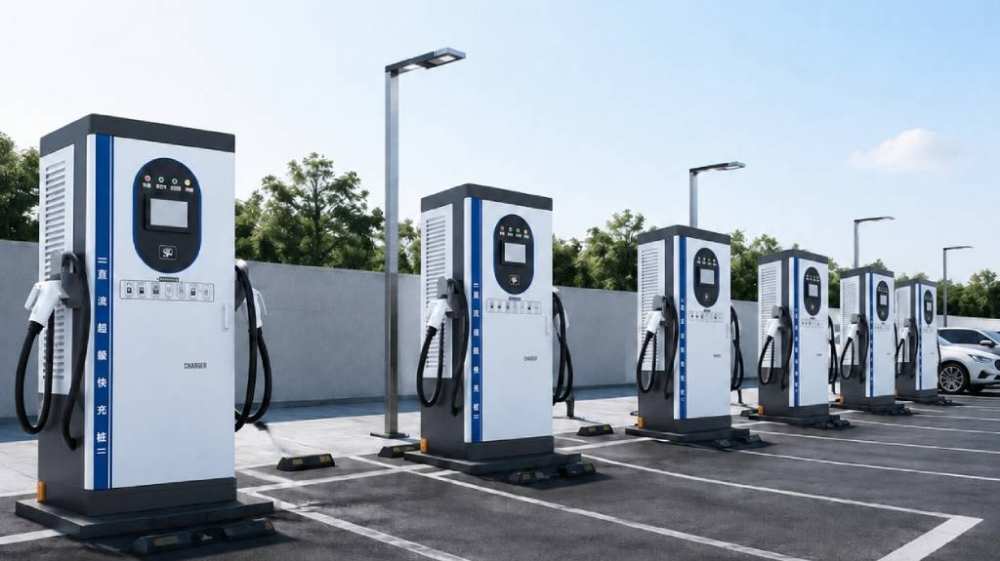
DC fast chargers start at 30 kW. A 50 kW unit qualifies as DC fast charging. The fastest units reach 350 kW or more. The U.S. Department of Energy reports that public DC fast charging equipment can deliver power outputs of up to 500 kW. More power generally means faster charging, but the vehicle itself sets the real limit.
Charging Speeds of 50 kW, 100 kW, and 150 kW DC EV Chargers
A 50 kW DC EV charger adds roughly 36 kWh to a 60 kWh battery in about 43 minutes, based on the standard charging time formula: charging time equals charge needed divided by charging power. That covers a 20% to 80% window. A 100 kW unit cuts that time nearly in half for vehicles that accept the power. A 150 kW charger can push a compatible EV from 20% to 80% in well under 30 minutes.
The vehicle’s maximum acceptance rate caps how much power it can actually draw. A Chevrolet Bolt EV accepts only 50 kW. A Nissan Leaf also peaks at 50 kW. The Nissan Leaf Plus reaches 100 kW. A Volkswagen ID.4 accepts up to 125 kW. Plugging a Bolt into a 150 kW charger still delivers only 50 kW.
A bigger battery generally takes longer to charge. More energy must flow into the pack to reach the same state of charge. A 60 kWh battery needs 36 kWh for a 20% to 80% session. An 80 kWh battery needs 48 kWh for the same window.
Charging Speeds of 250 kW and 350 kW DC Fast Chargers
High-power chargers in the 350–400 kW range are the focus of networks such as EVgo, Electrify America, IONNA, Mercedes-Benz HPC, Francis Energy, and Walmart. Mid-power chargers at 150–249 kW are becoming the de facto minimum standard among non-Tesla networks, partly due to NEVI requirements. Low-power chargers at 24–149 kW are growing through deployments at auto dealerships and ChargePoint 62 kW and 120 kW units.
Real-world results show what these chargers deliver. Independent testing by Supertests Automobile Propre found the Tesla Model 3 Long Range completed a 10% to 80% charge in 33 minutes on a 250 kW charger, with an average measured power of 106 kW. Verdek reports a typical 10% to 80% time of about 20 to 30 minutes for the same model on a 250 kW Supercharger.
The Hyundai Ioniq 5 shows the upper end of this range. According to the 2027 Hyundai Ioniq 5 charging guide, the Long Range model with an 80 kWh usable battery charges from 10% to 80% in approximately 18 minutes on a 350 kW charger. The 800V E-GMP architecture enables a peak charging power of about 240 kW, adding roughly 220 miles of range in that window. Zapmap reports a longer time of 36 minutes on a 350 kW ultra-fast charger, noting the model supports ultra-rapid charging at up to 225 kW.
How Long Does a DC Fast Charger Take to Charge an EV to 80%?
Most drivers stop charging at 80% for good reason. The battery accepts power quickly in the middle of its range. Above 80% state of charge, the charging curve drops sharply. The battery management system slows the flow to protect the cells from heat and stress. The table below shows how this slowdown plays out in real terms.
| Charging interval | DC fast charging time |
|---|---|
| 10% to 80% | 18 minutes |
| 80% to 100% | 32 minutes additional |
Charging from 80% to 100% takes 14 minutes longer than the entire 10% to 80% stretch, or about 1.78 times as long. The final 20% of capacity costs more time than the first 70%. That is why the 20%–80% window is the sweet spot for road trips. A DC EV charger delivers its best value in that range.
Temperature changes everything. Cold batteries resist fast charging. A test drive in winter showed the problem clearly. The driver left for a charger without activating battery preconditioning, which created worst-case conditions on purpose.
- After a 22-mile drive, the battery had warmed to only 37°F (3°C), still too cold for high charging power.
- At the charger, the system projected 55 minutes to go from 25% to 75% state of charge.
- For the first 10–15 minutes, most incoming energy went to heating the battery instead of charging it.
- Charging power never exceeded 100 kW, well below the Model 3’s normal capability.
- On the return trip, with the battery fully warmed, efficiency nearly doubled to about 3 miles per kWh.
The lesson is simple. Precondition the battery before fast charging in winter. Extreme heat causes similar slowdowns, since the system must cool the pack. Preconditioning and shade both help.
What Factors Affect DC Fast Charging Speed and Efficiency?
Many things decide how fast a DC EV charger fills a battery. The charger’s maker, its condition, and its age all matter. The temperature of the air around it matters too. The vehicle’s battery size, age, and overall shape change the result. The battery management system (BMS) then brings these factors together in real time.
How EV Battery Acceptance Rates Limit DC Fast Charging Speed
The battery itself sets the top limit. Every pack has a maximum acceptance rate. A 50 kW vehicle cannot use a 150 kW charger at full power. The BMS watches cell temperatures and voltage levels the whole time it charges. It talks to the charger and tells it how much power the battery can safely take at any moment. When the BMS sees risky conditions, like high heat or voltage near safe limits, it tells the charger to send less power. Cooling systems and smart charging tech work with the BMS to adjust delivery based on real-time conditions.
Cold weather makes this limit worse. At 0°C outside, a pack left cold charged from 20% to only 42% in 15 minutes. A pack warmed by driving reached 66% in the same time. A warmed pack with no extra heating load hit 80%. The BMS limits current until the battery warms, so a cold pack gains far less charge in the same time.
How the DC Fast Charging Curve Changes as Battery Charge Increases
Charging speed drops as the state of charge goes up. As the battery gets near 80%, the BMS slows charging on its own to cut heat and cell stress. This taper protects the battery’s long-term health. Charging the last 10% of an EV battery can take as long as charging the first 90%. For the best cost and time, DC fast charging is suggested until the battery hits 80%.
Efficiency losses also differ. DC fast charging studies report efficiencies above 90%, with one 2018 European study measuring 93% and a 2015 Korean study reporting 85–89%. AC Level 2 results range from 89.4% to about 93–95% at higher currents. The gap is small, but it shows that faster charging does not always mean more wasted energy.
How Battery Temperature Affects DC EV Charger Performance
Battery temperature directly affects DC EV charger performance. Cold batteries generally accept less power until they warm up, while excessive heat can trigger charging limits. Battery preconditioning, when supported by the vehicle, can help prepare the battery for faster charging.
How Battery Size and State of Charge Affect Charging Time
Battery capacity and starting state of charge determine how much energy an EV needs. A larger battery generally takes longer to charge than a smaller one at the same power level. For example, charging from 20% to 80% requires replenishing 60% of the battery’s usable capacity. Actual charging time also depends on vehicle limits and the charger’s available output.
How Does DC Fast Charging Compare With AC EV Charging Speeds?
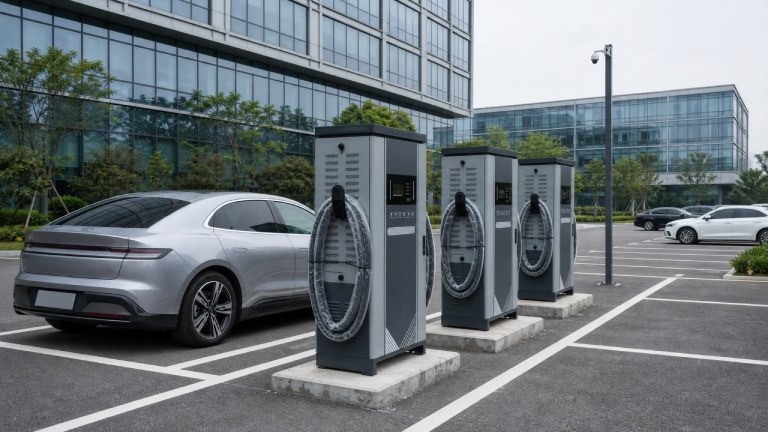
AC charging and DC fast charging serve different purposes. A Level 1 EV charger plugs into a standard 120V outlet and adds about 3–5 miles of range per hour. A Level 2 EV charger uses a 240V circuit and typically adds 25–40 miles per hour.
Level 3 EV chargers, also known as DC fast chargers, deliver direct current to the battery and provide much faster charging. They typically operate at 50 kW or higher, with high-power models reaching 350 kW or more. Depending on vehicle compatibility and battery conditions, they can add substantial driving range in 20–30 minutes, making them suitable for highway stations, public charging hubs, and commercial fleets.
| Charging Level | Power Type | Typical Range Added per Hour |
|---|---|---|
| Level 1 (120V) | AC | 3–5 miles |
| Level 2 (240V) | AC | 25–40 miles |
| Level 3 (DC Fast Charging) | DC | Varies by charger and vehicle; can exceed 180 miles |
Real-world charging times vary by vehicle. The Tesla Model 3 Long Range can take around 30–35 minutes to charge from 10% to 80% under suitable conditions. The Hyundai Ioniq 5 can charge faster on compatible high-power equipment, depending on its battery version and charging conditions.
DongYu offers DC EV chargers ranging from 20 kW to 480 kW for fleet depots, commercial sites, and public charging infrastructure. Wholesale and customization options help buyers select charging equipment for different project requirements.
AC charging remains suitable for overnight home charging and workplace use, while Level 3 DC fast charging is ideal when drivers need to recharge quickly. Both technologies serve different charging needs.DC fast charging wins when time is short. The two methods work together, not against each other.
How Can You Figure Out DC EV Charger Charging Time?
Estimate charging time by dividing the energy needed (kWh) by the average charging power (kW). For example, an EV with an 80 kWh battery needs 48 kWh to charge from 20% to 80%. At an average power of 100 kW, it takes roughly 29 minutes, excluding charging losses.
However, a DC EV charger rarely delivers its maximum rated power throughout the session. Charging speed varies with the vehicle’s acceptance rate, battery temperature, and state of charge. Power usually decreases as the battery approaches 80%.
For a more accurate estimate, use this formula:
- Energy needed (kWh) = Battery capacity × (Target charge % − Current charge %) ÷ 100
- Charging time (hours) = Energy needed ÷ (Average charging power × Charging efficiency)
Most EVs can charge from 20% to 80% in around 20–60 minutes using DC fast charging, depending on the vehicle and charger.
To save time, plan charging stops before the battery reaches full capacity, precondition the battery in cold weather when supported, and remember that a higher-power DC EV charger only helps when the vehicle can accept that power.
Frequently Asked Questions About DC Fast Charging Speeds
How Long Does DC Fast Charging Take From 20% to 80%?
DC fast charging typically takes 20–60 minutes to charge from 20% to 80%. Actual time depends on the charger’s output, battery size, and the vehicle’s maximum charging rate.
Why Does DC Fast Charging Slow Down After 80%?
Charging slows after 80% because the battery management system reduces power to control heat and voltage as the battery fills. Stopping around 80% can save time during long trips.
Can Every Electric Vehicle Use a High-Power DC Fast Charger?
No. The vehicle must support DC fast charging and use a compatible connector. Its maximum charging acceptance rate also determines how much power it can receive, even from a high-power charger.
Does a Higher-Power DC EV Charger Always Charge Faster?
No. Charging speed is limited by the vehicle’s acceptance rate, battery temperature, and state of charge. A 350 kW DC EV charger will not charge a vehicle faster than its own power limit allows.