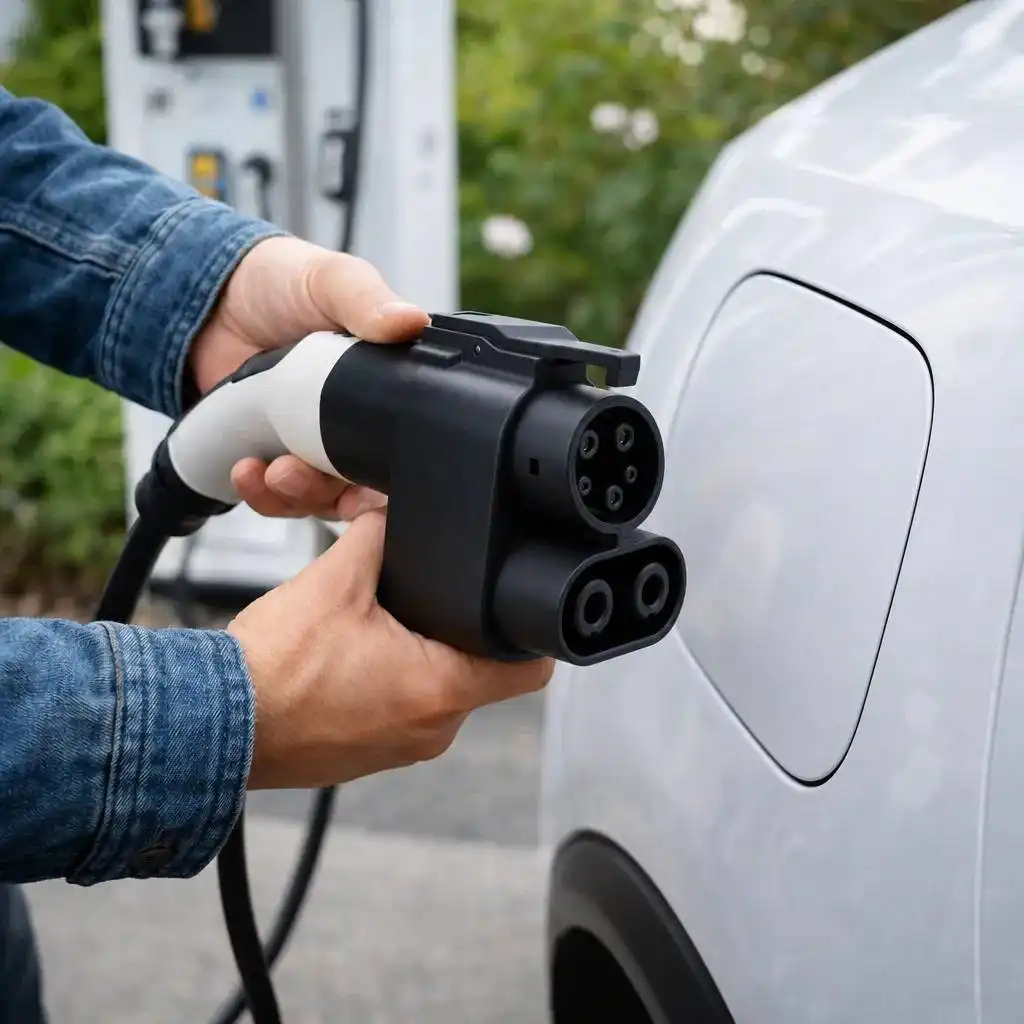
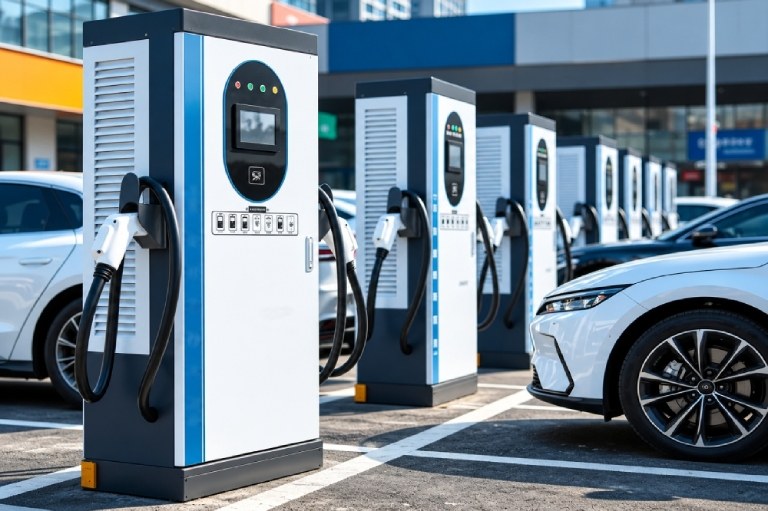
Buying a commercial EV charging station has six main steps. You must assess needs, research costs and funding, choose hardware, prepare the site, install, and market the station for profit. This guide gives business owners practical direction.
Demand for electric vehicles is growing. The ICCT says U.S. EV sales hit 1.56 million in 2024, about 10% of light-duty vehicles. That growth means money-making chances. Stores, hotels, and workplaces can attract EV drivers and earn income while they charge. A well-planned station turns parking time into profit.
Start with a clear needs assessment. Know your customers, how long they stay, and how they charge. A good plan makes later choices easier.
Key Takeaways
- First, figure out your business needs. Know your customers and how long they park. This guides your charger choice.
- Pick the right charger type. AC EV chargers are good for long stays. DC EV chargers are for quick top-ups.
- Check the hardware and software features. Look for safety certifications and OCPP compatibility. These ensure reliability and easy management.
- Plan your site and costs. Check the electrical capacity and any incentives you can get. This step lowers what you pay upfront and over time.
- Pick a trusted supplier. Check warranties and support. A good supplier protects your investment and helps you grow.
Step 1: Assess Business Needs for Commercial EV Charging Stations
Evaluate EV Demand, Parking Duration, and Required Charging Ports
Each project begins with clear goals. A retail store might want to draw in EV drivers who shop for an hour. A hotel might want overnight guests who need a full charge by morning. A delivery company might need quick turnaround for its vans. Write down your main goal before you call any supplier. This goal shapes every choice you make later about power level, port count, and location.
Next, look at your daily traffic and how drivers act. Count how many cars come into your lot each day. Check how long drivers usually stay. A grocery shopper stays 30 to 60 minutes. A moviegoer stays two to three hours. An office worker parks for eight hours. These stay times tell you if Level 2 or DC fast charging fits your site. Longer stays work well with slower, cheaper chargers. Short stays need fast charging.
The type of location also matters. Retail, hospitality, workplace, multifamily, and public infrastructure each have different charging patterns. Workplace sites need enough ports for employees who plug in each morning. The table below shows a common planning guide.
| Facility Type | Recommended Ratio | Example |
|---|---|---|
| Office parks, medical centers, university campuses | 1–2 charging stations per 10–20 parking spots | A 100-space lot could install 5–10 charging stations |
A simpler rule also helps. As one industry guideline puts it:
You should have at least one EV charging station for every 25 to 30 parking spots. This ratio ensures that there is always a charger available for EV drivers, and it avoids overburdening the power supply.
These ratios give you a starting point. Your own traffic counts and stay-time data sharpen the final number. A busy retail center with short stays may need more ports than a quiet office park. Commercial EV Charging works when supply matches real driver demand.
Step 2: Choose the Right Commercial EV Charger Type for Your Site
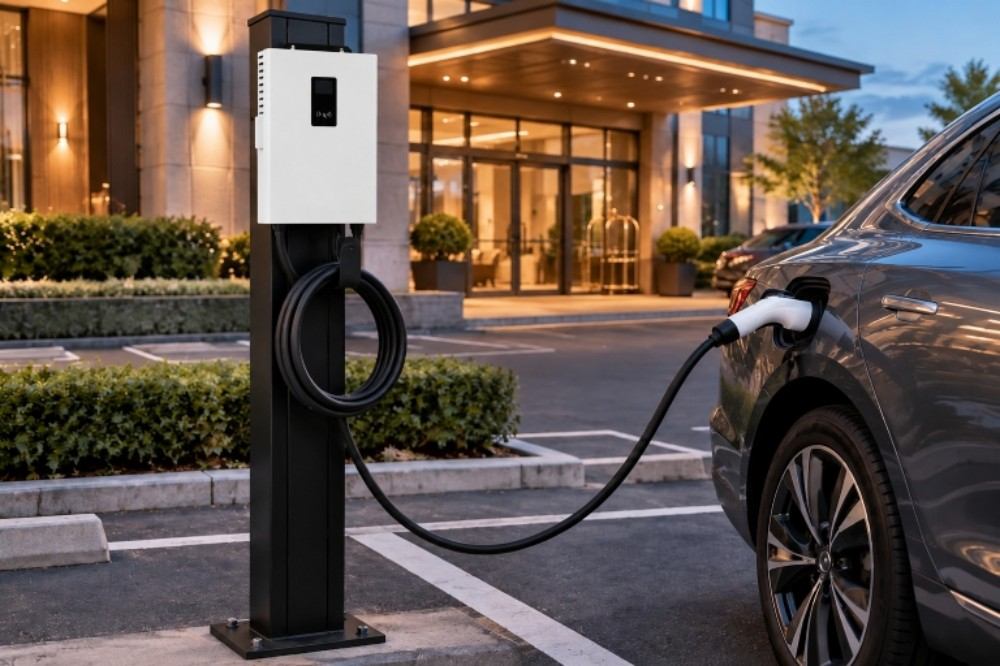
Compare AC EV Chargers and DC EV Chargers for Commercial Use
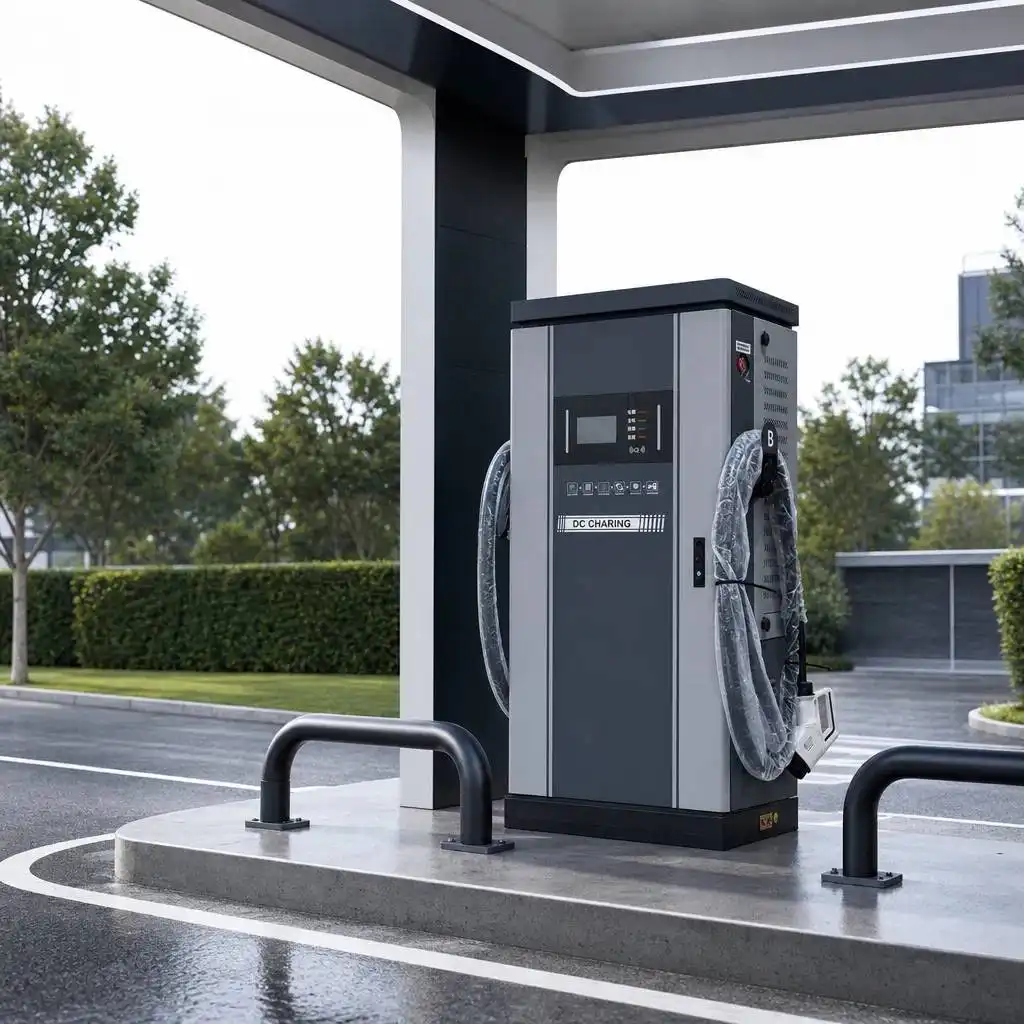
The charger type decides your cost, your customers, and your power needs. Level 2 AC chargers suit long parking times. DC fast EV chargers serve drivers who need a quick top-up. The table below shows the main differences.
| Feature | Level 2 AC Charging | DC Fast Charging |
|---|---|---|
| Charging Speed | Adds range over several hours | Can reach ~80% in under an hour |
| Best Use Case | Overnight, work, long parking | Highway stops, urgent charging |
| Power Conversion | Inside the vehicle | Inside the station |
| Cost | Lower | Higher |
| Battery Impact | Gentler | More heat |
Level 2 units fit offices, hotels, and apartment complexes. Drivers park for one to six hours or more. DC fast units fit highway rest areas, fleet depots, and busy retail sites. A delivery fleet needs fast turnaround. A hotel guest needs a full charge by morning.
Most EVs charge at about 7.2–19.2 kW on Level 2.
Level 2 output ranges from 3 kW to 22 kW. DC fast output ranges from 15 kW to 350 kW and beyond. Level 2 wins on cost. Installation runs $3,500–$15,000 per port. DC fast installation runs $18,000–$350,000 or more per port. Level 2 also costs less per kilowatt-hour and needs less maintenance. DC fast brings higher energy demand and more complex cooling.
Check EV Charger Connector Compatibility and Power Requirements
Connector type depends on your region. North America uses CCS1 and NACS for DC, J1772 for AC. Europe uses Type 2 AC and CCS2 DC. China uses GB/T AC and GB/T DC. A charger with the wrong plug cannot serve local drivers. Confirm the standard before you buy.
Power requirements differ by type. Commercial Level 2 units run on 208V–240V single-phase power. They are configurable up to 80A output per port. A 100A circuit delivers a maximum of 19.2 kW at 240VAC. DC fast units need 3-phase AC input. A 360 kW model draws from a 3-phase 480VAC system on a 600A or larger circuit. NEC Article 625 requires cables and breakers rated for at least 125% of a continuous load. Each station also needs a dedicated circuit.
Funding options reduce the upfront burden. Federal and state incentives, tax credits, loans, and grants all lower the net cost. Charging-as-a-Service plans and site host partnerships with networks like ChargePoint or FLO shift capital costs to the operator. Financing and subscription models cut the cash needed at signing. These tools make Commercial EV Charging affordable for small businesses. Match the charger to your site, your drivers, and your budget before you commit.
Step 3: Compare Commercial EV Charger Hardware and Software Features
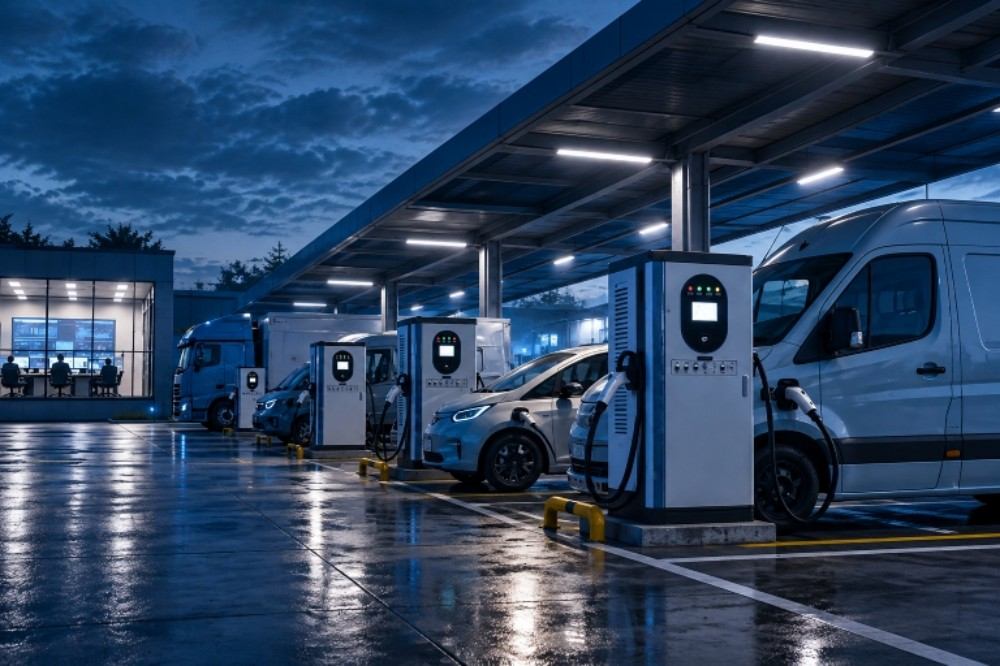
Evaluate EV Charger Safety, Weather Protection, and Durability
Safety and durability are essential when choosing a Commercial EV Charger. For the U.S. market, check applicable electrical safety requirements and recognized certification marks, such as UL or ETL. For outdoor installations, NEMA Type 4 enclosures protect against weather exposure, while Type 4X adds corrosion resistance for coastal and industrial environments.
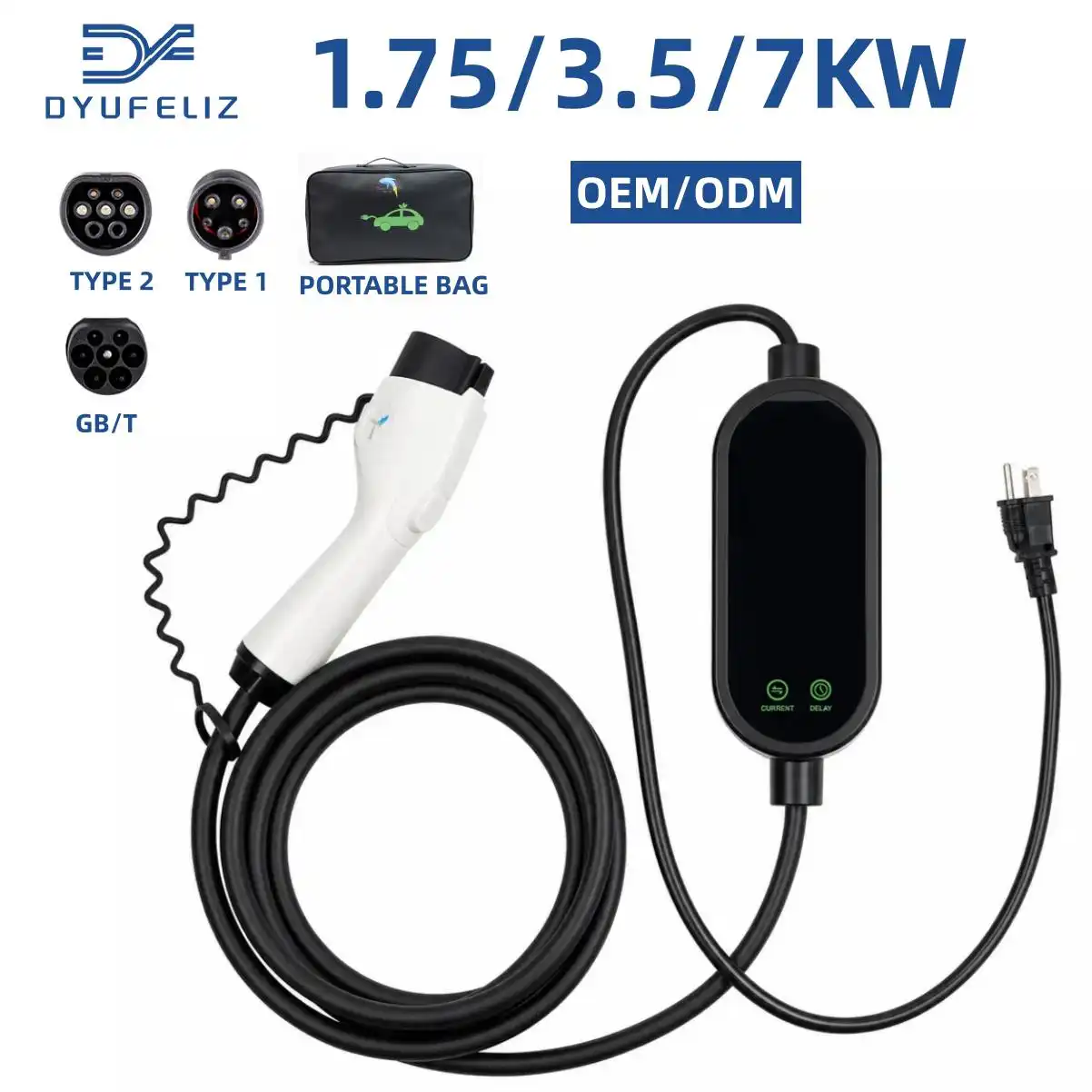
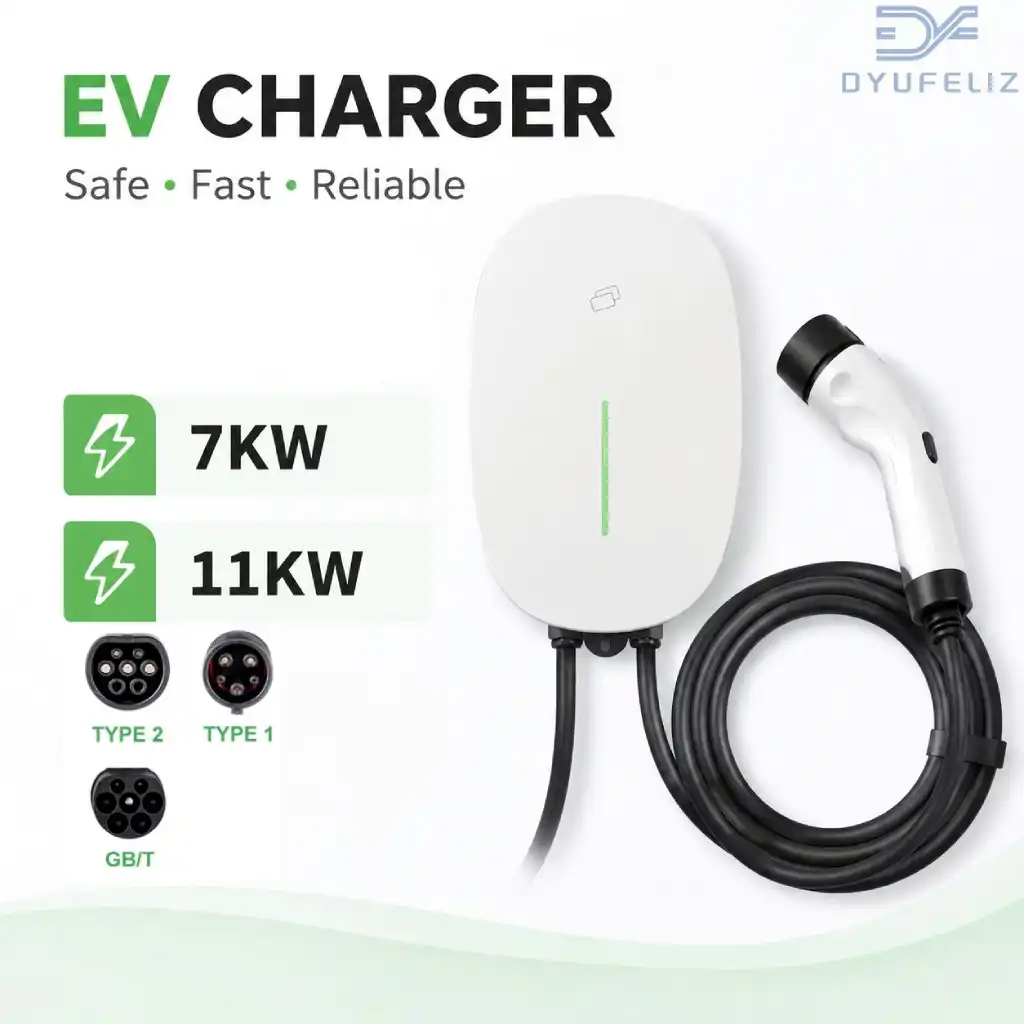
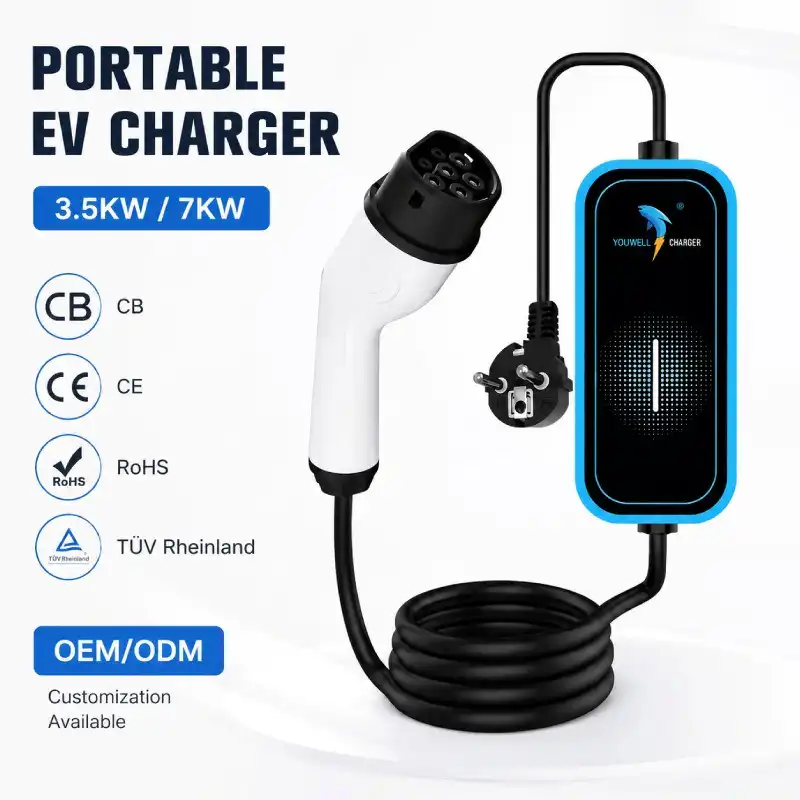
Also compare charging power, connector types, cable length, and warranty coverage. DongYu offers AC and DC EV chargers, Type 1, Type 2, and GB/T connectors, OEM/ODM customization, and a 12-month warranty. Buyers can evaluate these options based on their site requirements and project specifications.
Check OCPP Compatibility, Network Connectivity, and Remote Monitoring
For networked Commercial EV Chargers, check compatibility with the charging management platform before purchasing. The Open Charge Point Protocol (OCPP) enables communication between chargers and backend systems, helping operators manage equipment across different locations. OCPP 1.6 and 2.0.1 are important versions to evaluate.
Remote monitoring can provide real-time charging status, fault alerts, energy consumption data, and remote control. These functions help operators identify problems, reduce unnecessary site visits, and manage multiple charging stations more efficiently. Confirm that the charger and software support the specific features your operation requires.
Compare EV Charger Payment Options, Access Control, and Billing
Payment and access control determine how drivers use commercial charging stations. Public charging sites may require contactless payments, RFID cards, or mobile app payments, while workplaces and fleet depots may prioritize authorized access.
Billing features are equally important. Look for session records, energy-based pricing, transaction reports, and user-level billing where needed. Property managers may need to allocate charging costs among tenants, while fleet operators may require centralized expense tracking.
Before selecting a Commercial EV Charger, confirm that the hardware, payment methods, and backend software work together. This helps create a charging service that fits your business model and simplifies daily operations.
Step 4: Assess Site Readiness for Commercial EV Charger Installation
Check Electrical Capacity, Load Management, and Upgrade Requirements
Electrical capacity decides how many chargers your site can handle. Engineers figure out the load for each charger by multiplying voltage by rated input current. A 208 V charger pulling 48 A needs 9.984 kW. NEC 220.57 counts EVSE as a continuous load. A 225 kVA transformer can support about 22 of these chargers.
Load management lowers upgrade costs. Dynamic Load Management sets a real-time power limit. Chargers only pull power after building operations get full support. Businesses that use DLM cut installation costs by 40% compared to normal grid upgrades. Material costs can drop by up to 75% with management controllers. Some systems let up to 8 EVs charge from one 40–60A branch circuit using rotational charging. Without load management, electrical upgrades cost $2,000 to over $50,000. Submetering tracks energy use per charger and can cut energy use by 15–30%.
Circuit sharing lets several chargers share one circuit. Dedicated panel sharing gives chargers their own breakers. Mixed load panel sharing uses spare capacity on panels that already serve HVAC or lighting. These methods avoid or delay pricey service upgrades.
Review Parking Layout, Accessibility, Permits, and Local Codes
Pick spots that are easy to see with enough power and parking. Accessible EV charging spaces must be on the shortest accessible path to the building entrance. The ADA requires clear floor space and operable parts within reach, less than 48 inches above ground. Vehicle charging space slope must be less than 1:48. Provide an 11-foot-wide, 20-foot-long vehicle space and a 5-foot-wide access aisle.
Permits differ by state and city. Zoning approvals, electrical permits, and ADA compliance all apply. Talk to local authorities early. Some states already require a minimum number of accessible chargers. The Access Board will issue rules on accessible charger counts. Signs with the ISA are not recommended at accessible EV charging spaces unless local code requires them. Turning accessible parking spaces into EV charging is not recommended. This step protects your Commercial EV Charging investment.
Step 5: Calculate Commercial EV Charging Station Costs and Incentives
Costs tell you whether a Commercial EV Charging station can make money. Use a 10-year calculation to protect your budget. The ranges below come from industry benchmarks.
Compare EV Charger Hardware, Installation, and Operating Costs
Hardware is only part of the price. Budget Level 2 chargers cost $600–$1,200. Mid-range commercial models run $1,500–$3,500. High-end Level 2 units reach $4,000–$7,000 or more. DC fast chargers cost $40,000–$150,000+.
Installation adds more to the bill. Panel upgrades run $5,000–$25,000, while trenching and conduit will cost $50–$150 per linear foot. Permits cost $500–$2,500, and soft costs add 10–20%. Hire a certified electrician, coordinate with the utility, and activate the network before opening.
Costs continue after launch. Network fees run $15–$75 per port monthly, and electricity costs $0.10–$0.30 per kWh. Maintenance costs $200–$500 per port each year. Payment processing fees apply when drivers pay, and DC fast sites also face demand charges. You need a monthly plan for remote monitoring and customer support. Also schedule routine maintenance for cables, connectors, and screens.
Calculate Total Ownership Costs and Explore Available EV Charger Incentives
Look at 10 years when planning replacements. Level 2 units last 7–10 years, and DC fast units last 8–10 years. Budget for at least one component replacement and an end-of-life refresh.
Federal incentives lower the net price. The Inflation Reduction Act renewed Section 30C.
- The base credit is 6% of depreciable property cost, up to $100,000 per port.
- If you meet prevailing wage and apprenticeship rules, the credit rises to 30%.
- Tax-exempt entities can use direct pay.
- The station must be in an eligible census tract.
Revenue can offset cost. Level 2 stations earn about $1,200–$1,800 per port monthly with 4 hours of daily use. DC fast stations earn $3,000–$5,000 per port monthly at 60% usage. State rebates, utility make-ready support, and demand-response payments also lower cost. Paid charging, time-of-day pricing, and demand-based pricing help recover costs. Signage, app listings, loyalty programs, and partnerships raise usage. Fast charging brings repeat customers, and visitors buy while they wait, so extra income rises. Most commercial properties break even in 3–5 years.
Step 6: Evaluate Commercial EV Charger Suppliers and Support Services
Compare EV Charger Warranties, Maintenance, and Technical Support
When comparing Commercial EV Charger suppliers, look beyond the initial price. Consider shipping, installation, software fees, maintenance, spare parts, and potential downtime to estimate the total cost of ownership.
Check warranty coverage, technical support availability, repair procedures, and firmware updates. Confirm whether cloud services require recurring fees and whether replacement parts are readily available. Manufacturers with in-house production and customization capabilities may offer more direct technical support.
Check Supplier Experience, Compliance, and Future Expansion Capabilities
Choose a supplier with relevant project experience, verifiable certifications, and reliable technical support. Check applicable safety standards for your target market, such as UL requirements in North America and CE requirements in Europe, and verify certification for the specific charger model.
For future expansion, consider Commercial EV Chargers that support OCPP-compatible management systems, adjustable power settings, and load management where available. Planning electrical capacity and cable routes ahead of time can also reduce future upgrade costs.
A successful Commercial EV Charging project starts with clear requirements, suitable equipment, realistic budgeting, and a reliable supplier. Evaluate these factors before purchasing to reduce risks and support long-term business growth.
Frequently Asked Questions About Buying Commercial EV Chargers
How Much Does a Commercial EV Charging Station Cost to Purchase?
The cost of a Commercial EV Charging Station depends on its power output, connector type, software features, and installation requirements. AC chargers generally cost less than DC fast chargers, while customized hardware and network management features may increase the total investment. Businesses should compare equipment prices, installation costs, and ongoing operating expenses before purchasing.
How Many Commercial EV Charging Stations Does a Business Need?
The number of Commercial EV Charging Stations depends on daily traffic, parking duration, expected EV adoption, and available electrical capacity. Workplaces and hotels may start with a few AC chargers for longer parking periods, while busy public locations and fleet depots may need more chargers or higher-power DC units. Planning for future demand can help avoid costly upgrades.
How Long Does Commercial EV Charger Installation Usually Take?
Installation time varies with site conditions, charger quantity, electrical capacity, and permitting requirements. A straightforward installation may take a few days, while projects requiring electrical upgrades, utility coordination, or construction can take several weeks or longer. A site assessment helps establish a realistic timeline.
Can Commercial EV Charging Stations Generate Revenue for Businesses?
Yes. Businesses can generate revenue by charging drivers per kWh, per session, or by parking duration, depending on local regulations and platform capabilities. Charging stations can also attract customers, support tenant services, and improve fleet operating efficiency. Profitability depends on utilization, electricity costs, pricing, and maintenance expenses.
What Should Businesses Check Before Buying Commercial EV Chargers?
Before purchasing Commercial EV Chargers, businesses should evaluate:
- Power and compatibility: Match AC or DC output and connector types to target vehicles.
- Safety and durability: Check applicable certifications and environmental protection ratings.
- Software and connectivity: Confirm OCPP compatibility, remote monitoring, and payment options.
- Installation requirements: Assess electrical capacity, site conditions, and local regulations.
- Supplier support: Review warranty terms, customization options, and technical assistance.
DongYu offers AC and DC EV charging solutions with OEM/ODM customization. Businesses can compare available configurations to identify equipment that fits their project requirements.