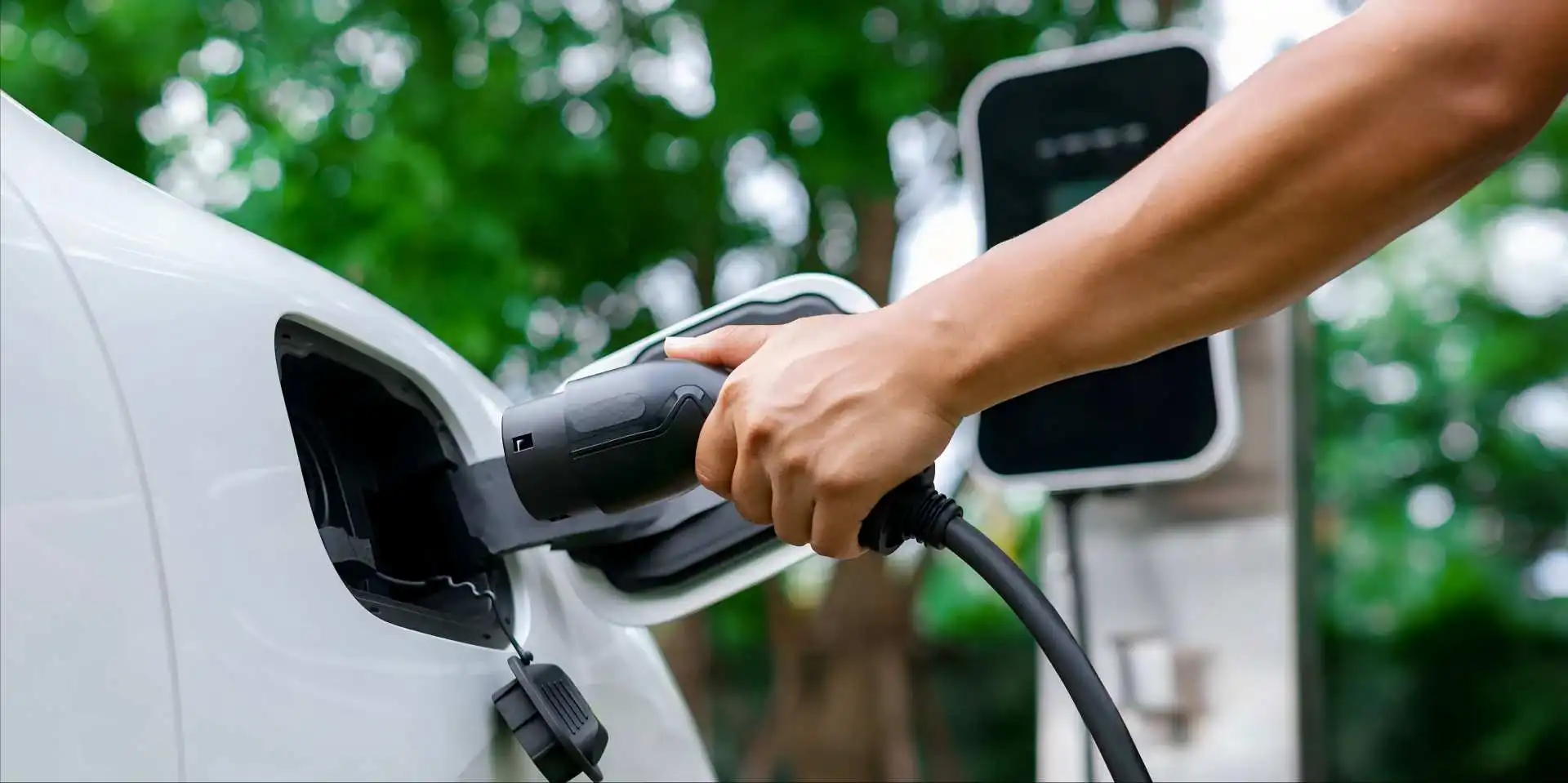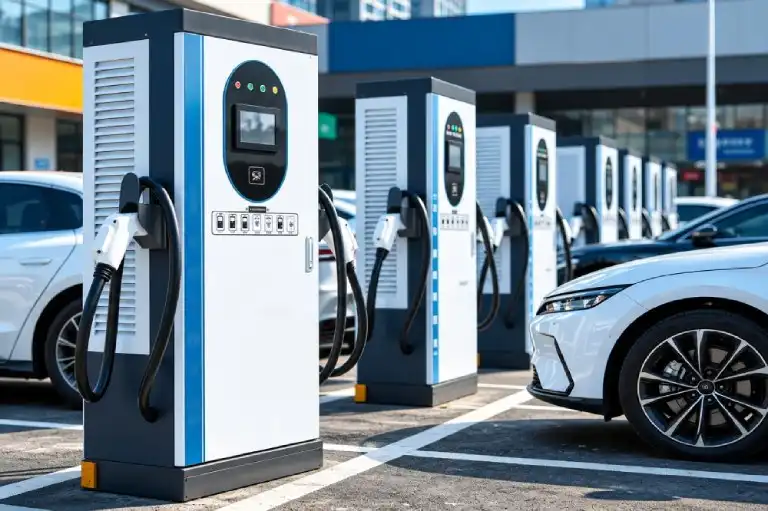
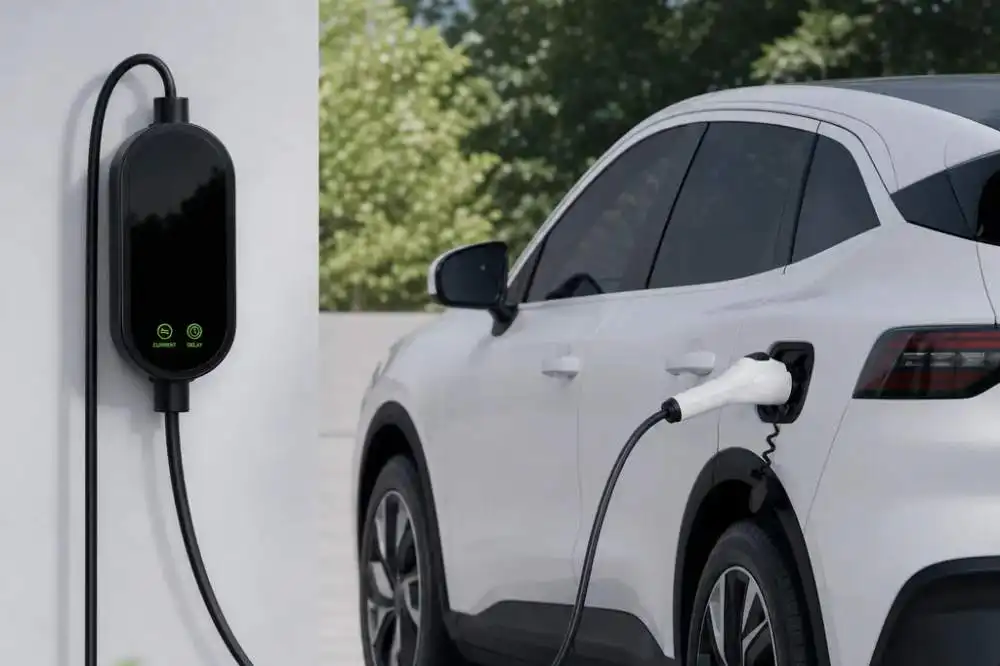
An AC EV Charger is a device that gives alternating current to a vehicle, and the car changes that power to DC for its battery. This is the most common way to recharge at home and at work. Actual speed depends on the vehicle’s onboard charger, not the charging station alone. Level 1 units plug into a standard household outlet and charge slowly, so they work well for overnight use. Level 2 units give more power for daily driving. This guide explains how AC charging works, the main charger types, their benefits and limits.
Key Takeaways
- AC EV chargers send alternating current to your car, and the car’s onboard charger changes it to DC for the battery.
- Level 1 chargers plug into a normal outlet and charge slowly, while Level 2 chargers use 240 volts and charge much faster.
- AC charging is great for home, work, or hotel stays because it costs less and is easier on your battery than DC fast charging.
- Before you buy a charger, check your car’s onboard charger limit and your region’s connector type (Type 1, Type 2, or GB/T).
- AC charging costs about one-third as much as public DC fast charging. This makes it the cheapest way to charge your car every day.
What Is an AC EV Charger and How Does It Work?
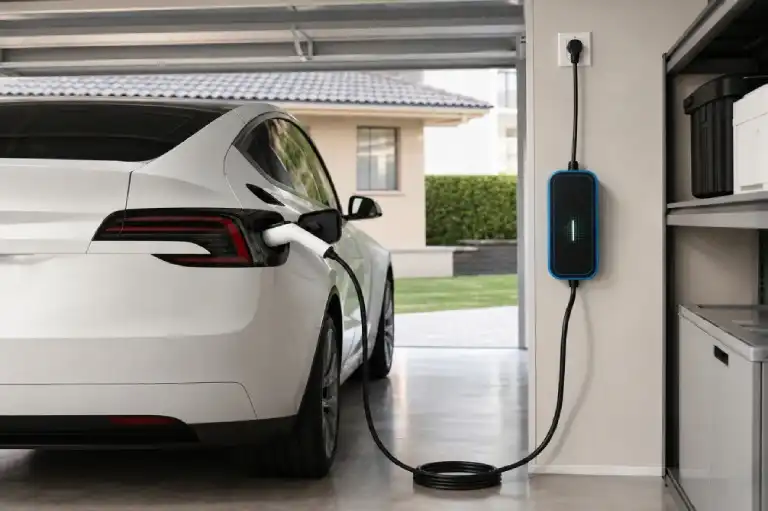
An AC EV Charger is a device that sends alternating current electricity to a vehicle. Alternating current is the normal supply in homes and most commercial buildings. It changes direction at regular times, which is why it has the “alternating” name. The charger gives this current to the car, and the car does the rest.
The charger itself does not change power. That job goes to the onboard charger inside the vehicle. This small but important detail explains why AC charging speed differs so much from one car to another. The station may offer plenty of power, but the car takes only what its onboard hardware allows.
The Onboard Conversion Process
The onboard charger turns grid AC into DC for the battery pack. It works through four stages in order.
- An EMI filter removes unwanted noise from the incoming AC power. It also limits voltage and current spikes that could harm later stages.
- Power factor correction does the actual AC-to-DC conversion. Capacitors and inductors bring the current waveform in phase with the voltage, raising the power factor close to 1.
- A DC-to-DC converter steps the roughly 700 V DC from the correction stage up or down. The result is the 400–1000 V DC range used by most EV high-voltage buses. This isolated stage also separates the grid from the DC bus for safety.
- A final filter removes remaining harmonics and fine-tunes the voltage before it reaches the battery.
During this process, the onboard charger talks with the battery management system. That system decides whether charging is allowed and how much power the pack will accept. The charger then controls the flow using a constant-current and constant-voltage strategy.
AC Chargers as Part of EVSE
AC chargers belong to a larger group called electric vehicle service equipment, or EVSE. This term covers the hardware that connects an EV to the electricity grid and controls energy flow.
- EVSE is the formal name for charging hardware. People also call it an EV charger, charging station, charge point, or charging dock.
- In Level 1 and Level 2 charging, the AC charger supplies AC power to the vehicle. The onboard charger converts it to DC.
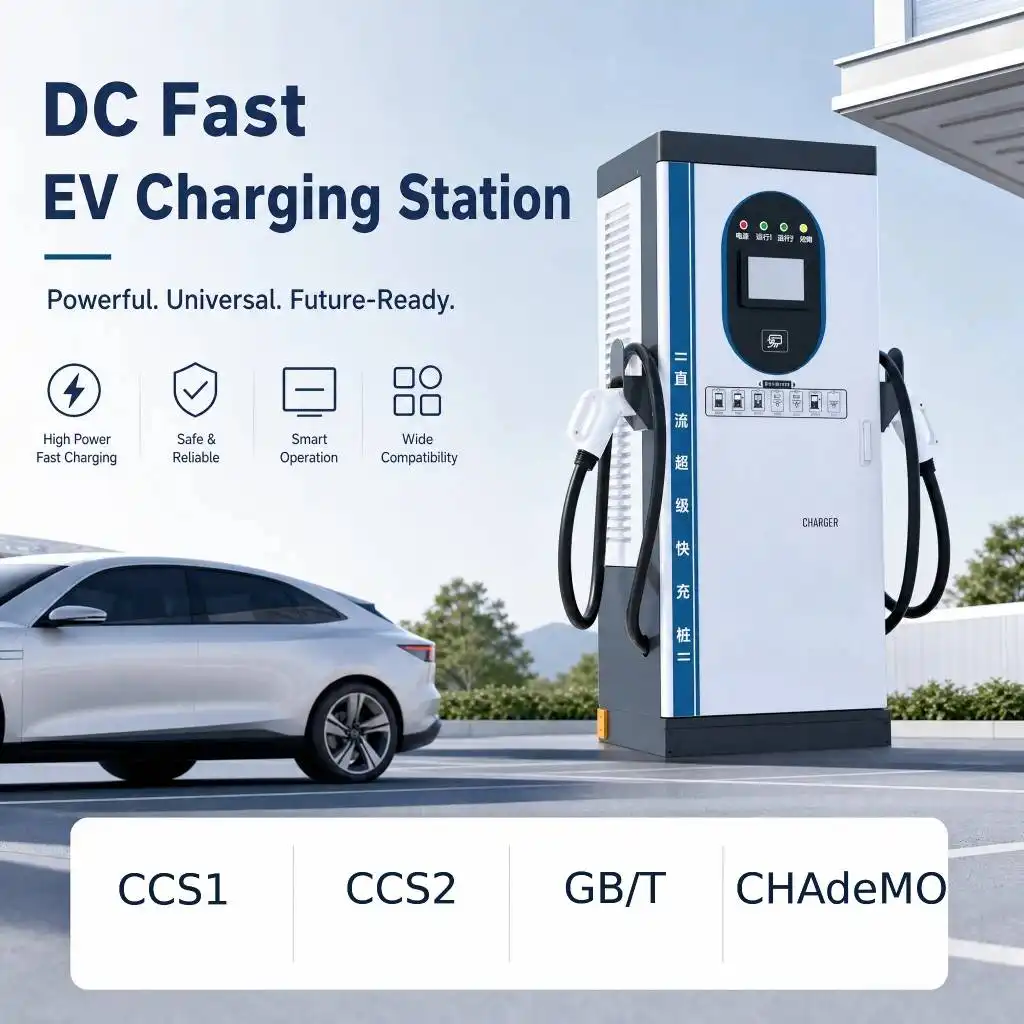
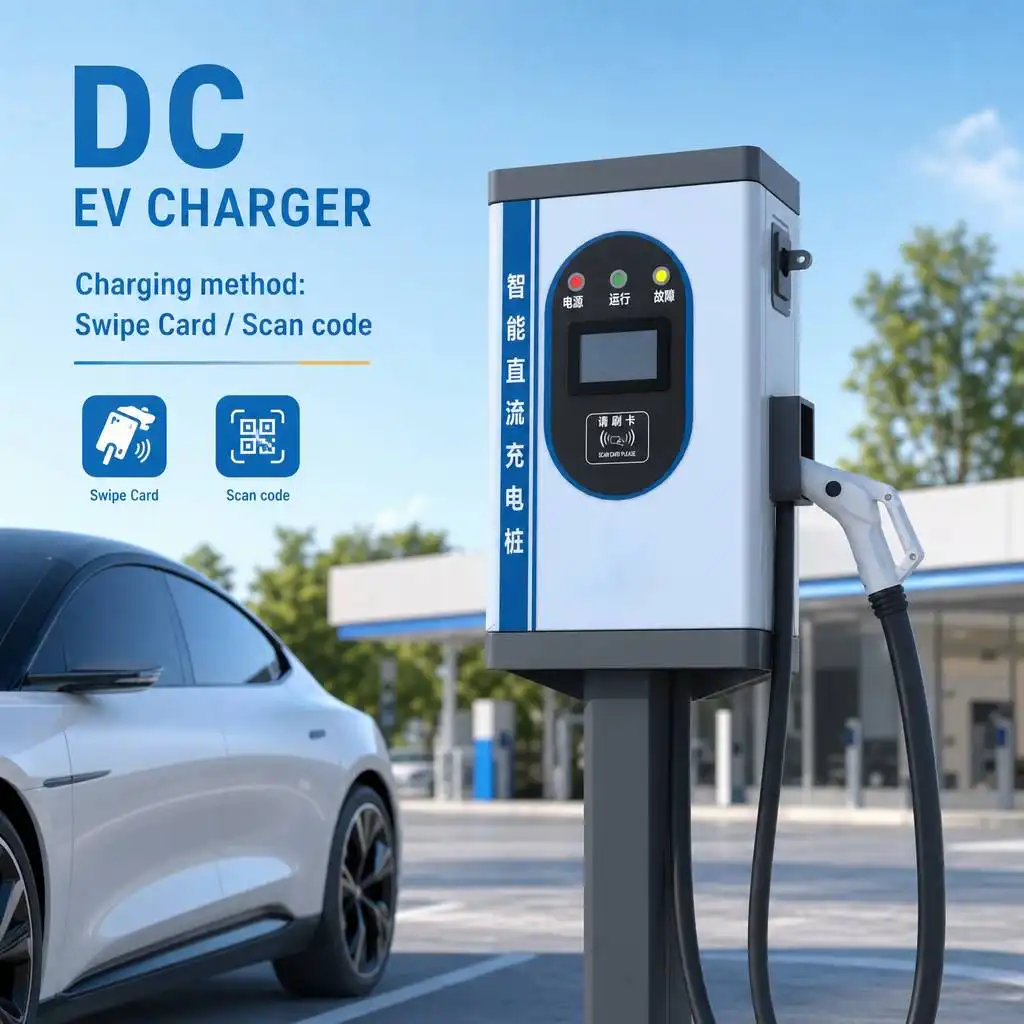
- Level 3 DC fast chargers work differently. They convert AC to DC inside the station and send high-voltage DC straight to the battery, bypassing the onboard charger.
What Are the Main Types of AC EV Chargers?
Level 1 and Level 2 are the two main types of AC EV Chargers. The best one depends on power output, installation method, and location.
AC EV Charger Types: Power Output and Charging Speed
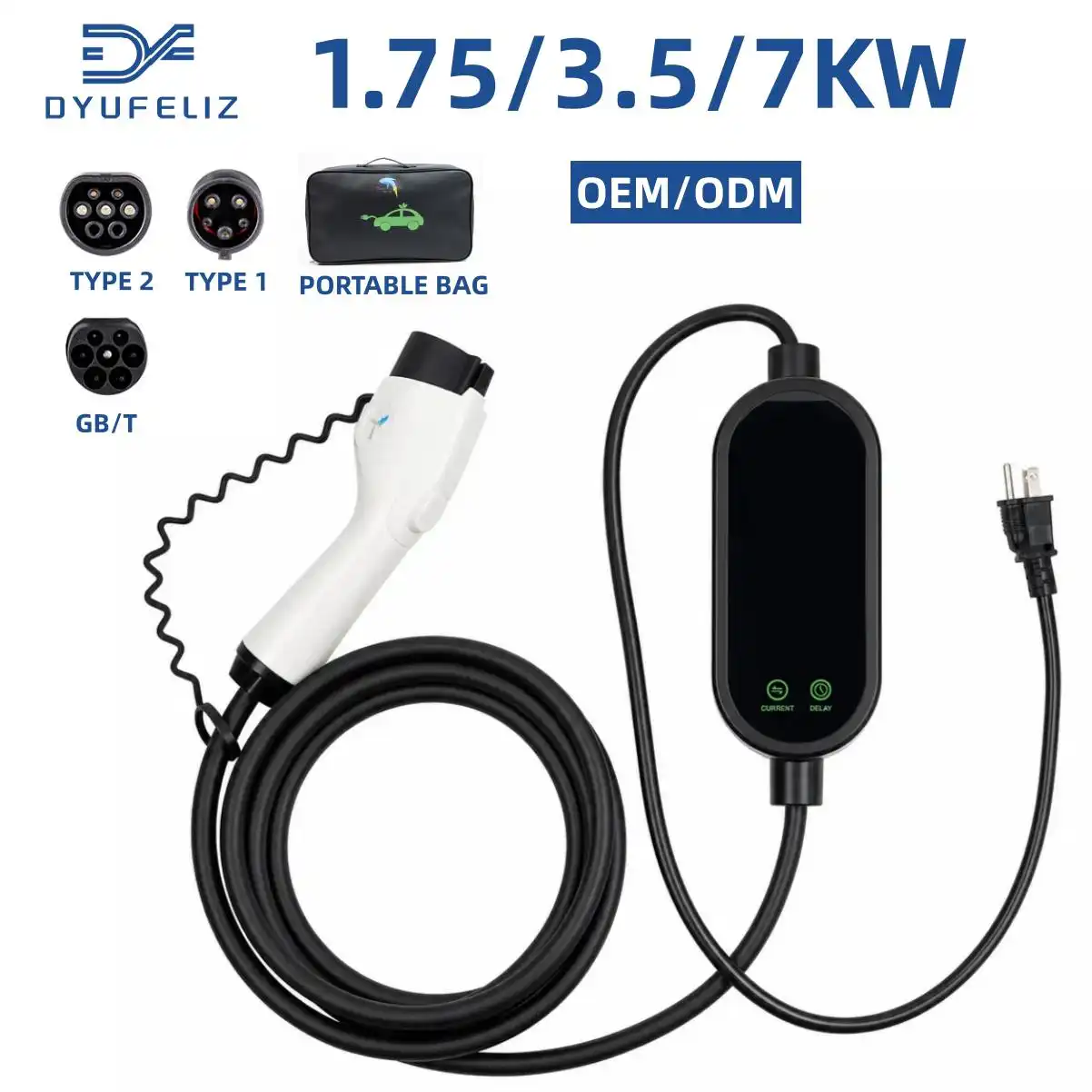
Level 1 EV Chargers use a standard 120-volt household outlet and typically provide around 1.3–2.4 kW of AC power. They add about 3 miles of range per hour, making them suitable for overnight charging.
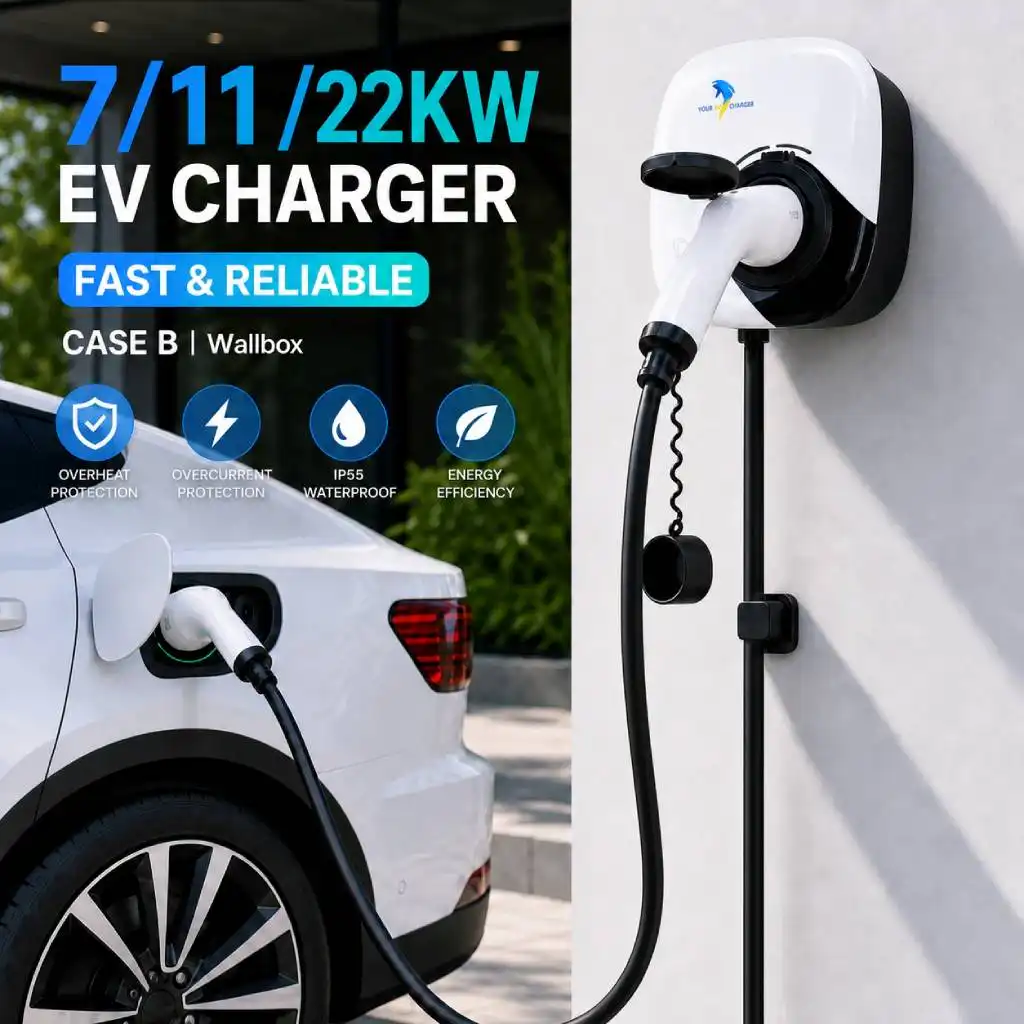
Level 2 EV Chargers use 208–240V power and are the most common AC charging solution for homes and businesses. They typically deliver 7–11 kW, providing around 20–30 miles of range per hour depending on the vehicle’s onboard charger.
Connector standards also vary by region. The United States and Canada use Type 1 (SAE J1772), Europe uses Type 2 (Mennekes), and China uses GB/T.
AC EV Charger Types: Installation Method and Location
Installation types are plug-in and hardwired. A plug-in Level 2 charger uses a NEMA 14-50 outlet. It needs its own 240-volt circuit. Once an electrician installs the outlet, homeowners can plug the charger in. Hardwired units connect straight into the home’s electrical system. Only licensed professionals should install them. Both methods usually need a local electrical permit.
Wall-mounted chargers keep cords neat and off the floor. They fit garages, apartment parking, and office lots. Portable chargers travel in a trunk for occasional use. Pedestal stations work well for commercial parking areas.
Where Are AC EV Chargers Commonly Used in Practice?
AC EV Chargers for Residential Garages and Apartment Parking
Home charging is the most common way people use AC EV chargers. Drivers plug in at night and wake up with a full battery. The equipment costs less than DC fast charging. But installation adds to the total price.
Apartment parking comes with extra problems. The building’s electrical panel often limits what you can install. A 7 kW charger needs a 40 A breaker and 8 AWG copper wire. An 11 kW unit needs a 60 A breaker and 6 AWG wire. A 200 A service panel can usually handle either one. Older 100 A or 150 A panels may need an upgrade or load management. Renters should check if a 240 V circuit already exists. If it does not, a certified electrician must add one. A hardwired outdoor-rated charger works best for shared parking areas. A smart charger can also stop unauthorized use.
AC EV Chargers for Offices, Hotels, and Commercial Parking
Workplaces and hotels depend on AC charging because vehicles stay parked for hours. Level 2 stations give 3–19 kW and add about 20–40 miles of range per hour. That works well for an 8-hour workday or an overnight hotel stay. Employees arrive, plug in, and leave with a full charge. Hotel guests get the same benefit during a night’s rest.
Commercial sites get other advantages too. AC charger hardware costs less than DC units. The slower pace also puts less stress on battery health over time. Hotels attract guests who need reliable overnight charging. Offices keep employees happy without building a fast-charging station. Both settings benefit from wide connector compatibility across Type 1, Type 2, and GB/T standards. This compatibility means one station can serve almost any EV that parks there.
What Key Specs Should You Check When Picking an AC EV Charger?
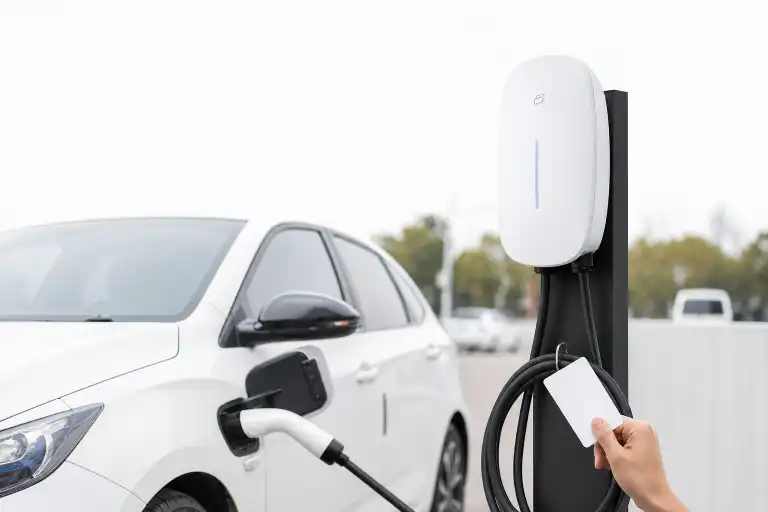
AC EV Charger Power Rating, Voltage, and Phase Needs
Power rating determines how fast an AC EV Charger can charge an electric vehicle. Buyers should check the charger’s power output, voltage, current, and phase type to match their vehicle and electrical supply.
| Charger Power | Phase | Current | Voltage | Standard |
|---|---|---|---|---|
| 3.5 kW | 1-phase | 16 A | 220 V | GB/T |
| 7 kW (7.4 kW) | 1-phase | 32 A | 110–240 V (Type 2) / 220 V (GB/T) | Type 2 / GB/T |
| 11 kW | 3-phase | 16 A | 380–415 V | Type 2 |
| 22 kW | 3-phase | 32 A | 380–415 V | Type 2 |
Circuit capacity also affects charging performance. A 7 kW AC EV Charger usually requires around a 32 A charging current, while an 11 kW three-phase charger requires about 16 A per phase. The electrical system should be sized correctly to avoid reduced charging speed or circuit overload.
AC EV Charger Connector Types and Vehicle Compatibility
Connector standards vary by market, so choosing the correct plug type is essential for vehicle compatibility.
| Standard | Region | Charging Type | Max AC Power |
|---|---|---|---|
| SAE J1772 (Type 1) | North America, Canada | AC single-phase | ~19.2 kW |
| IEC 62196 Type 2 (Mennekes) | Europe | AC single/three-phase | ~43 kW |
| GB/T 20234.2-2015 | China | AC | N/A |
Type 1 is commonly used for single-phase home charging, while Type 2 supports both single-phase and three-phase charging. GB/T is mainly used in China with its own communication and connection system. Buyers should always match the AC EV Charger connector with their target vehicles and regions.
Unlike DC fast chargers, AC EV Chargers rely on the vehicle’s onboard charger to convert AC power into DC power for the battery. This makes connector compatibility and onboard charger capacity important factors when selecting a charger.
AC EV Charger Safety Features, Protection, and Connectivity
Safety features help ensure reliable operation during long charging periods. A quality AC EV Charger should include protection functions such as:
| Safety Feature | Function |
|---|---|
| Overcurrent protection | Prevents excessive current damage |
| Overvoltage protection | Protects against unstable voltage |
| Leakage protection | Reduces electric shock risks |
| Overtemperature protection | Prevents overheating |
| Short-circuit protection | Responds to electrical faults |
For outdoor use, buyers should also check the enclosure protection level to ensure resistance against dust and water. Smart connectivity features, such as remote monitoring, charging management, and mobile app control, can improve operation efficiency for commercial and shared charging applications.
AC EV Charger Installation Requirements and Electrical Capacity
Before installation, the site’s electrical capacity should match the AC EV Charger’s power requirements. The available supply, circuit rating, wiring, and installation environment all affect charging safety and performance.
| Installation Factor | Consideration |
|---|---|
| Power supply | Check single-phase or three-phase availability |
| Circuit capacity | Match breaker and wiring with charging current |
| Cable selection | Consider power rating and installation distance |
| Installation location | Evaluate weather exposure and accessibility |
| Grounding | Ensure proper electrical safety protection |
A higher-power AC EV Charger may require upgraded electrical capacity, especially for commercial installations. Professional site assessment and load calculation help prevent issues such as circuit trips, reduced charging speed, or additional upgrade costs.
What Are the Main Benefits and Limitations of AC EV Chargers?
AC EV Charger Benefits for Cost, Convenience, and Daily Charging
An AC EV Charger is a cost-effective solution for daily EV charging at homes, workplaces, and commercial locations. Compared with DC fast chargers, AC chargers have lower equipment costs and simpler installation requirements.
AC charging is also suitable for overnight and long-term parking because vehicles can charge steadily for several hours. The slower charging speed helps reduce stress on charging equipment and supports regular battery maintenance when used properly.
AC EV Charger Limitations in Charging Speed and Power Delivery
The main limitation of an AC EV Charger is charging speed. AC chargers rely on the vehicle’s onboard charger to convert AC power into DC power for the battery, which limits the maximum charging rate.
Most AC chargers provide 1.75 kW to 22 kW of charging power, making them suitable for homes, offices, and daily commuting. However, they are not ideal for situations that require rapid charging, such as long-distance travel or quick battery top-ups.
For example, a 7 kW AC EV Charger may take several hours to charge a medium-sized EV battery, while a DC fast charger can complete the same process much faster. Therefore, AC charging is best for regular daily use, while DC charging is better suited for high-speed charging needs.
Overall, AC EV Chargers offer an affordable and convenient charging option for most EV owners. Choosing the right charger depends on driving habits, charging location, and available electrical capacity.
Frequently Asked Questions About AC EV Chargers
Can an AC EV Charger Be Installed in an Apartment Building?
Yes, an AC EV Charger can be installed in an apartment building if the electrical system has enough capacity and the installation meets building requirements. For shared parking areas, load management systems can help balance power use when multiple EVs charge at the same time.
How Long Does It Take to Charge an EV With an AC EV Charger?
Charging time depends on the charger power, battery size, and vehicle onboard charger capacity. A 7 kW AC EV Charger can usually charge an EV overnight, while 11 kW or 22 kW chargers provide faster charging when supported by the vehicle and electrical supply.
Does an AC EV Charger Affect Electric Vehicle Battery Health?
No. An AC EV Charger is suitable for regular EV charging and does not harm battery health when used properly. The stable charging process allows the vehicle’s battery management system to control charging conditions effectively.
What Maintenance Does an AC EV Charger Require?
An AC EV Charger requires basic maintenance, including checking cables, connectors, housing condition, and electrical connections. For smart chargers, software updates and system checks can help maintain reliable performance.