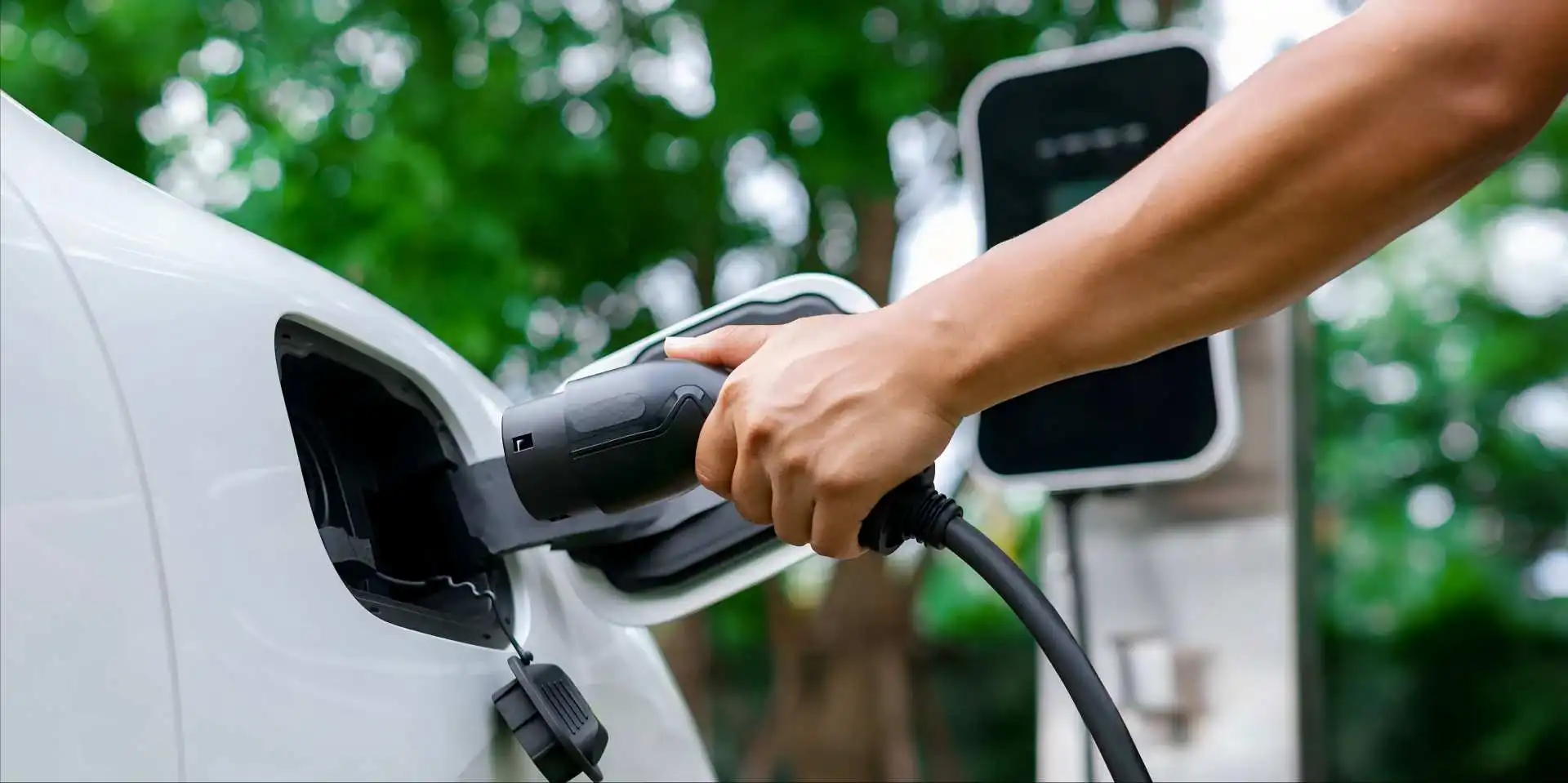
A public EV charging station can be either AC or DC, and DC is the standard for fast charging. AC, or alternating current, is the electricity form that comes from the power grid. DC, or direct current, is the form that an electric car battery stores. The station type controls charging speed. It also decides when a driver should use it. AC stations suit longer stops. DC stations deliver quick top-ups on the road. This guide explains the difference in plain terms. You will learn which public station to pick and why.
Key Takeaways
- DC fast chargers give quick top-ups on highways, while AC chargers work well for longer stops at workplaces and shopping centers.
- Your car’s onboard charger limits AC speed, but DC stations skip it to send power straight to the battery.
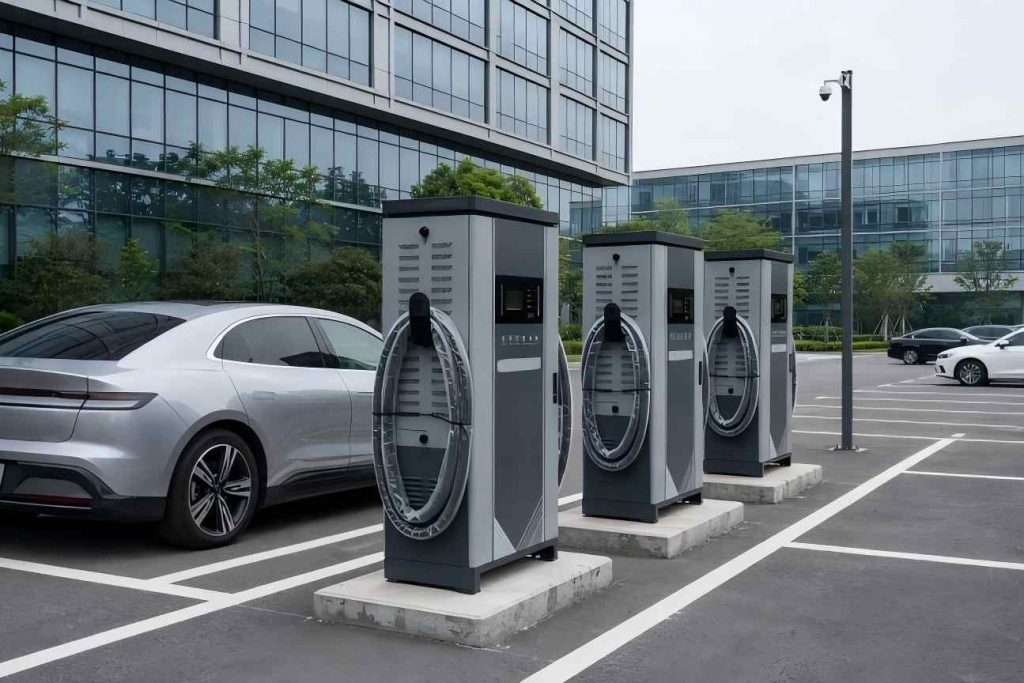
- You can tell a DC station by its big cabinet and thick cable. AC stations are smaller and have thinner cables.
- Use DC for long trips and AC for everyday charging to keep your battery healthy and save money.
- Check your car’s connector type and charging limit before you plug in. This helps you avoid slow charging sessions.
Are Public EV Charging Stations AC, DC, or Both?
Public EV charging stations come in both types, but they do different jobs. The difference comes down to where the electrical conversion takes place. AC, or alternating current, flows from the power grid through standard outlets. DC, or direct current, moves in one steady direction, like water in a pipe. Batteries store energy only as DC. This simple fact shapes everything about charging.
Every electric vehicle carries a small device called an onboard charger, or OBC. This part converts AC power from the grid into DC power for the battery. The OBC must fit inside the car, so it stays compact. Its size limits how fast AC charging can happen. Most vehicles charge between 7 kW and 22 kW on AC power. This range works well for overnight charging at home or during a workday.
How Do AC Public EV Charging Stations Work?
An AC public charging station sends grid power straight to the vehicle. The station does not convert electricity. Instead, the car’s onboard charger handles that task inside the car. The OBC takes incoming alternating current, rectifies it, and delivers direct current to the battery pack. This process works reliably but slowly.
The bottleneck is physical space. A compact onboard charger cannot hold large transformers or heavy cooling systems. Higher charging speeds make heat that needs bigger equipment. Car manufacturers balance size, weight, and cost when designing the OBC. Most production vehicles therefore cap AC charging around 19.2 kW, even when the station could supply more.
AC stations appear in places where drivers park for hours. Shopping centers, office buildings, and municipal lots commonly host these units. They suit the natural rhythm of daily life. A driver plugs in during a meeting or a meal, and the battery gains meaningful range by departure time. The slower speed rarely matters because the vehicle sits idle anyway.
How Do DC Fast Charging Stations Work?
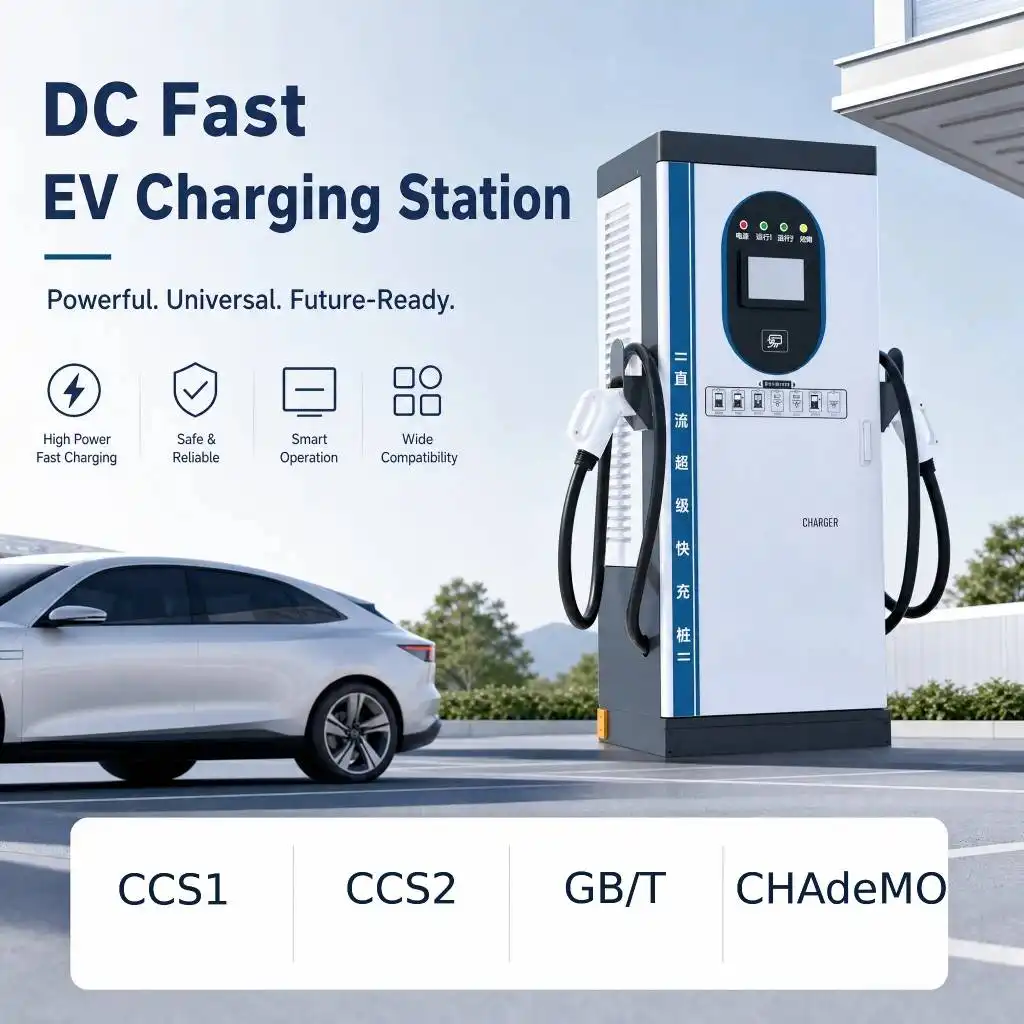
DC fast charging converts grid AC electricity into DC power inside the charging station, bypassing the vehicle’s onboard charger. Built-in power electronics and cooling systems enable high-power energy transfer, typically from 50 kW to 350 kW or higher.
The vehicle’s battery management system monitors voltage, current, and temperature to regulate charging speed and protect the battery. Charging power also depends on the vehicle’s acceptance rate, battery temperature, and state of charge.
DC fast chargers are widely used along highways, at public charging hubs, and in fleet depots where shorter charging times are essential. DongYu offers DC fast charging solutions from 20 kW to 480 kW for public infrastructure and commercial fleet projects.
AC vs. DC EV Charging Stations: Key Differences Explained
Comparing AC and DC EV Charging Station Speeds and Power
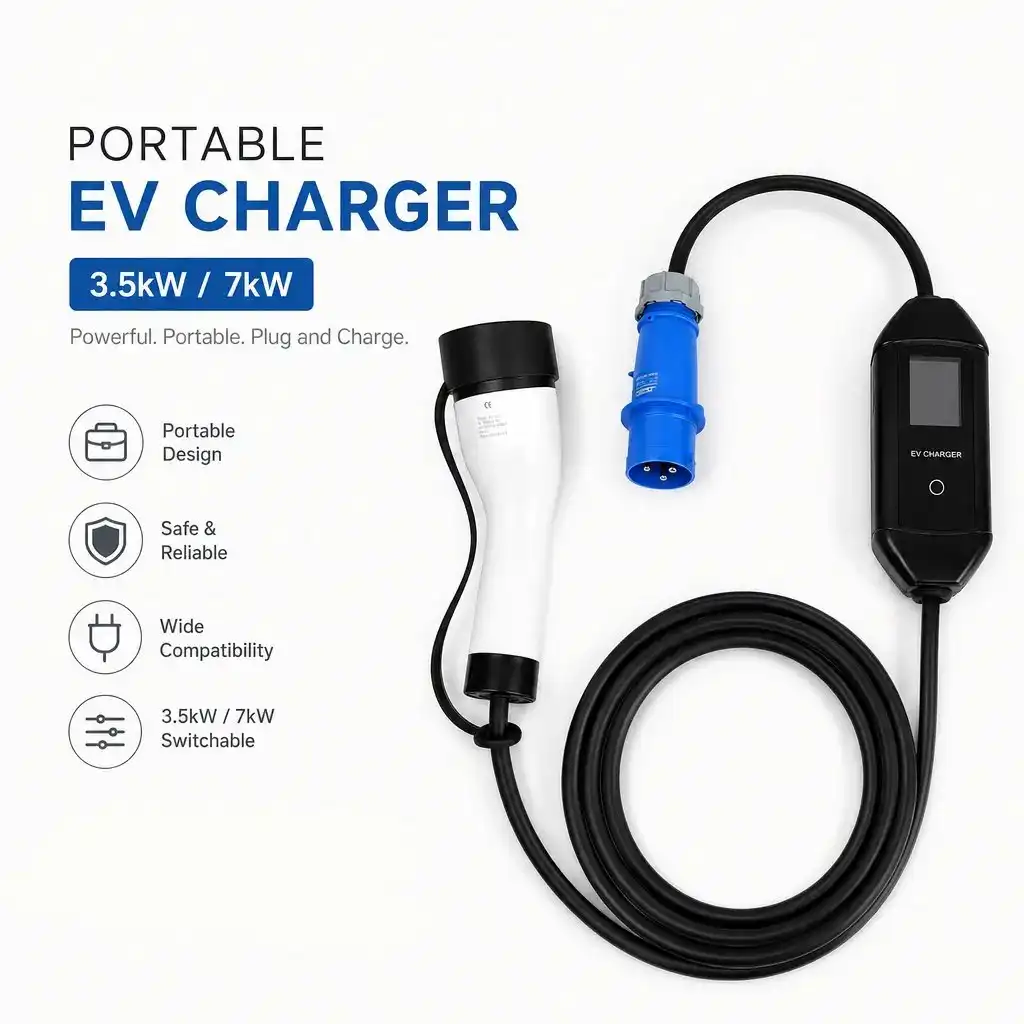
AC EV charging stations typically deliver around 3–22 kW, making them suitable for homes, workplaces, and public parking lots. The vehicle’s onboard charger determines the actual charging speed. For example, a car with a 7 kW onboard charger cannot draw 22 kW from a higher-powered AC station.
DC fast chargers bypass the onboard charger and supply DC power directly to the battery. Common power levels range from 50 kW to 350 kW or higher, making them ideal for highways, public charging hubs, and commercial fleets. Actual charging speed depends on vehicle limits, battery temperature, and state of charge, with power often decreasing as the battery approaches 80%.
| Feature | AC Charging | DC Charging |
|---|---|---|
| Typical Power | 3–22 kW | 50–350 kW or higher |
| Main Advantage | Lower cost for longer charging periods | Faster charging and shorter stops |
| Common Applications | Homes, workplaces, parking lots | Highways, public hubs, fleets |
Comparing AC and DC EV Charging Station Connectors and Cables
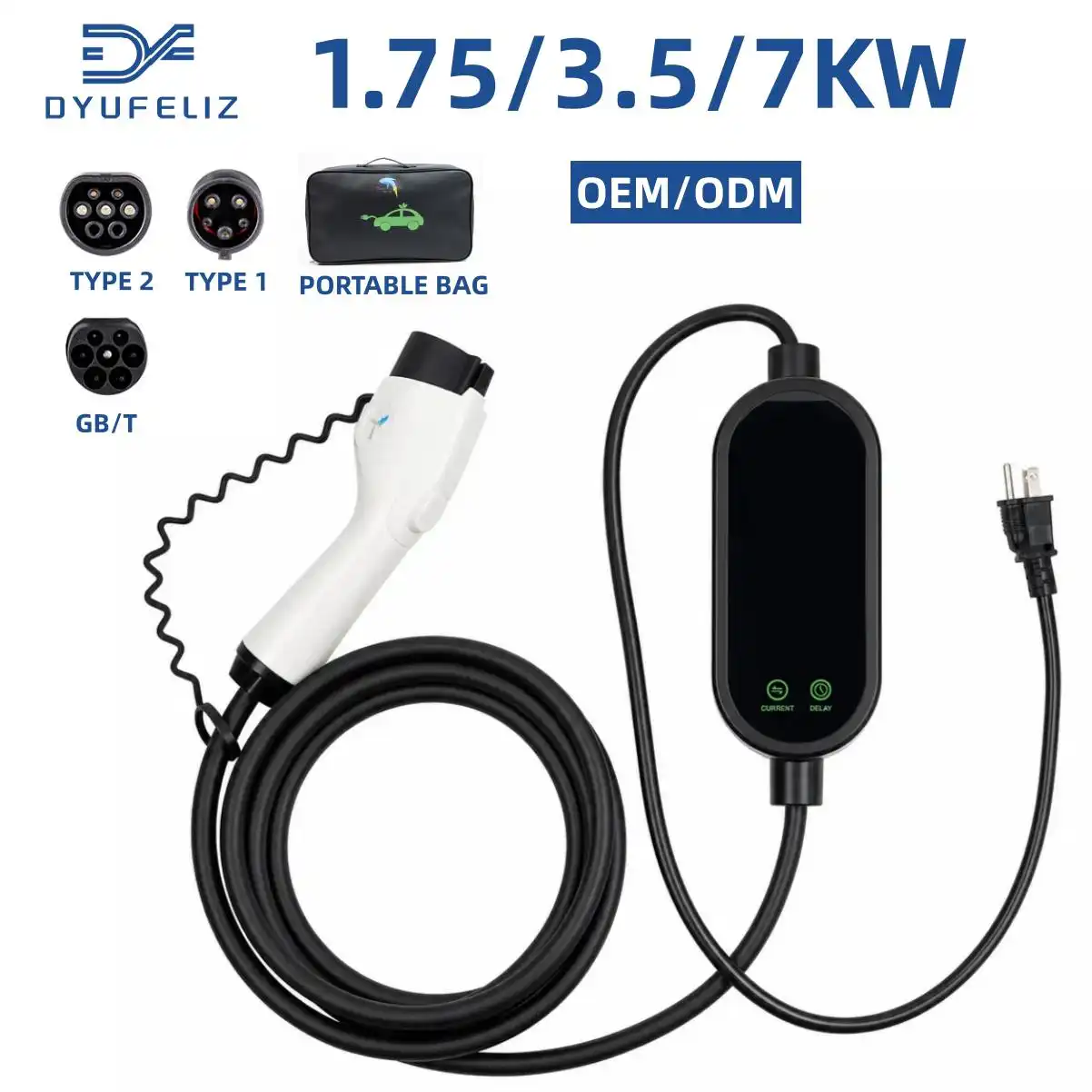
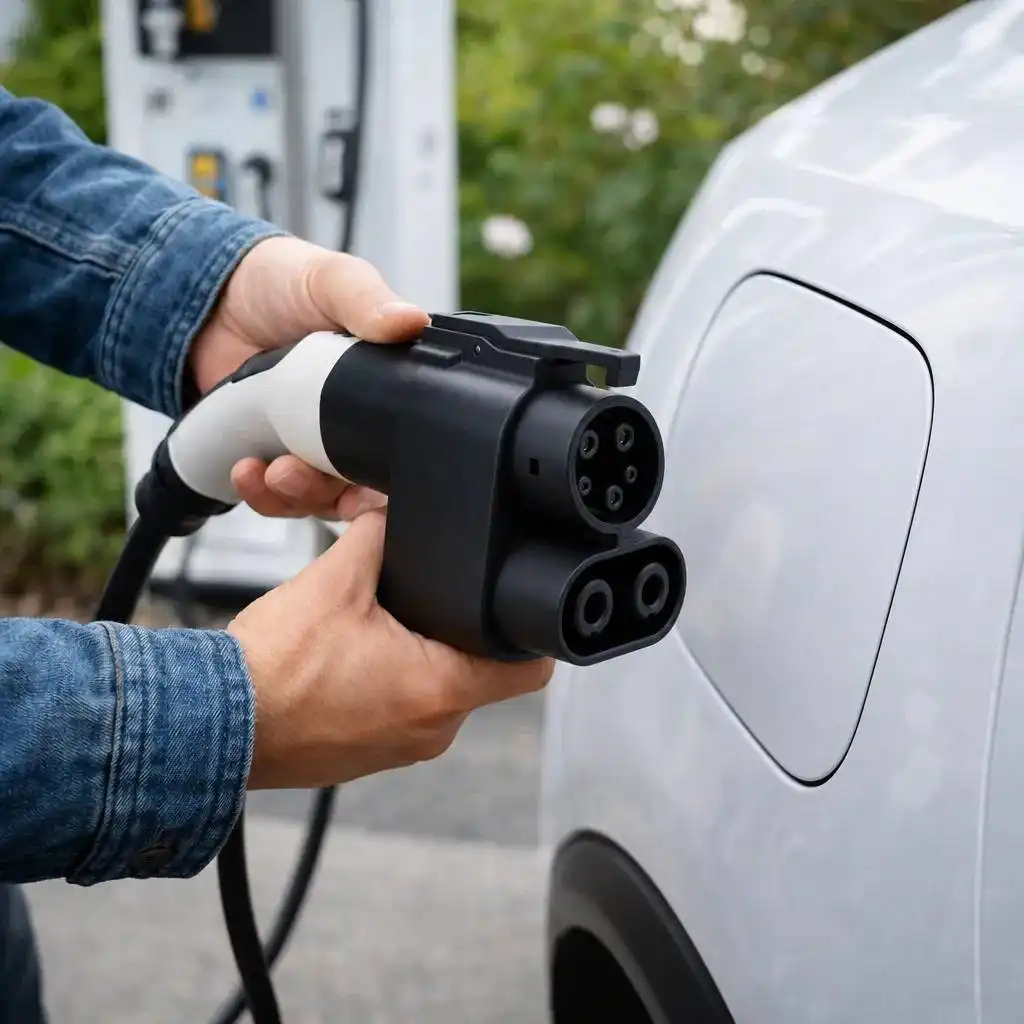
Connector standards vary by region. Type 1 (SAE J1772) is widely used for AC charging in the United States and Canada, while Type 2 is common in Europe. China uses GB/T for both AC and DC charging. DC fast charging commonly uses CCS1 in North America, CCS2 in Europe, and CHAdeMO in Japan. NACS is also gaining wider adoption in the United States and Canada, so buyers should verify vehicle compatibility.
AC charging cables generally require simpler cooling systems. High-power DC charging generates more heat, making cable design and cooling important. Air-cooled cables suit many applications, while liquid-cooled cables can support higher currents with less weight and greater flexibility. Buyers should consider connector compatibility, cable length, current rating, and cooling requirements.
Comparing AC and DC EV Charging Station Costs and Applications
AC EV chargers generally have lower equipment and installation costs, making them suitable for homes, offices, hotels, and parking facilities where vehicles stay parked for hours.
DC fast chargers require a higher initial investment and may need electrical infrastructure upgrades. Operating costs also depend on electricity tariffs, demand charges, maintenance, and utilization rates. However, their faster charging speeds suit busy public stations and commercial fleets that need to reduce vehicle downtime.
When choosing between AC and DC charging, buyers should evaluate charging demand, parking duration, available power supply, and project budget. DongYu offers DC EV charging solutions from 20 kW to 480 kW for commercial and fleet charging projects.
How Can You Tell Whether a Public EV Charging Station Is AC or DC?
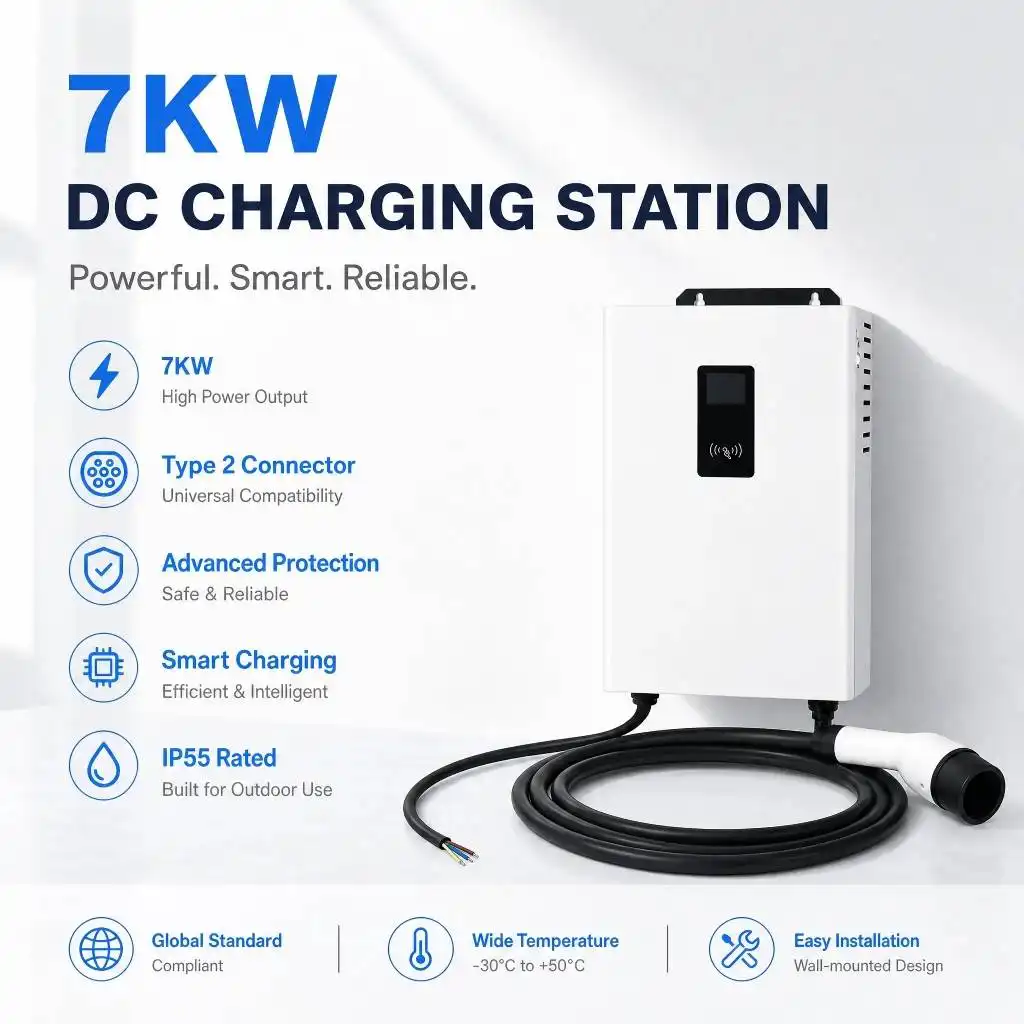
The quickest way to identify a DC fast charging station is to check its cabinet size, cable thickness, and power rating. DC EV chargers usually have larger cabinets and thicker cables, while AC chargers are generally smaller with lighter cables. AC public chargers commonly deliver around 3–22 kW, whereas DC fast chargers typically start at 50 kW and can reach 350 kW or higher.
The main difference is how electricity is converted. AC stations rely on the vehicle’s onboard charger to convert AC power into DC, while DC stations perform this conversion internally and supply DC power directly to the battery. This allows DC chargers to deliver energy much faster, although actual charging speed depends on the vehicle and battery conditions.
Connector types provide another clue. CCS1 is common for DC charging in North America, while CCS2 is widely used in Europe. CHAdeMO is also found at some stations, particularly in Japan. Always check connector compatibility with your vehicle before charging.
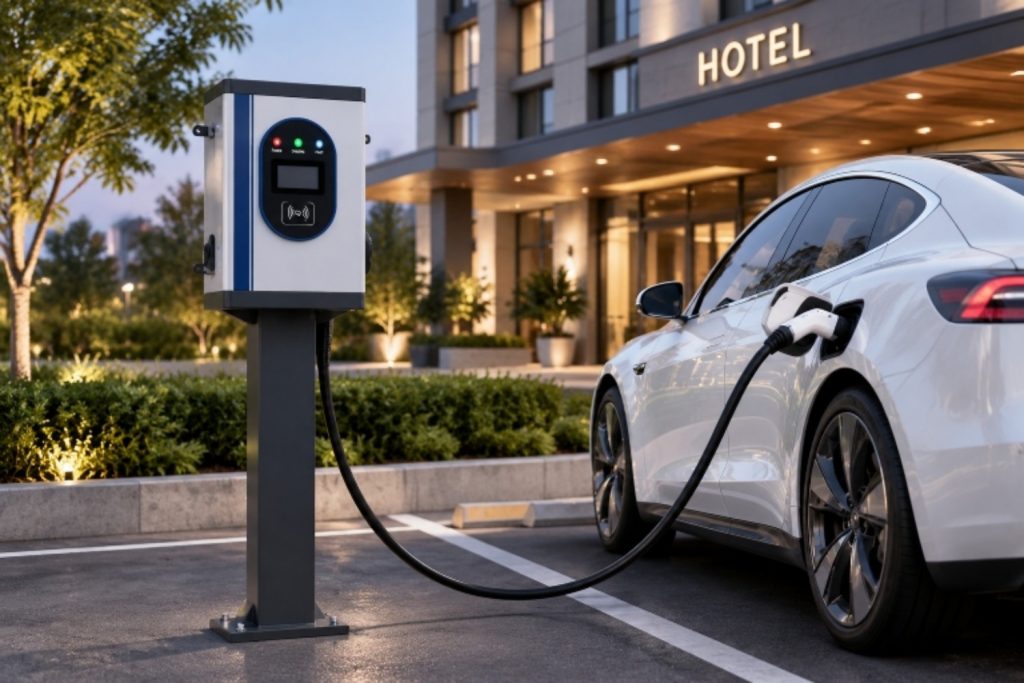
Location can also help you identify the charging type. DC fast chargers are common along highways, at public charging hubs, and in fleet depots. AC chargers are more frequently found in hotels, workplaces, parking garages, and shopping centers where vehicles can stay parked longer.
DongYu offers DC fast charging solutions from 20 kW to 480 kW, with OEM and ODM options for power ratings, connectors, and appearance. These solutions support businesses developing public charging networks and commercial fleet infrastructure.
Quick rule: A high-power unit with thick cables is likely a DC fast charger, while a lower-power unit with thinner cables is more likely AC. Check the station label and connector to confirm.
Can Every Electric Vehicle Use Public AC and DC Charging Stations?
Not every electric vehicle can use every public EV charging station. Three vehicle-side factors decide compatibility. First, the onboard charger has a maximum power limit. A Tesla Model 3 Standard Range accepts up to 7.2 kW AC. If a station offers more, the car still charges at 7.2 kW. Second, battery voltage must fall within the charger’s range. DC fast chargers often support 400–1000V DC. The vehicle only accepts power inside its designed voltage window. Third, the physical connector must match the charge port. A J1772 plug cannot fit a NACS port without an adapter.
How Do EV Connectors and Charging Standards Affect Compatibility?
Regional standards create a fragmented landscape. CCS has won in Europe and is mandated by EU law for new fast chargers. In the US, NACS gained broad support in 2023, simplifying the market to CCS1 and NACS. China remains unified under GB/T. These differences mean public chargers must often support multiple standards or provide adapters.
Automakers are moving toward NACS at a rapid pace. Ford was first to announce adoption. General Motors, Rivian, Hyundai, Kia, Honda, Nissan, Mercedes-Benz, and Volvo followed. Many new models now ship with native NACS ports. Examples include the Cadillac Optiq-V, Genesis Electrified GV70, and BMW i5. This shift gives drivers access to Tesla Supercharger locations without a separate connector.
| Factor | AC Charging | DC Charging |
|---|---|---|
| Speed | 10–60 miles per hour | 100–250+ miles in ~30 minutes |
| Typical Power | 3–19 kW | 50–350 kW |
| Cost per Session | Lower fees | Higher fees |
| Battery Impact | Gentler on battery | More stress over time |
| Common Locations | Workplaces, hotels | Highways, fleet depots |
A simple rule of thumb: use DC for quick top-ups on trips, AC for longer stays or gentler charging. DongYu manufactures both AC (3.5kW–22kW) and DC (20kW–480kW) chargers for public and commercial use. As a leading supplier, DongYu supports wholesale and custom orders for businesses building charging networks.
How Do You Choose the Right Public EV Charging Station?
Choosing the right public EV charging station depends on your schedule, vehicle, and charging needs. Consider these six factors before plugging in:
- Charger output – Higher power can deliver more energy if your vehicle supports it.
- Vehicle charging capacity – Your EV has a maximum charging rate that limits actual power.
- Battery size – Larger batteries generally take longer to charge.
- State of charge (SoC) – Charging usually slows as the battery approaches full.
- Battery temperature – Extreme temperatures can reduce charging speed.
- Battery management system (BMS) – The BMS adjusts power to protect the battery.
| Factor | AC Level 2 Charging | DC Fast Charging |
|---|---|---|
| Charging Speed | Typically adds range gradually over several hours | Can add substantial range in around 30 minutes, depending on the vehicle |
| Best Use | Work, shopping, and longer parking periods | Highway trips and quick top-ups |
| Charging Cost | Generally lower | Generally higher |
| Charging Pattern | Relatively steady | Often slows at higher battery levels |
Connector compatibility is equally important. Type 1 and CCS1 are common in North America, Type 2 and CCS2 in Europe, CHAdeMO in Japan, and GB/T in China. NACS is also expanding across North America. Always check your vehicle’s charging port before choosing a station.
Frequent DC fast charging may contribute to battery degradation over time, depending on battery design and operating conditions. Combining DC fast charging with regular AC charging can suit different driving needs. Charging to around 80% can also reduce waiting time because charging often slows at higher battery levels.
Remember, your EV’s maximum charging rate determines how much power it can accept. A vehicle limited to 50 kW cannot charge at 100 kW, even when connected to a more powerful station.
For everyday parking, AC charging is often the practical choice. For highway trips and fleet operations, DC fast charging helps reduce downtime. DongYu offers DC charging solutions from 20 kW to 480 kW, with OEM and ODM options for commercial and public charging projects.
Frequently Asked Questions About Public EV Charging Stations
Are Public EV Charging Stations Usually AC or DC?
Public EV charging stations offer both AC and DC charging. AC Level 2 chargers are common at workplaces, shopping centers, and parking facilities, while DC fast chargers are often found along highways and at high-traffic locations. The best option depends on how long you plan to park and how quickly you need to charge.
Is DC Fast Charging Faster Than AC Charging at Public Stations?
Yes. DC fast charging is generally much faster because it supplies DC power directly to the battery, bypassing the vehicle’s onboard AC charger. AC charging is better suited to longer parking periods, while DC fast charging is ideal for quick top-ups during road trips.
Do Public AC and DC EV Charging Stations Have Cables?
Most public DC fast chargers have attached cables because they use specialized high-power connectors. Public AC charging stations may have built-in cables or require drivers to bring their own, depending on the station and region. Check the station details before arriving.
Can You Charge an Electric Vehicle at Any Public Charging Station?
No. Your EV must support the station’s charging method and have a compatible connector. AC charging commonly uses J1772 or Type 2, depending on the region, while DC fast charging may use CCS, CHAdeMO, or NACS. Compatible adapters can help in some cases, but always verify vehicle and adapter compatibility before charging.