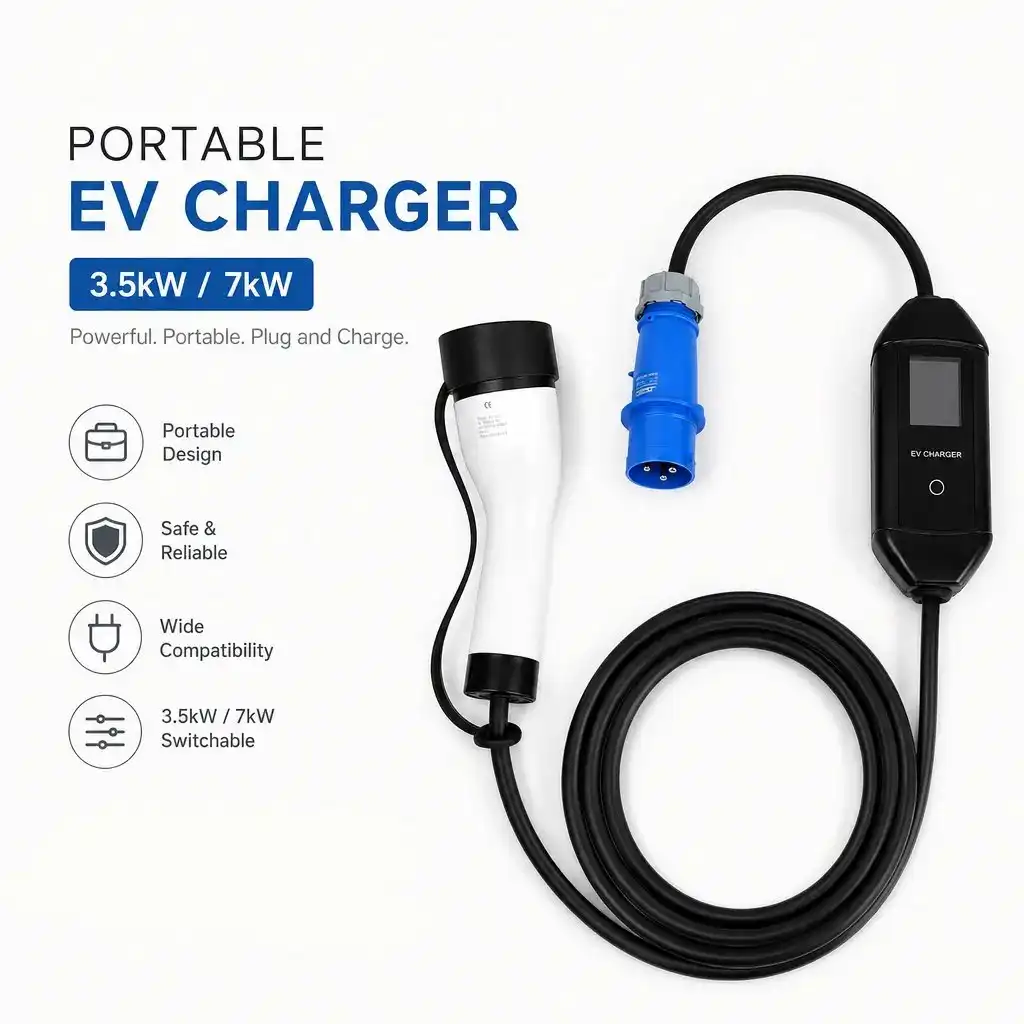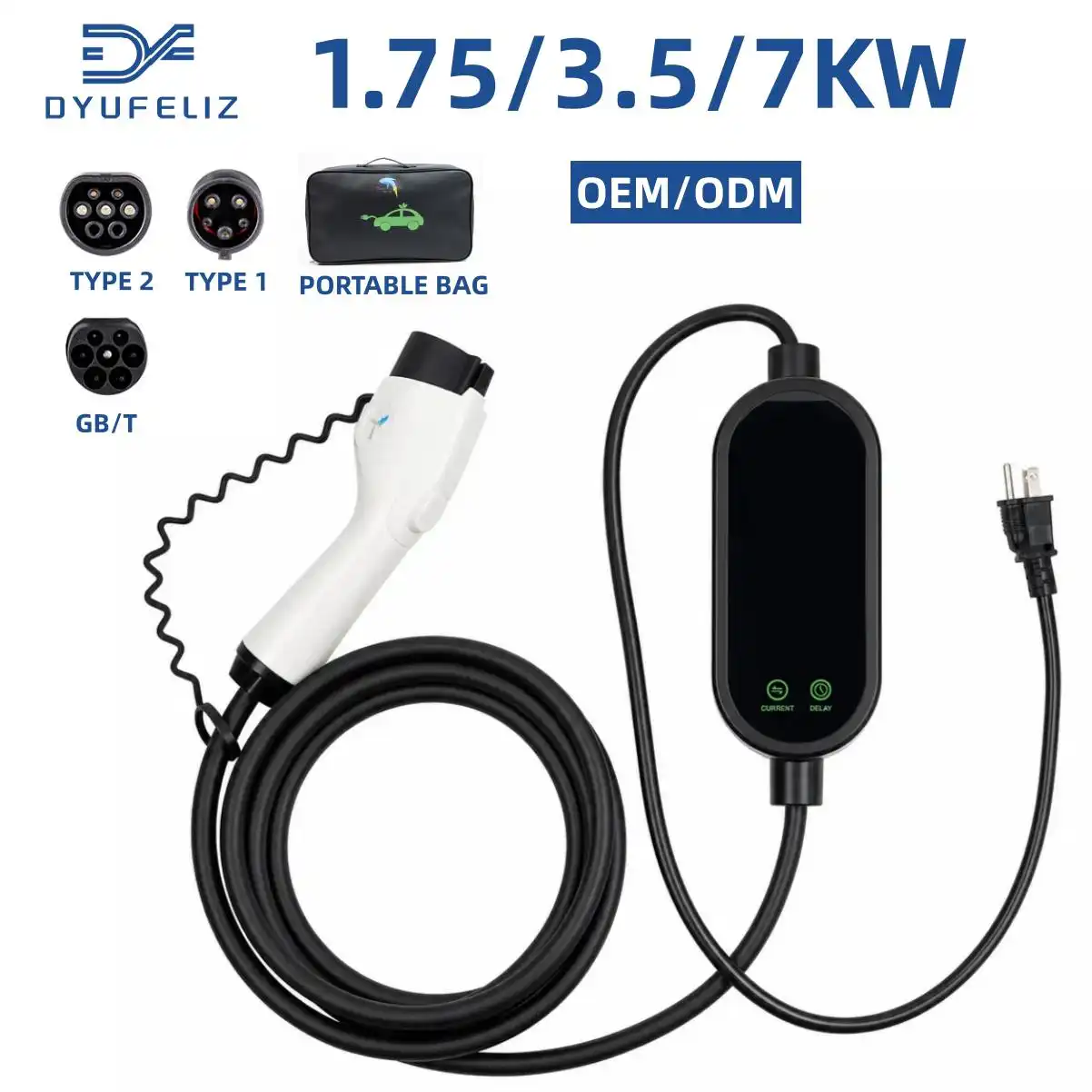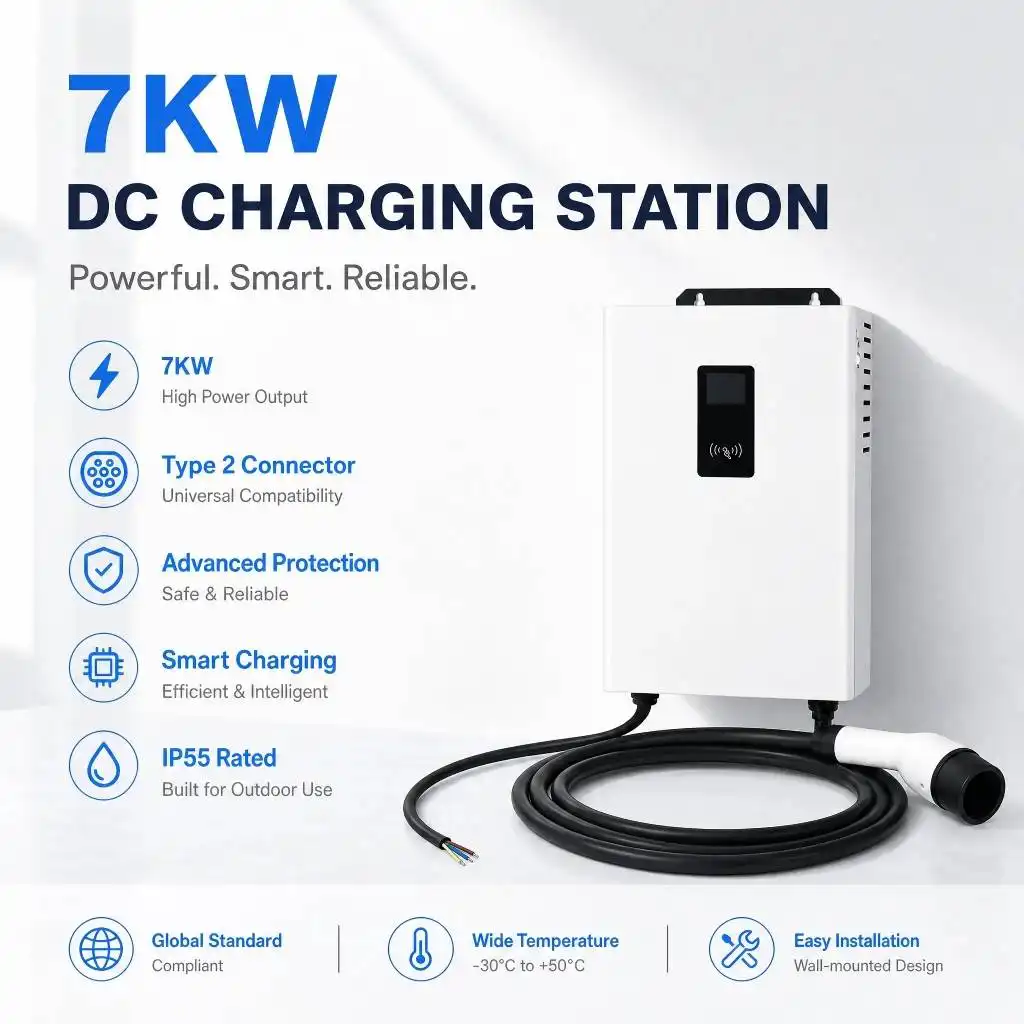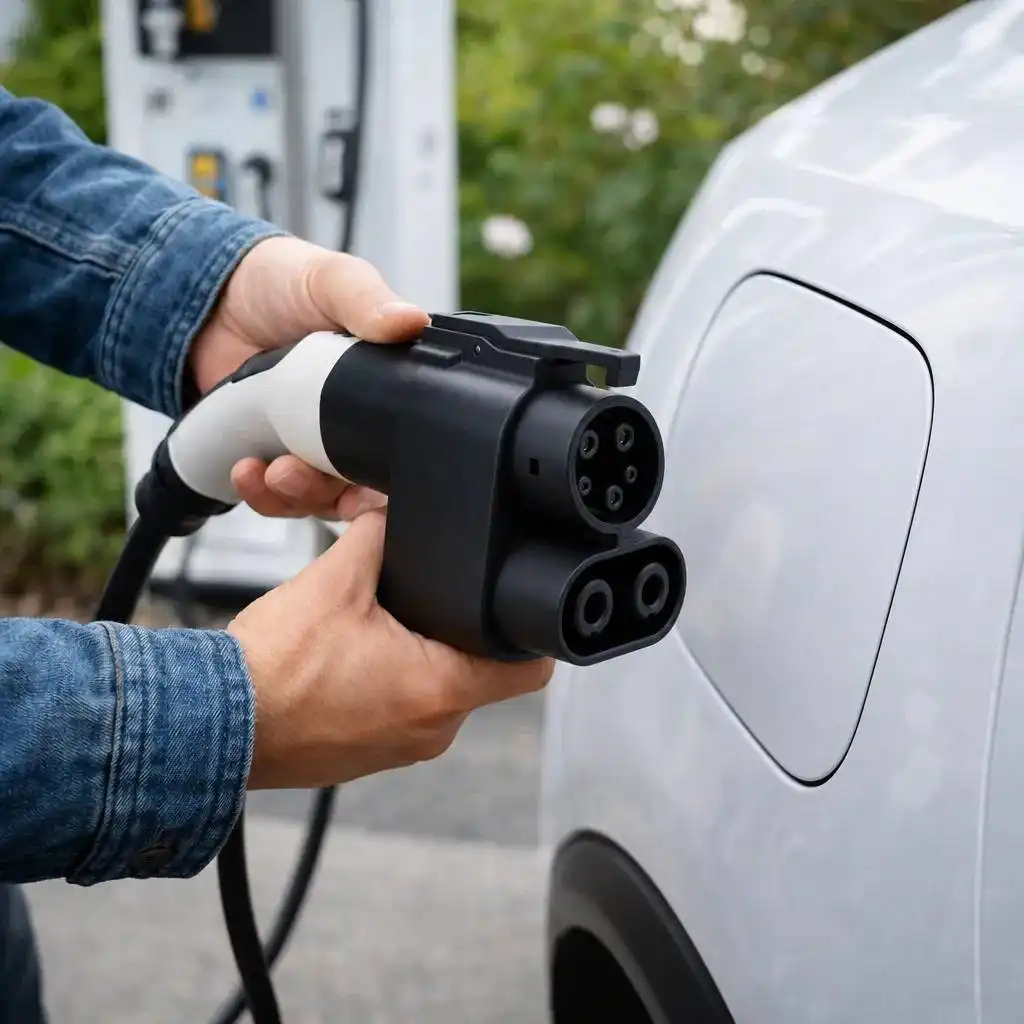
Most people spend weeks choosing the EV Charger box that goes on the wall — and almost no time on the three things that actually decide whether the job goes smoothly: your incoming supply, your fuse board, and the route a cable has to take. Here is the order a competent installer works in.
Key takeaways
- A 7kW charge point pulls roughly 32A continuously for 8–10 hours, so it is a serious addition to your supply — not a plug-in appliance.
- Your main fuse rating, consumer unit capacity and cable route drive most of the cost and complexity, far more than the charger itself.
- Low fuse rating or a looped supply usually means a network operator upgrade first, which adds lead time.
- Every charge point needs its own dedicated, correctly protected circuit — a “spare way” in a full board is not necessarily usable.
- Surge protection and a reliable data connection are not nice-to-haves; both are effectively part of a compliant modern install.
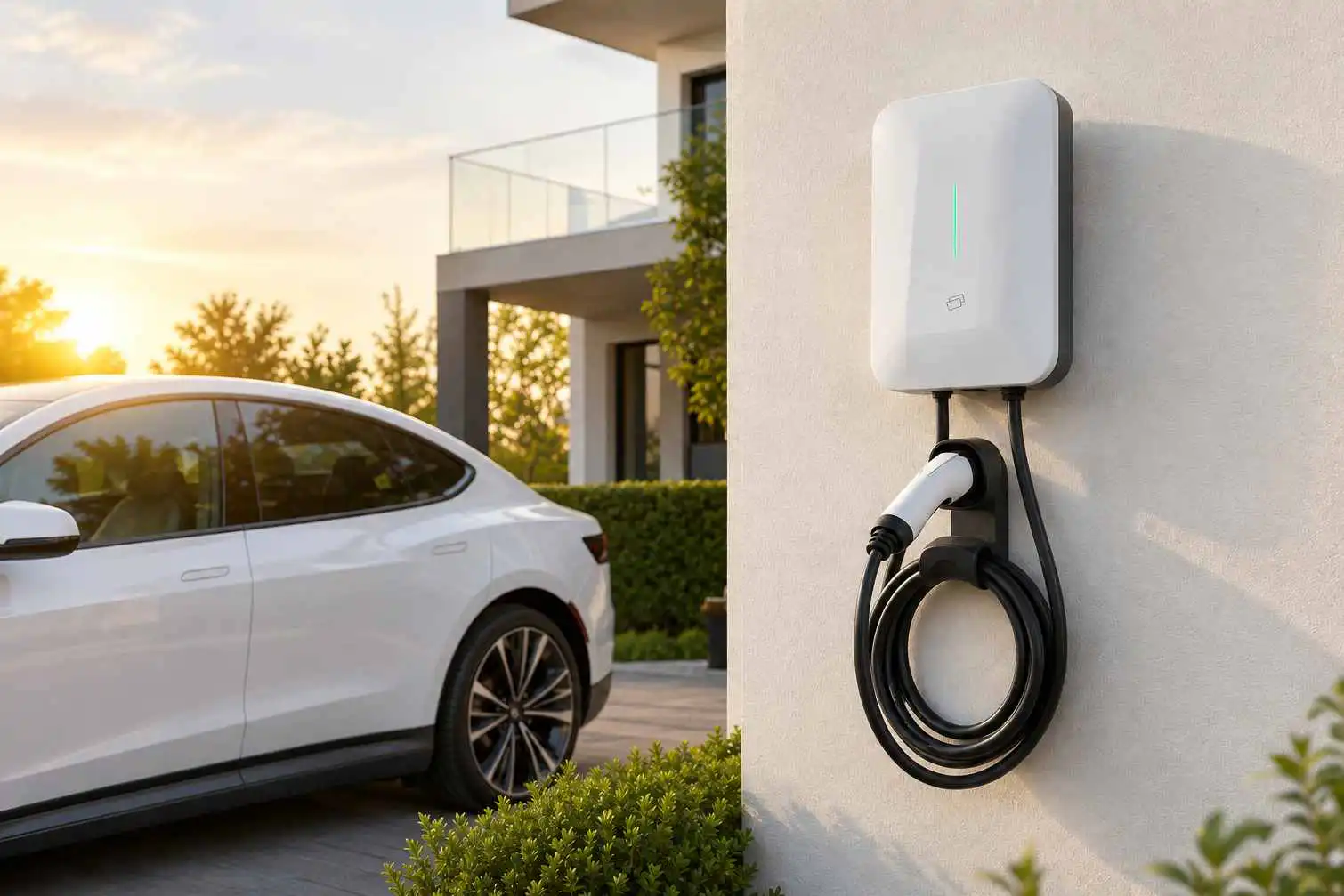
Getting a home EV charging installed is less about the hardware and more about your property’s electrical infrastructure. A domestic charge point is a continuous, high-current load: at 7kW it will draw about 32 amps for the whole time the car is plugged in, which for a full charge can be eight to ten hours overnight. That is very different from a kettle or an oven, which run for minutes.
Because of that, the questions that matter are: can your incoming supply take it, can your fuse board safely accommodate a new circuit, and can a cable physically be routed from one to the other? The ten points below walk through exactly that — in the order a survey should cover them.
Find out your main cutout fuse rating (and the size of your meter tails)
Your main cutout fuse is the single protective device that controls all the electricity entering the property and caps how much you can draw from the grid. It is usually in the meter box — often a white box outside, but sometimes inside a cupboard under the stairs or in a garage — and it will be labelled 60A, 80A or 100A.
Why it matters: a charge point pushes your total demand up by roughly 32A for hours at a time. If the fuse is only sized for the existing load and other appliances are running, you risk blowing it and losing power to the whole house.
- 100A fuse — usually straightforward; in most cases no prior network approval is needed.
- 80A or 60A fuse — your installer will normally need to apply to your Distribution Network Operator (DNO) for permission in advance, and the DNO may need to upgrade the fuse before work can proceed.
Alongside the fuse, check the meter tails — the heavy cables between the cutout, the meter and your consumer unit. A 100A fuse is typically paired with 25mm² tails; older installations may have 16mm² tails that are not suitable for the additional load even after a fuse upgrade. Note who does what: the fuse and the tails on the supply side of the meter are the DNO’s and your energy supplier’s responsibility, while the tails between the meter and your consumer unit are yours.
Do this first: Photograph your meter box — including the fuse label and the meter — before you ask for a quote. It is the single most useful piece of information you can give an installer, and it often removes the need for a physical visit just to establish basic capacity.
Look closely at your consumer unit — capacity and protection
The charge point needs its own dedicated circuit in your consumer unit (fuse board). “Dedicated” is the important word: it cannot simply share a circuit with other equipment.
So the first question is whether there are spare ways available. But a spare way is not automatically usable. Protective devices are often grouped behind a shared residual current device (RCD), and a device that already protects a dozen other circuits is not a dedicated protective device for a charging circuit. In many boards the honest answer is that there is no suitable spare position, which leaves two options:
- Add a dedicated charge point consumer unit fed from the existing supply — often the cleanest solution, and it leaves room for future additions such as a second charge point, solar or battery storage.
- Upgrade the existing consumer unit — sensible where the current board is old, plastic-cased, or of the rewireable-fuse type. In that situation an Electrical Installation Condition Report (EICR) plus a board upgrade is the right sequence, because you are about to add a significant load to an ageing installation.
Watch out for: An installer proposing to mount a consumer unit outside, next to the meter box, to save cable. Outdoor boards take in water and insects over time, and cold ambient temperatures can mean protective devices do not operate as intended under fault conditions. It is rarely the safest option, even when it is the cheapest.
Confirm whether you are on a looped supply
A looped service means the supply cable entering your property continues on to a neighbouring property, so the two homes effectively share one cable. It is common in older terraced and semi-detached housing, and it is generally a barrier to installing a charge point at full rating, because the shared cable’s capacity cannot be relied upon.
If you are on a looped supply, the DNO will need to separate it — which usually means excavation and a new service cable to your property. That is a network upgrade with its own lead time, so it is worth establishing early rather than discovering it halfway through a booking.
Not sure? Most DNOs publish a form on their website for exactly this question, and it is standard practice for an installer to check during the survey.
Check your earthing and main protective bonding
The next safety check is whether your incoming metallic services are correctly earth bonded. Look for a green-and-yellow cable clamped to the pipework, typically 10mm², at the main water stopcock (often under the kitchen sink), at the gas meter, and at the oil supply if you have one.
The rule of thumb: if the incoming supply and the internal pipework are plastic, bonding may not be required. Where copper pipework is present, it does. Missing or inadequate bonding is a defect that must be corrected as part of the job, and it needs to be priced into your quote rather than treated as an unexpected extra on the day.
Know your meter situation — and have your MPAN ready
Your MPAN (Meter Point Administration Number) is the identifier for your property’s electricity supply. You will find it on your electricity bill, and your installer needs it to notify the DNO that a charge point has been installed.
That notification is a legal and grid-planning requirement, not paperwork for its own sake: network operators keep records of where charge points are installed so they can understand load on the local network. It is filed after installation where the supply has already been approved, or before it where a low fuse rating, looped supply or other issue means prior approval is required.
It is also worth considering a smart meter before installation, if you do not already have one. Smart meters unlock the time-of-use tariffs that make overnight charging genuinely cheap, and they give your charge point the half-hourly data it needs to schedule charging intelligently.
Decide exactly where the charge point goes — then plan the cable route
Location is a practical question with three parts, and getting it wrong is the most common source of daily irritation after installation:
- Where do you actually park? A garage is only worth mounting a unit inside if the car really goes in. For most households the car lives on the drive, so the unit belongs outside.
- Which way round do you park? This determines which side of the car the charging port faces, and therefore which wall the unit should go on.
- Where is the car’s charging port? It varies by model — some are rear-left, many are front or front-side. If the port ends up on the far side of the vehicle, a standard tethered cable may not reach, and you may need a different position or a longer cable.
Then comes the cable route, which is where costs diverge sharply. Every requirement below is more work than the last:
- Easy: consumer unit on the same wall as the charge point — a short, clipped run.
- Moderate: lifting floorboards, or surface trunking through the house, or drilling through a wall and clipping the cable externally.
- Complex: a detached garage or outbuilding requiring a dug trench and ducting, or a freestanding pedestal mount needing a concrete base and vehicle protection.
Match charging speed to your vehicle — not to the brochure
“I want the fastest one” is the most common request and the most common mismatch. Here is the reality:
- Single-phase supply: 7kW (about 32A) is the standard, and it delivers roughly 25–30 miles of range per hour for a typical car.
- Three-phase supply: up to 22kW is possible — but only if your vehicle’s onboard charger can accept it.
- Your car is the limit, not the wall unit. Many EVs cap AC charging at 11kW; some at 7kW; many plug-in hybrids at around 3.6kW. If the car cannot take more, a higher-rated unit simply charges at the same speed.
The better question is how fast you need to charge. If the car is parked overnight, a 7kW unit will refill it comfortably within an off-peak window. Higher charge rates tend to matter for high-mileage users who need to top up in a couple of hours and go out again. There is a growing category of higher-power and bidirectional units aimed at that use case, but they sit at a significant price premium, so treat them as a considered upgrade rather than a default.
Choose the right type and features — tethered vs untethered, and what it integrates with
Once capacity and location are settled, the remaining choices are genuinely about how you will live with the thing:
Tethered or untethered
A tethered unit has the charging cable permanently attached, so you unwind it and plug straight into the car. An untethered unit has only a socket, so you use the cable that came with the vehicle — which means retrieving it from the boot and handling it in the rain every time, and leaving a loose cable draped about when you are done. For most homes, a tethered unit is the more practical choice.
Load management
If your supply capacity is tight, dynamic load management lets the charge point monitor the rest of the house and reduce charging current automatically, so you do not exceed your limit. It is often the difference between a straightforward install and a costly supply upgrade.
Integration with solar, battery and smart tariffs
If you have solar panels or battery storage, look for a unit that can see your generation and divert surplus solar into the car rather than exporting it. If you want cheap overnight electricity, check that the unit integrates directly with your supplier’s smart tariff and supports scheduled charging. Some vehicles handle tariff scheduling themselves, but where you charge more than one car, having the charge point do it is usually the better setup.
Appearance
Finish, colour and physical size are legitimate considerations — a charge point is on the wall of your home for a decade. Units are available in different colours and finishes, and compact options exist where space is tight.
Do not skip surge protection
A surge protection device (SPD) limits transient overvoltages — from lightning activity nearby, from switching on the network, or from equipment inside the property — and diverts that energy away from your installation.
This matters for charging because the equipment at risk is expensive and full of sensitive electronics: the charge point itself, the vehicle’s onboard charger and control systems, and any associated communications and load-management hardware. Under Section 443 of BS 7671, surge protection is required where a transient overvoltage could cause serious injury or loss of life, or significant financial or data loss — and a modern charging installation will typically fall within that.
An SPD can be installed at the origin (in or beside the consumer unit), in a dedicated charge point board, or as a small combined isolator-and-SPD unit where there is no room in the existing board. If your installer proposes to leave one out, they should carry out a documented risk assessment and get your written agreement — so treat “it’s optional” as a question worth asking, not an answer.
Plan the data connection — smart charging is now a legal requirement
This is the point that catches most people out, and it applies to the majority of installations across Europe. Under the Electric Vehicles (Smart Charge Points) Regulations 2021, charge points sold since 30 June 2022 must have smart functionality. In practice that means:
- the ability to send and receive information over a communications network;
- the ability to adjust when and at what rate charging happens, including participating in demand-side response;
- pre-set default charging hours outside peak times;
- a random delay of up to 10 minutes at the start of charging (and capability of up to 30 minutes) to avoid simultaneous demand spikes;
- the ability to keep charging the car even if the network connection is lost;
- smart functionality that survives switching energy supplier; and
- device-level cyber-security and compliance documentation.
Practically, this is good news for you. The connection is what delivers firmware updates, app-based monitoring, remote scheduling and integration with cheap overnight tariffs. The pitfall is the connection method: a Wi-Fi-only install works until you change your router, at which point the unit can drop offline and need re-commissioning — potentially a paid callout.
Best practice: Where the router is within reasonable reach, ask for a hardwired data connection to the charge point. Then a router change is just a cable swap. Check that there is a decent Wi-Fi signal at the charge point position as well, so you retain a wireless fallback.
Frequently asked questions
Do I need permission from my network operator to install a home charge point?
Usually not in advance, but the installation must still be notified to your Distribution Network Operator. Any new dedicated circuit drawing more than 16A — which includes essentially every 7kW charge point — must be notified. Where your main fuse is rated below 100A, your supply is looped, or the survey raises other concerns, prior approval and a supply upgrade may be needed before work starts.
Can I install a charge point on a looped supply?
Not until the supply is unlooped. A looped service is shared with a neighbouring property, so capacity cannot be guaranteed. Your DNO will need to separate the supply, often involving excavation and a new service cable. Your installer can normally confirm this during the survey, or your DNO can via their own enquiry form.
7kW or 22kW — which should I fit?
For the great majority homes on a single-phase supply, 7kW is the right answer. A 22kW unit only reaches that output on a three-phase supply, and only if the vehicle’s onboard charger can accept it. Many cars are capped at 11kW or 7kW on AC, and many plug-in hybrids around 3.6kW — so check your vehicle’s specification before paying for capability you cannot use.
Why does the charge point need an internet connection?
Because the smart charging regulations require it, and because it is what enables firmware updates, app monitoring, remote scheduling and smart tariff integration. Choose a hardwired data connection where possible — it is not affected if you later change your broadband router.