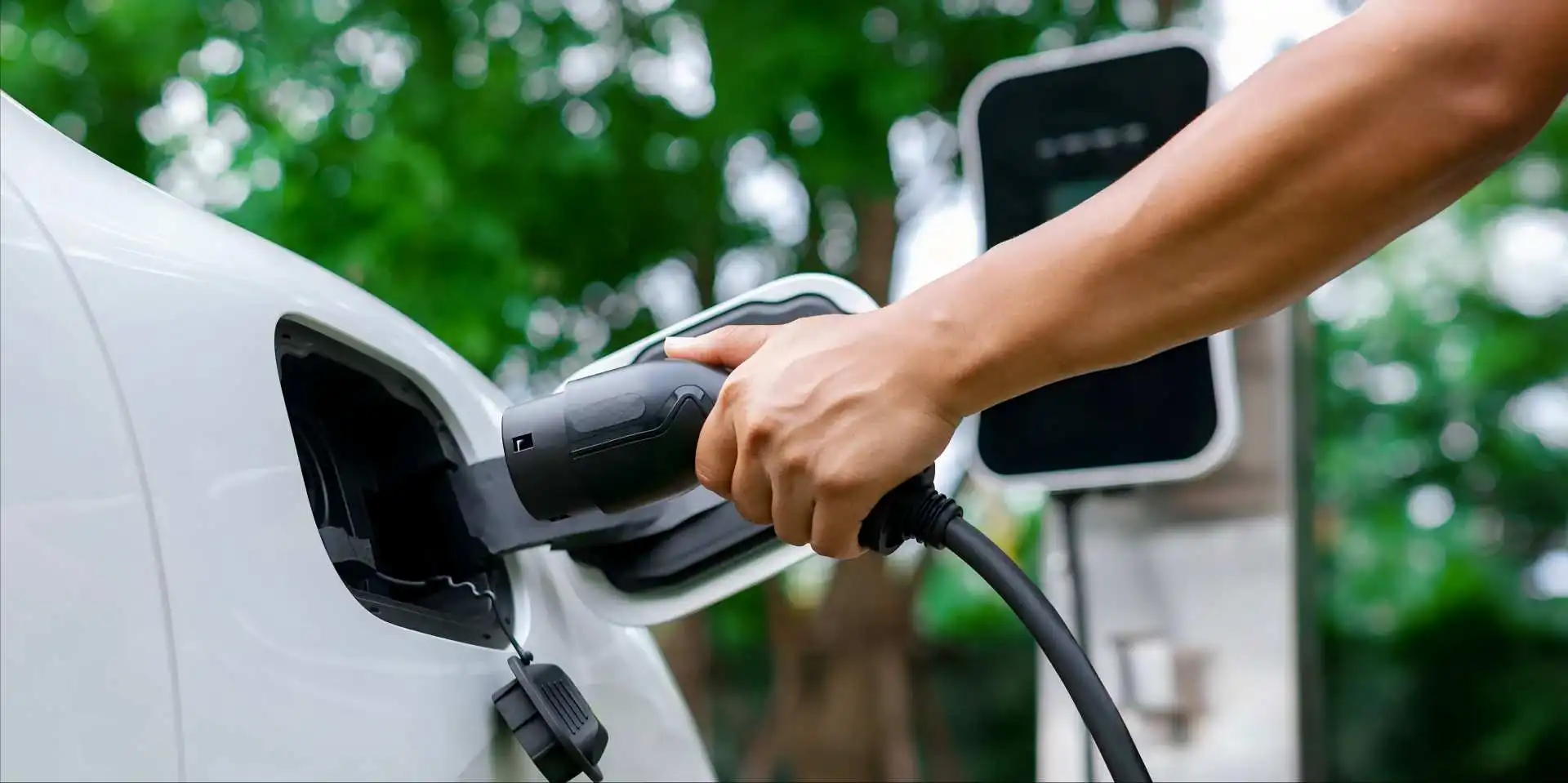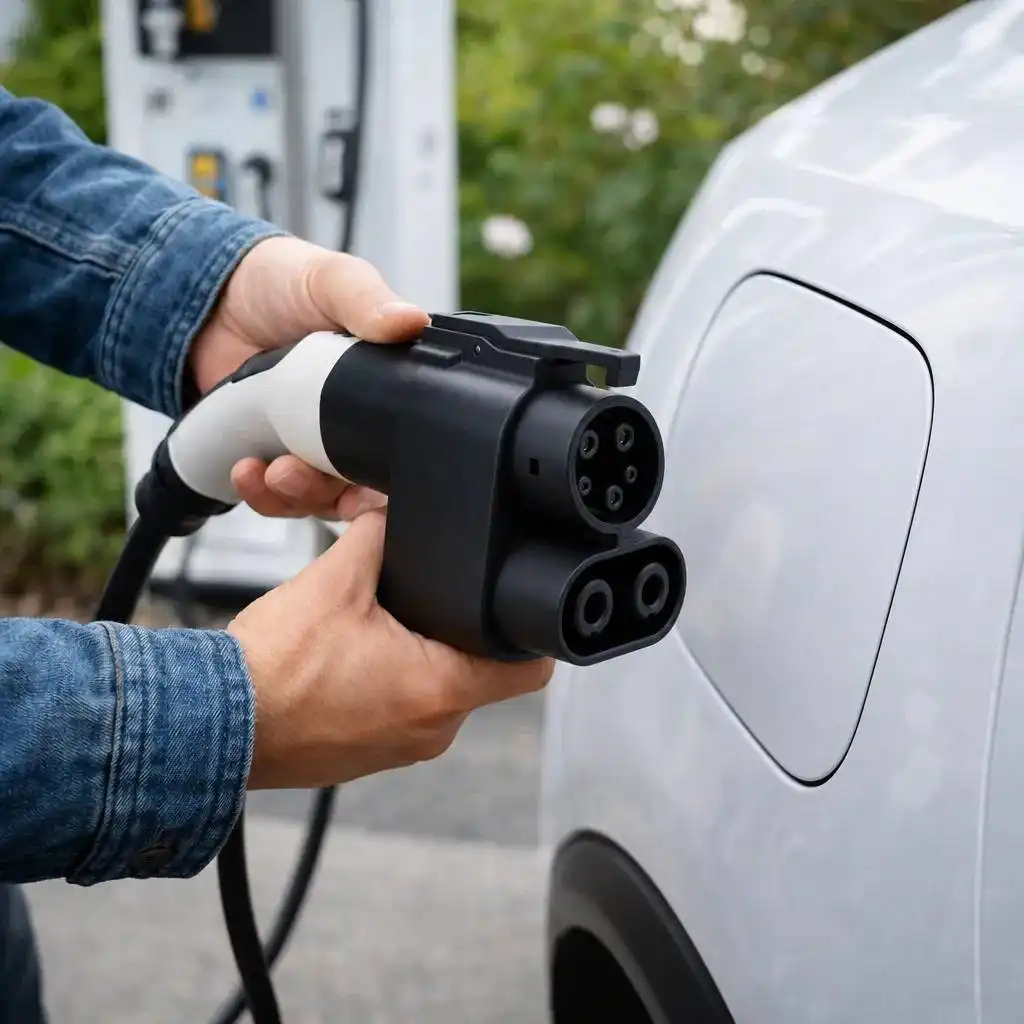
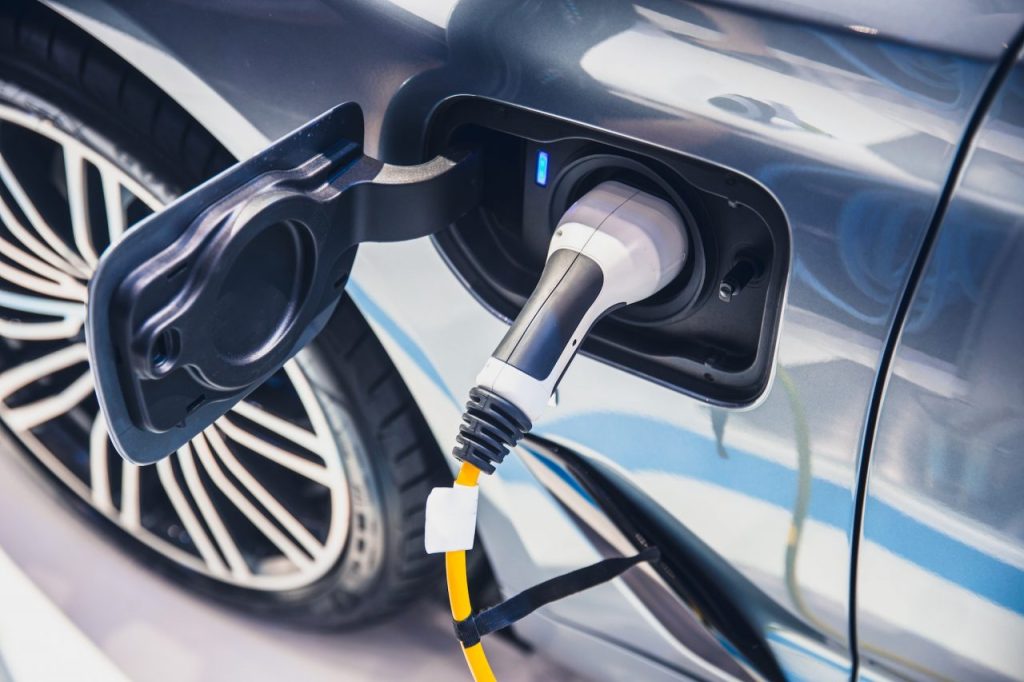
An EV charger‘s speed shapes every road trip. DC fast chargers, also called Level 3, are the fastest option. They give compatible cars an 80% charge in 20 to 40 minutes. Tesla Superchargers lead the pack for 400V cars. Meanwhile, 350 kW CCS stations from networks like Electrify America are the fastest public choice today. Real-world speed depends on two things. The charger’s power output sets one limit. The vehicle’s maximum acceptance rate sets another. A 350 kW station cannot speed up a car capped at 150 kW. This gap between station power and vehicle capability explains why charging times vary so much.
Key Takeaways
- DC fast chargers, also known as Level 3, are the quickest way to charge an EV. They can add up to 200 miles in 15-20 minutes.
- Your car’s top charging speed sets the limit, so a 350 kW station won’t make a 150 kW car go any quicker.
- To charge your car the fastest, use a Tesla Supercharger for 400V cars. You can also use a 350 kW CCS station if your car works with it.
- To charge as fast as possible, warm up your battery first and use network apps to find high-power stations along your route.
What Determines the Charging Speed of an EV Charger?
Charging speed depends on the charger level and the vehicle’s acceptance rate. Level 1 equipment uses a standard 120-volt outlet. It adds about 3 to 5 miles of range per hour. This speed suits overnight home charging. Drivers plug in before bed and wake up with a fuller battery.
Level 2 chargers run on 240 volts. They add 12 to 80 miles of range per hour. The exact rate depends on the amperage. Higher amperage delivers more miles per hour. These units work well at home and at workplaces. A driver can gain a meaningful charge during a work shift.
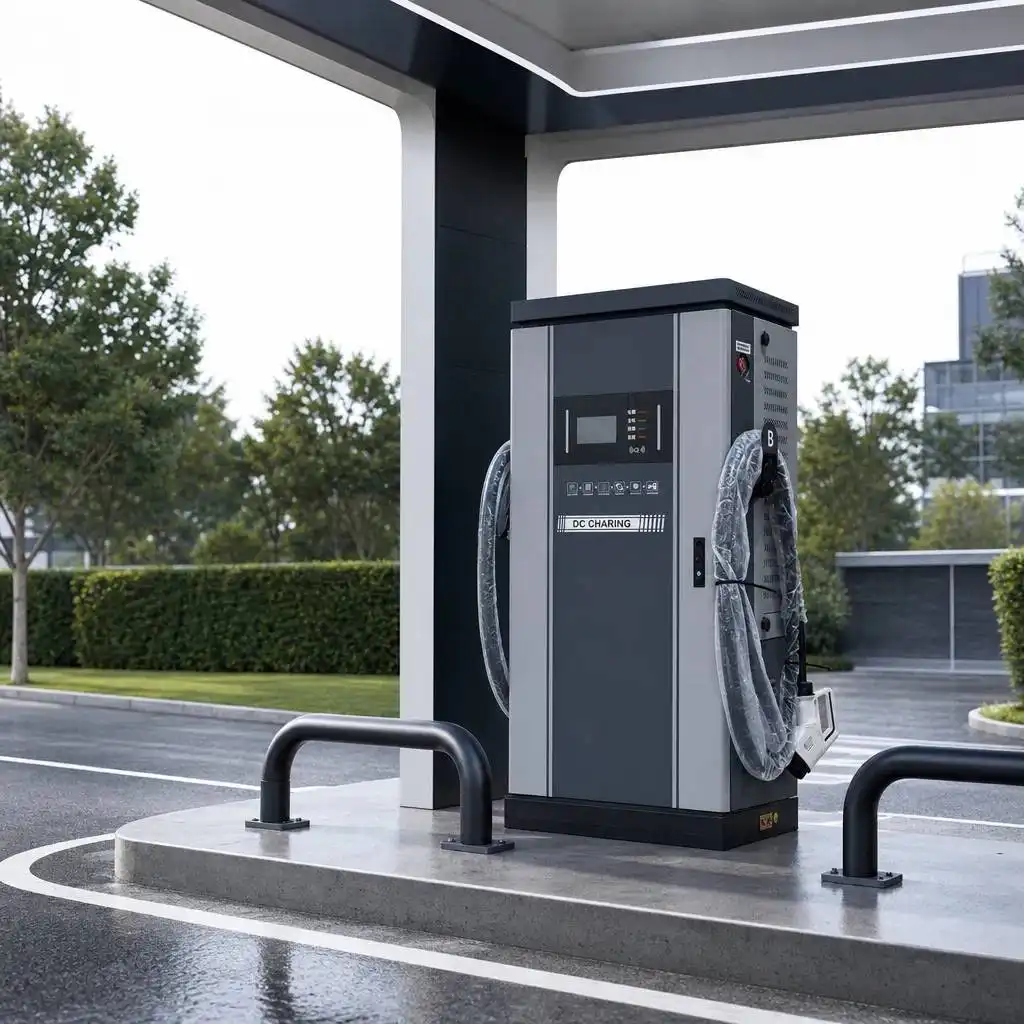
DC fast chargers, also called Level 3, are the fastest option. Their power outputs range from 50 kW to 350 kW and beyond. These stations push power directly to the battery. They bypass the onboard charger that limits Level 1 and Level 2 speeds.
The vehicle itself sets a hard ceiling. A 350 kW station cannot speed up a car capped at 150 kW. The table below shows the maximum DC fast charging rates for several popular models.
| Vehicle | Max DC Fast Charging Rate (kW) |
|---|---|
| Lucid Air | Up to ~300 kW |
| Porsche Taycan | Up to 320 kW |
| Hyundai IONIQ 5 | Up to ~260 kW |
| Ford F-150 Lightning | Up to ~155 kW |
Battery state also shapes the experience. Charging runs fastest between 20% and 80% state of charge. Beyond 80%, the rate tapers off to protect battery health. This pattern is called the charging curve.
The tapering effect is especially relevant for DC fast charging. As the battery approaches full charge, the charging speed will decrease to protect the battery’s life and health. This tapering means the last 20% of the battery might charge slower than the first 80%.
Today, 350 kW stands as the fastest public DC fast charger speed available. Engineers are developing faster technology. For now, drivers should match station power to their vehicle’s limits.
What Are the Different EV Charger Levels and Their Speeds?
EV chargers are commonly divided into three levels based on power output and charging speed. Level 1 and Level 2 use AC power, while Level 3 uses DC fast charging. Actual charging speed depends on charger output, vehicle capabilities, and battery conditions.
| Charging Level | Typical Power Output | Charging Speed |
|---|---|---|
| Level 1 AC | 1.0–1.9 kW | Around 3–5 miles of range per hour |
| Level 2 AC | 2.9–19.2 kW | Typically around 12–80 miles of range per hour |
| Level 3 DC | 50–350+ kW | Often charges from 20% to 80% in 20–60 minutes |
A higher-power EV charger does not guarantee faster charging for every vehicle. The car’s maximum charging rate and battery management system determine how much power it can accept.
Level 1 EV Chargers: Power Output and Typical Charging Speed
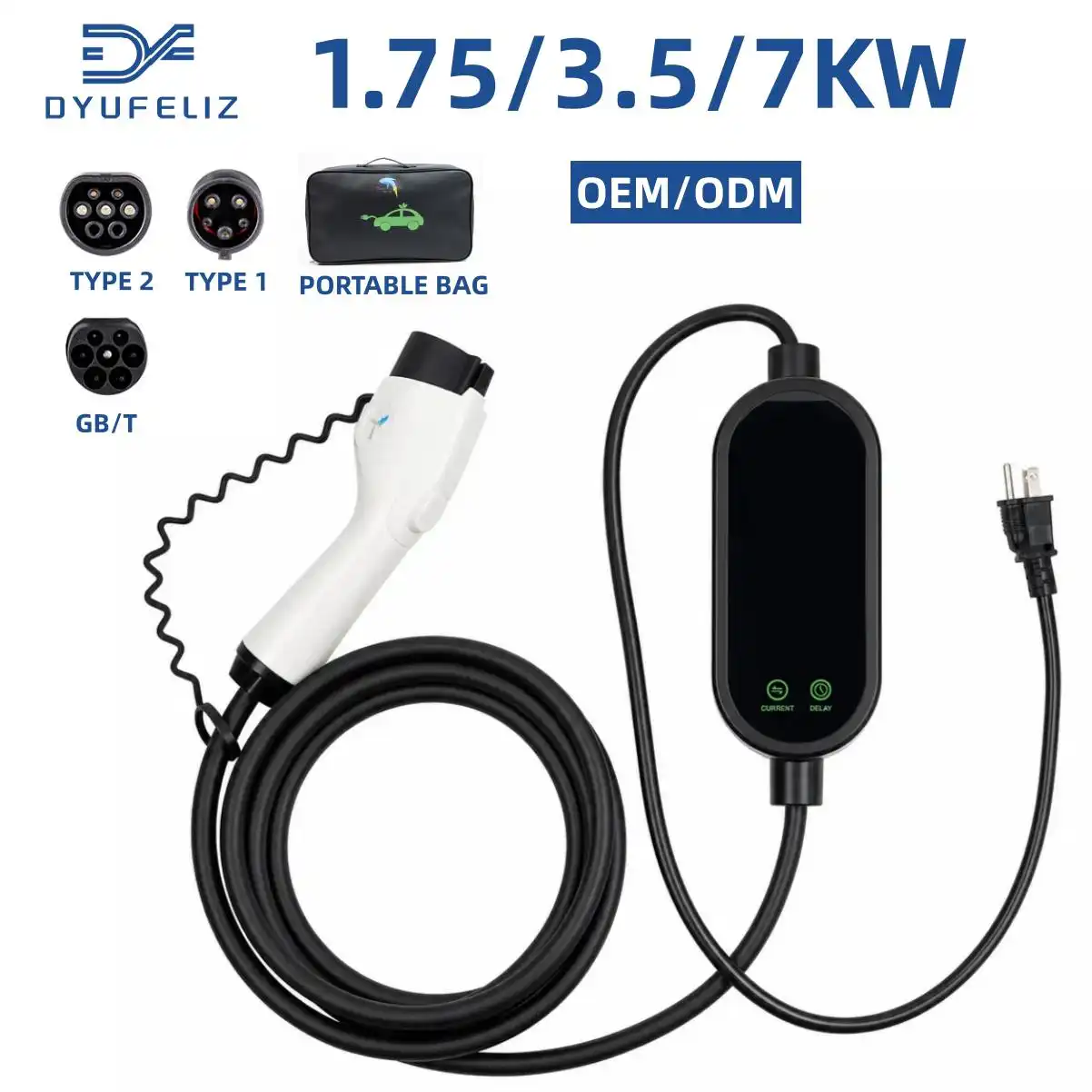
Level 1 EV chargers use a standard 120-volt household outlet and typically deliver 1.0–1.9 kW. They add around 3–5 miles of driving range per hour, making them suitable for plug-in hybrids and drivers with short daily commutes. Their main advantage is convenience, as a suitable outlet usually eliminates the need for dedicated charger installation.
Level 2 EV Chargers: Power Output and Home Charging Speed
Level 2 EV chargers typically operate at 208–240 volts, with power output ranging from approximately 2.9 to 19.2 kW. They can add roughly 12–80 miles of range per hour, depending on charger power and vehicle compatibility.
Level 2 charging is a practical choice for homes, workplaces, and commercial parking facilities. Installation may require a dedicated circuit or electrical upgrades. Charging speed can also decrease when the battery is too hot or cold, or when the battery approaches full capacity.
Level 3 EV Chargers: DC Fast Charging Power and Speed
Level 3 EV chargers use DC fast charging to deliver power directly to the battery, bypassing the vehicle’s onboard AC charger. Typical power ranges from 50 kW to 350 kW or higher, allowing compatible EVs to recharge much faster than with AC charging.
Actual speed depends on the vehicle’s maximum DC charging rate, battery temperature, and state of charge. Charging commonly slows above 80%, so a high-power charger may not maintain its peak output throughout a session.
DongYu offers DC EV chargers from 20 kW to 480 kW for commercial charging stations and fleet applications. Choosing the right output depends on vehicle compatibility, site power capacity, and expected charging demand.
Which Type of EV Charger Offers the Fastest Charging Speed?
DC fast charging networks offer the fastest public EV charging. Tesla Supercharger V3 units deliver up to 250 kW, while Electrify America Hyper-Fast stations and some EVgo stations offer up to 350 kW. Actual charging speed depends on vehicle compatibility, battery conditions, and the car’s maximum charging rate.
| Charging Network | Maximum Power Output | Key Feature |
|---|---|---|
| Tesla Supercharger V3 | 250 kW | Designed for compatible Tesla vehicles and other supported EVs |
| Electrify America | 350 kW | High-power CCS charging |
| EVgo | Up to 350 kW | DC fast charging at selected locations |
A 350 kW EV charger will not charge every vehicle at that speed. For example, a car limited to 150 kW cannot use the charger’s full output.
For charging network operators and fleet managers, hardware selection is equally important. DongYu offers DC fast chargers from 20 kW to 480 kW, with OEM and ODM customization options for power output, connector type, branding, and appearance. The right EV charger balances vehicle compatibility, site requirements, and charging demand.
What Are the Fastest Public DC Fast Chargers Available Today?
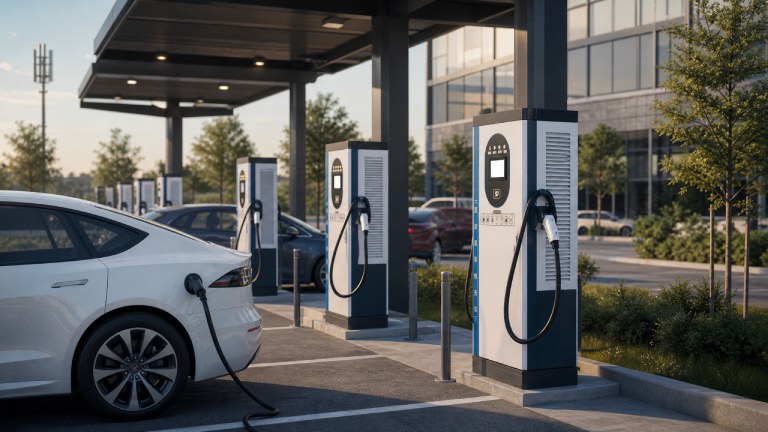
Public DC fast charging has reached new heights. Recurrent Auto’s 2026 ranking names the quickest models on the road. The Hyundai IONIQ 5 leads with a time of 5.79 minutes to add 100 miles. The Hyundai IONIQ 6 follows at 7.43 minutes. The Porsche Taycan takes 8.06 minutes. The Lucid Air needs 8.1 minutes. The Lucid Gravity rounds out the top five at 8.18 minutes. The Kia EV6 and Genesis models also rank among the fastest.
| Rank | Model | Time to Add 100 Miles (min) | Peak Charging (kW) | Body Style |
|---|---|---|---|---|
| 1 | Hyundai IONIQ 5 | 5.79 | 350 (vehicle caps ~235–240 kW) | Compact crossover |
| 2 | Hyundai IONIQ 6 | 7.43 | 350 | Aerodynamic midsize sedan |
| 3 | Porsche Taycan | 8.06 | 320 | Performance luxury sedan |
| 4 | Lucid Air | 8.1 | 300 | Luxury sedan |
| 5 | Lucid Gravity | 8.18 | 400 | Three-row luxury SUV |
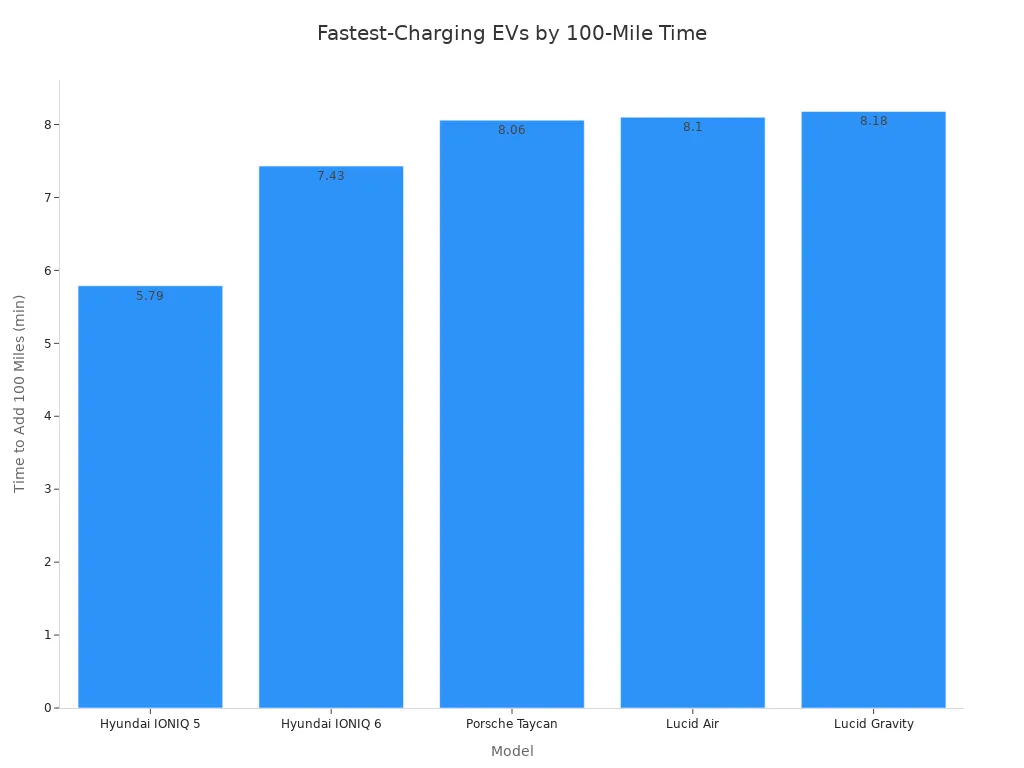
The Lucid Gravity adds 18.2 miles of range per minute. The Porsche Taycan adds 16.9 miles per minute. The Lucid Air adds 16.7 miles per minute. These figures show what a top-tier EV charger can do with the right vehicle.
Three factors enable these speeds. First, 800-volt or high-voltage systems allow higher power delivery. Second, efficient aerodynamics and powertrains translate energy into miles faster. Third, flat charging curves sustain high speeds longer.
How 150 kW DC EV Chargers Compare With 350 kW Models
A 150 kW unit and a 350 kW unit differ in peak output. The 350 kW model can deliver more than twice the power. That gap matters only when the vehicle accepts the higher rate. The Hyundai IONIQ 5 caps around 235 to 240 kW. It cannot use the full 350 kW. A car limited to 150 kW charges at the same speed on both units.
Site conditions also shape results. A 350 kW station may share power across multiple stalls. Ambient temperature affects the battery’s acceptance rate. A cold battery charges slower than a warm one. Real-world results vary based on charger condition, vehicle state, and ambient temperature.
How High-Power EV Chargers Deliver Faster Charging Sessions
High-power equipment shortens sessions through sustained output. A 350 kW station pushes more energy during the peak window. The vehicle’s charging curve determines how long that window lasts. Cars with flat curves hold high power longer. The IONIQ 5 and IONIQ 6 use the 800-volt E-GMP platform. This architecture keeps the curve flat across a wide state-of-charge range.
The Lucid Gravity reaches 400 kW peak charging. That rating exceeds most public station capabilities. A driver needs a 350 kW or higher station to exploit it. The Porsche Taycan accepts 320 kW. The Lucid Air takes 300 kW. Each model pairs with stations that match its limit.
Drivers should check their vehicle’s peak rate before choosing a station. A 150 kW unit may deliver the same result as a 350 kW unit for many cars. For high-voltage models, a 350 kW EV charger unlocks the fastest possible session. The table above shows the payoff in minutes saved.
How Do You Choose the Fastest EV Charger for Your Needs?
Choosing a Fast EV Charger for Home and Residential Parking
Home charging speed starts with the electrical panel. A 48-amp Level 2 charger draws power all the time. The NEC rule says a continuous load can only use 80 percent of a breaker’s rating. So, this unit needs a dedicated 60-amp breaker. Most modern homes have 200-amp service panels. Older 100-amp panels may need an upgrade before installation.
The connection method matters too. A NEMA 14-50 outlet limits charging to 40 amps, about 9.6 kW. A hardwired setup allows the full 48 amps, giving roughly 11.5 kW. That difference means 30 to 40 miles of range per hour. Hardwiring also removes the outlet as a possible failure point. The charger needs 6 AWG copper wire for the circuit.
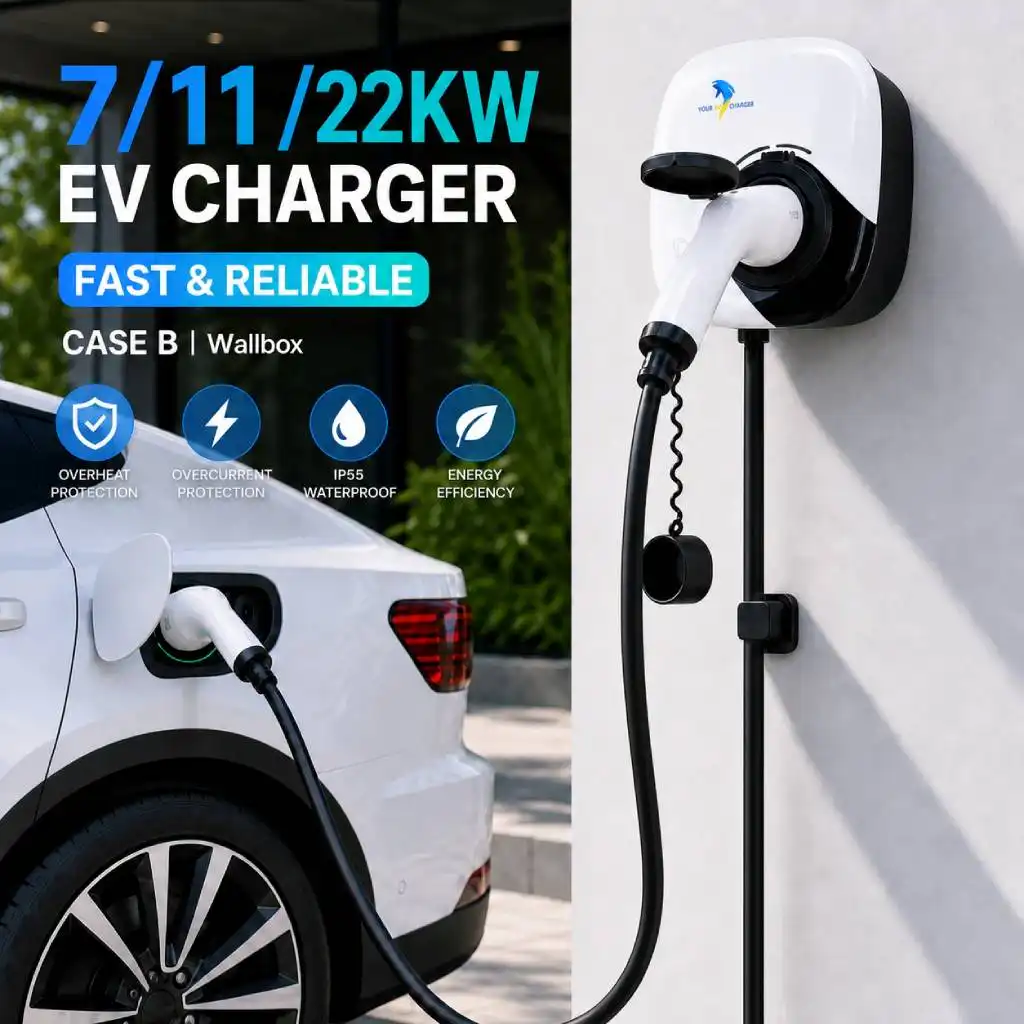
Most homeowners pick a wall-mounted unit that matches their daily driving distance. A 48-amp charger fills a typical commute overnight. Drivers with longer routes may want a higher-amperage unit. The key is matching the charger to the panel capacity and the vehicle’s acceptance rate.
Choosing High-Power EV Chargers for Commercial Charging Sites
Commercial charging sites need to balance charging speed, vehicle compatibility, electrical capacity, and operating costs. Fleet depots may benefit from moderate-power DC chargers, while highway stations often need higher output to reduce waiting times.
Peak power alone does not determine charging speed. Vehicle voltage, maximum charging rate, battery temperature, and state of charge all affect performance. Compare charging times across realistic operating conditions and include installation, grid upgrades, maintenance, and electricity costs when evaluating suppliers.
DongYu offers DC fast chargers from 20 kW to 480 kW, with OEM and ODM customization for commercial applications. Selecting the right EV charger requires matching power output to fleet requirements and site capacity.
For the fastest charging experience, check your vehicle’s maximum DC charging rate before choosing a station. Battery preconditioning, when available, can also help improve charging performance. A high-power charger delivers the best results when the vehicle can accept its output.
Frequently Asked Questions About the Fastest EV Chargers
What Is the Fastest Type of EV Charger Available Today?
DC fast charging is the fastest widely available EV charging method. High-power chargers can deliver 350 kW or more, depending on the equipment. DongYu offers DC EV chargers ranging from 20 kW to 480 kW for different commercial and fleet charging needs.
Does a 350 kW EV Charger Charge Every Electric Vehicle Faster?
No. A 350 kW EV charger does not guarantee 350 kW charging speed. The vehicle’s maximum charging rate, battery temperature, and state of charge determine actual performance. A vehicle limited to 100 kW cannot use the charger’s full 350 kW output.
How Long Does the Fastest EV Charger Take to Charge an EV?
A high-power DC fast charger can charge a compatible EV from 20% to 80% in around 20–30 minutes under favorable conditions. However, charging time varies with battery capacity, vehicle charging limits, temperature, and charging curve. Charging usually slows as the battery approaches 80%.
Can You Install the Fastest DC EV Charger at Home?
Installing a high-power DC fast charger at home is technically possible in some situations but often impractical due to equipment costs and substantial electrical capacity requirements. For most homeowners, a Level 2 AC EV charger offers a more affordable and convenient solution for overnight charging.